Archive for the ‘Uncategorized’ Category

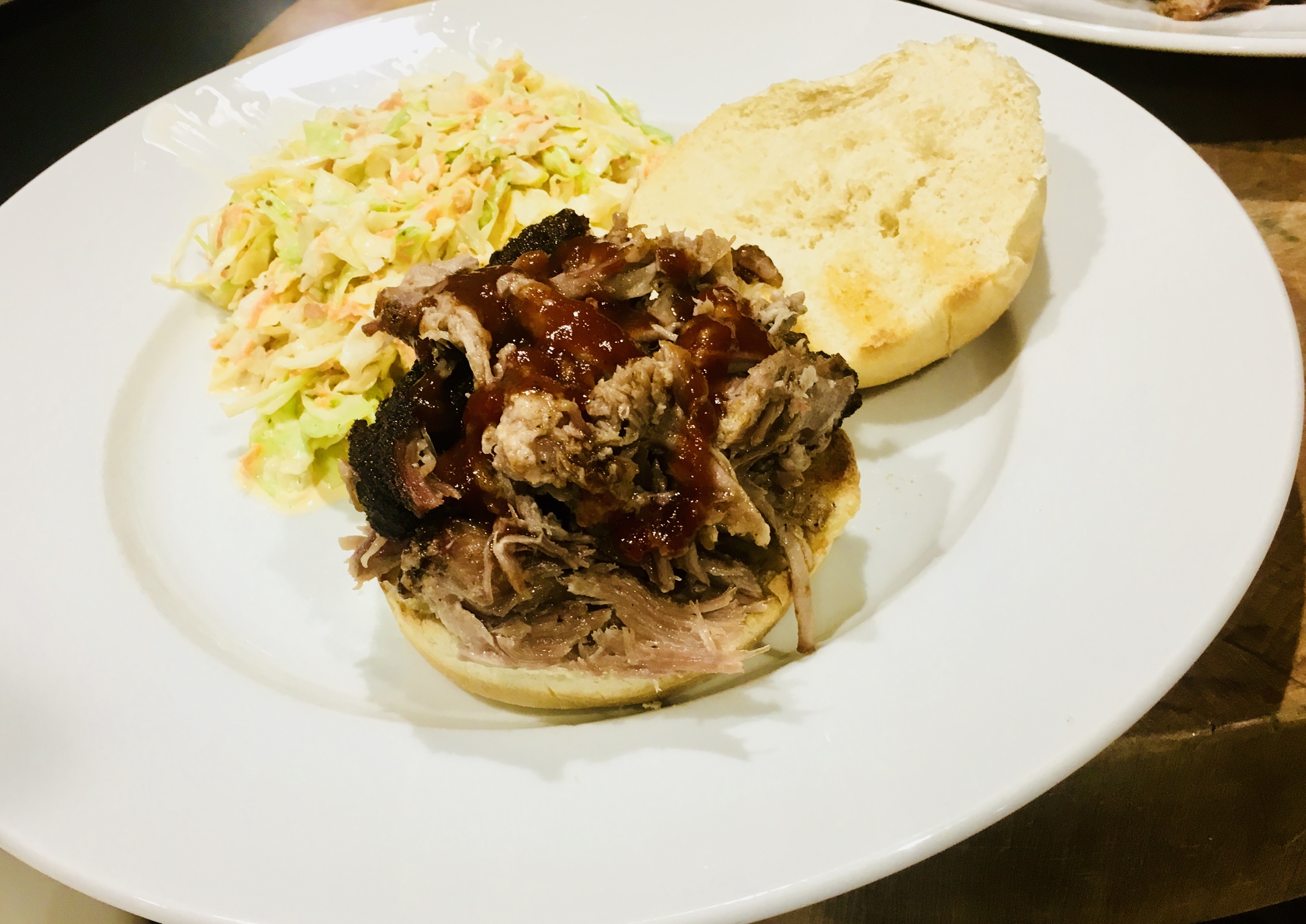
Few slabs of meat are as amazing as a pork butt or shoulder, rubbed with a special dry rub, then slow-smoked for 8 hours (or more), pulled and slathered with amazing barbecue sauce. It takes time, but it’s not really that hard to do.
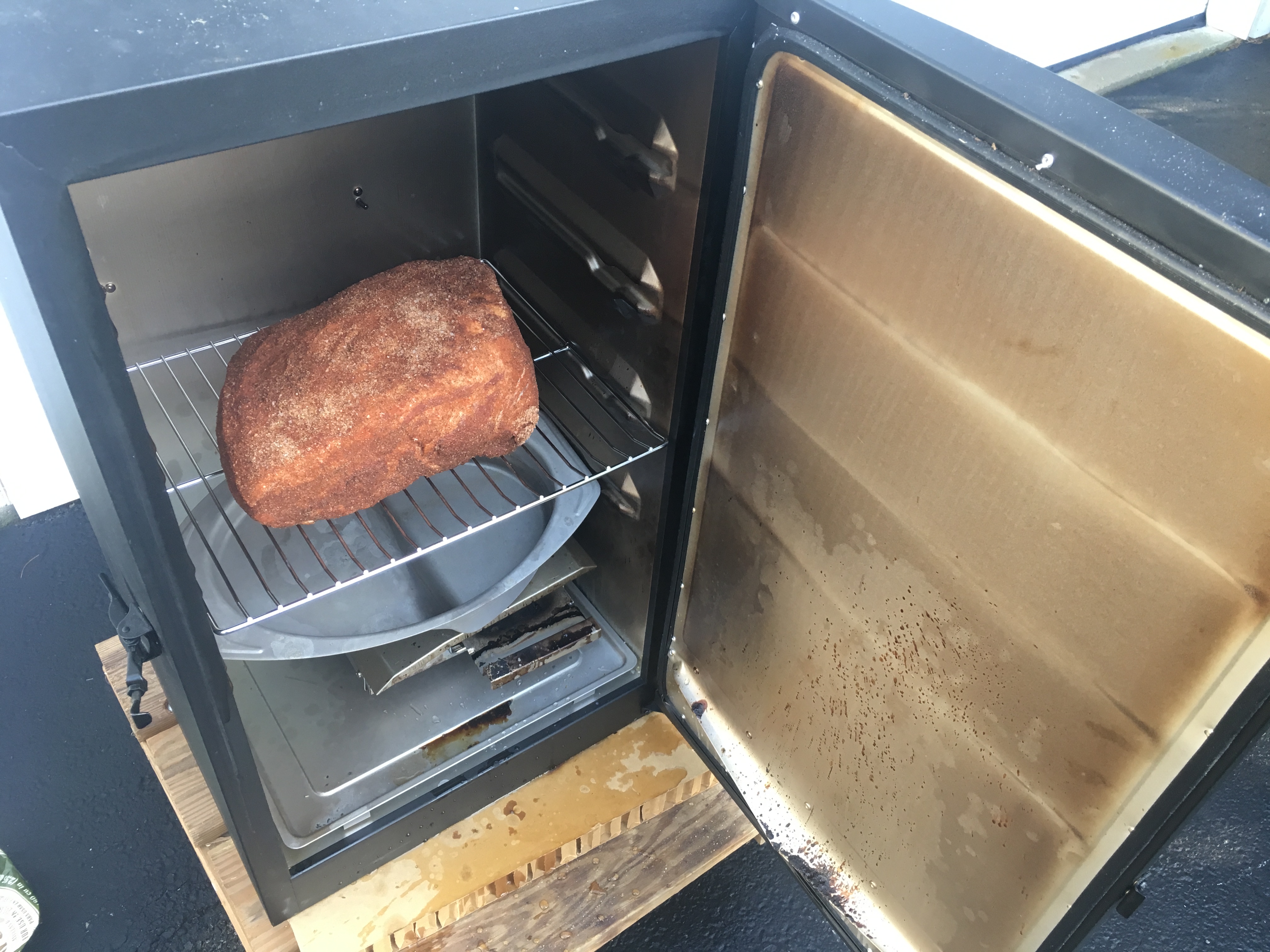
 

My electric smoker allows me to set the time and temp and walk away.


First, get a hunka pork. The kind of pig I get matters to me, and so I buy a heritage breed, like Berkshire (also known as Kurobuta), from a farm that raises them humanely. I’m willing to pay the extra bucks to get better quality meat.

But going to a supermarket or butcher shop for pork is what most people do. The names of the cuts of meat can be a bit confusing. Despite its name, pork butt is not from the back-end of the pig.  (The term “butt” referred to the barrel the meat was stored in when the only method of preservation was salting the meat and storing it in barrels.)

The pork butt is actually the shoulder of the pig. The pork shoulder picnic is a lower cut of the same area. These cuts can also go by the names Boston shoulder roast, Boston butt, Boston roast, shoulder butt, and shoulder-blade roast. Whatever the name, these are all nicely marbled hunks of meat that usually weigh in anywhere from 6 to 8 lbs, and are easy to find. Barbecue fanatics claim the bone-in pork butt is more flavorful, but boneless will work, too.

Once I’ve got my slab of pork, I need to season it. I’ve found that a simple rub is the best way to go for the sauce I’m going to use later.
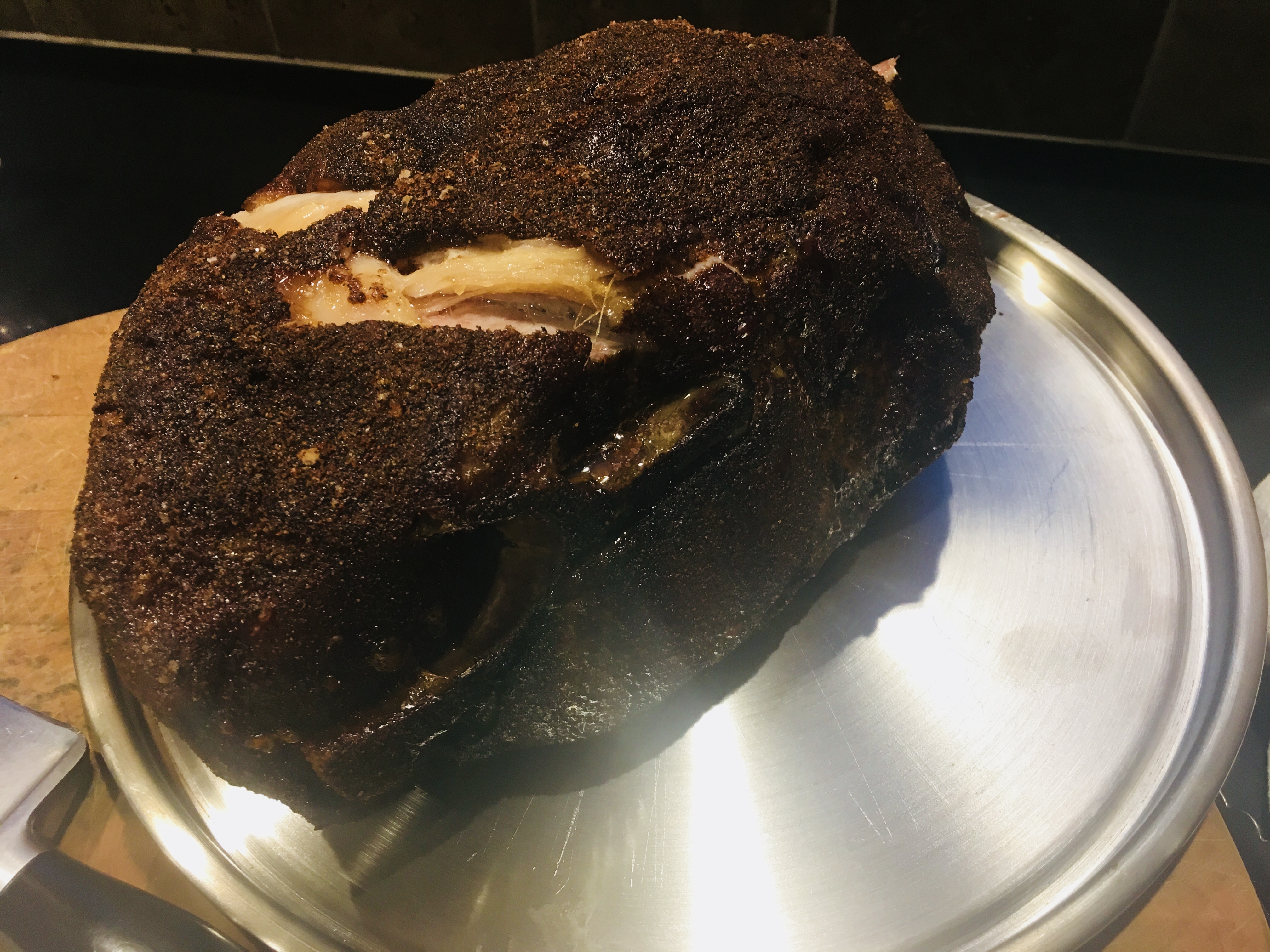
After 8 hours in the smoker, the rub makes a crust on the meat that is just fantastic!

BASIC DRY RUB

1/4 cup kosher salt
1/4 cup black pepper
1/4 cup paprika
¼ cup brown sugar
1 tablespoon granulated garlic
1 tablespoon onion powder

Place all the ingredients in a jar with a lid and shake it up to blend.

Once I’ve made the rub, I generously sprinkle it all over the pork, and rub it in really well. I have a digital smoker at home, which allows me to set the temperature to cook and smoke my pork butt. I place the pork butt on a rack, put a drip pan with water underneath it to catch the grease, and set the smoker for 250 degrees. I cook the pork at 250 for about 6 to 8 hours, and then add hickory chips to the smoker and smoke the butt at 250 for at least another 2 hours. The marbled fat in the pork butt slowly melts over time and the pork becomes incredibly tender and flavorful.

I remove the pork butt from the smoker and let it rest, covered with aluminum foil, for at least 20 minutes before pulling it apart with a couple of forks, shredding it into beautiful meaty bits.

While the pork is cooking and smoking, there’s plenty of time to make two other very important parts of this recipe: a vinegar-based barbecue sauce, and the cole slaw.

Slaw on the side or on the sandwich…up to you!


BARBECUE SAUCE

2 cups ketchup
3/4 cup water
6 tablespoons cider vinegar
6 tablespoons white vinegar
6 tablespoons brown sugar
3 tablespoons Worcestershire sauce
1 tablespoon chili powder
2 teaspoons salt
2 teaspoons black pepper
1 1/2 teaspoons cumin


Mix all the ingredients in a saucepan and simmer until the flavors have blended, about 20 minutes. Remove from the heat and cool to room temp. If you store it in an airtight container in the fridge, it’ll stay good for a few months.
COLE SLAW

My unusual cole slaw recipe uses an interesting ingredient: pickle juice! Just a splash of juice from your favorite jar of pickles is all you need.


1 package of cole slaw veggies
splash of pickle juice
1/4 cup mayonnaise (more to taste)
teaspoon celery seed (not salt)
salt and pepper

There are no real specific measurements for cole slaw, because I’ve found that some people like it dry, others wet…some peppery, some not. Play around with it and make it your own. I prefer a more mayonnaise-y cole slaw, and usually err on the wet side.

In a bowl, combine all the ingredients. Cover it with plastic wrap and chill. When ready to use, re-mix it, and taste for seasoning before using.

OK…time to make that sandwich!

You can either go Carolina style and place the cole slaw right on top of the pulled pork in the bun, or simply serve the slaw on the side. No rules!

Whether you go through all these steps yourself or not, it’s nice to appreciate a labor of love that is worth every bit of time and trouble invested in it.

WE BROKE 1000!

Posted: February 28, 2018 in Uncategorized
Tags: , , ,

My thanks to you for following this blog and getting it past 1000! If you haven’t signed up to follow, go to livethelive.com, look left and click!

It’s National Pancake Day!

These pancakes, based on a recipe from chef April Bloomfield (The Spotted Pig and The Breslin in NYC), are made from fresh homemade ricotta cheese. Light as air…and really delicious! I’ve made a few batches of fresh ricotta cheese in my day, but when the family has a craving for these pancakes at the last-minute, a good-quality store-bought ricotta cheese will do.


1 1/2 cups all-purpose flour (I use Cup4Cup GF flour if I want to make these gluten-free)
1/4 cup yellow cornmeal
2 tablespoons sugar
1/2 teaspoon salt
1/2 teaspoon baking powder
1/2 teaspoon baking soda
2 cups milk
2 large eggs, separated
1/2 cup fresh ricotta


In a large bowl, combine the flour, cornmeal, sugar, salt, baking powder and baking soda. In another large bowl, whisk together the milk, ricotta,  and egg yolks. Fold the wet ingredients into the dry ingredients.

In a large stainless steel bowl, whisk the egg whites until they are stiff, but not dry. Fold gently into the batter.

Spray a non-stick griddle with a little cooking spray and drop about 1/4 cup of batter per pancake. Cook over medium heat for about 2 minutes per side, until golden and fluffy.

pancake

This past weekend, I was at the annual Providence Art Club Founder’s Day celebration, raising a glass in their honor. And I was again asked to create the drink we toasted the evening with!

First, some history…

The Providence Art Club is the third-oldest art club in the United States. The Philadelphia Sketch Club was founded in 1860. New York’s Salmagundi Club, founded in 1871, came next. But they were both founded by an all-male board. The Providence Art Club is the oldest art club in the nation that also included women. And that was back in 1880! That’s especially huge when you see what’s going on in our country even today…and it’s even more special to me because my wife was elected president of the Providence Art Club  last year, making her only the second woman to hold that post in the club’s history!


1


Several years ago, they asked me to come up with a cocktail for their first Founders Day celebration. One hundred glasses were raised to honor the founding fathers of the Providence Art Club.

Silhouettes of past art club founders, influential members, and presidents line the walls of the Providence Art Club, so my wife came up with the name of the cocktail: The Silhouette. Little did she know that her own silhouette would grace the hallowed walls of the Providence Art Club this year!
In the past, I based my Silhouette cocktail on the Boulevardier, a delicious but strong drink that substitutes bourbon for gin in the classic Negroni. (See the recipe at the bottom of this page.)
But with my wife’s election as the new president at the art club, I thought a new Silhouette was in order, too…and it’s my own recipe for a cocktail I’ve made for many years. I call it Velvet Elvis. Keeping the silhouette theme, we decided to call it The Velvet Silhouette for this Founders’ Day celebration.
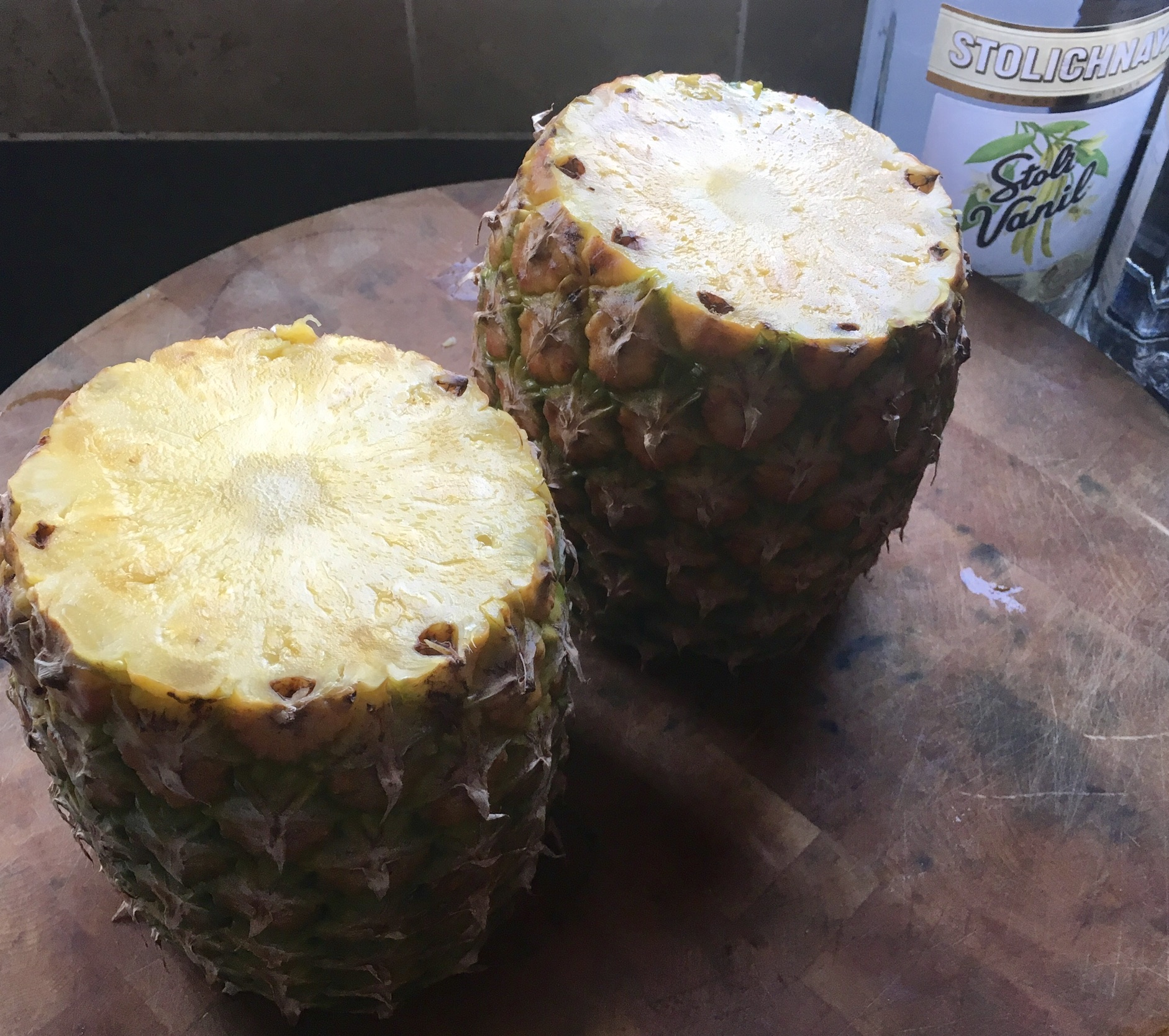
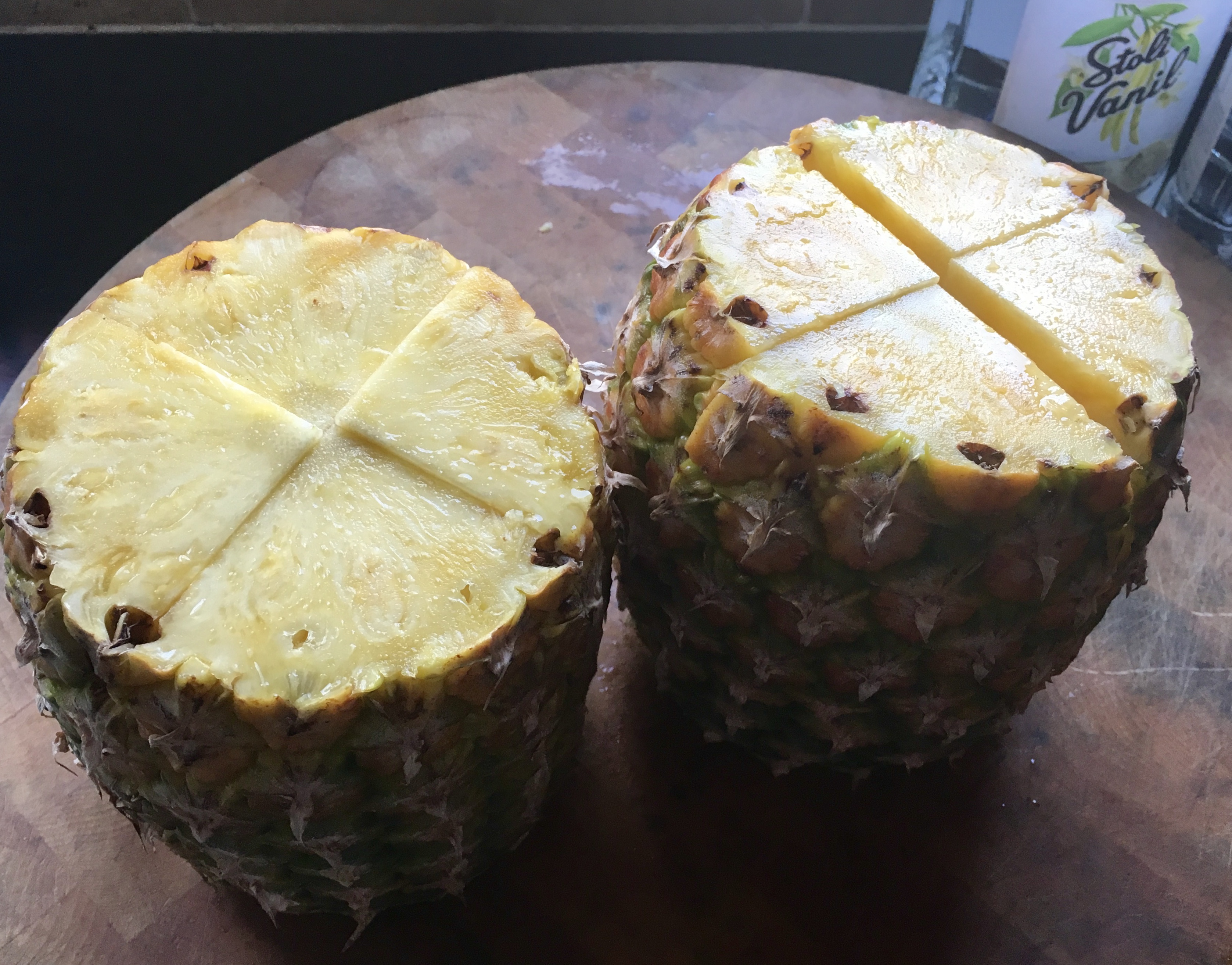
The Velvet Silhouette is my version of a fresh pineapple-infused vanilla vodka. (I use Stoli Vanil.) Here’s how it’s done…
Get a gallon-sized glass jar with a lid. Peel, core and slice the pineapple, and place all the pieces in the jar.
Pour in one 1.75l bottle of Stoli Vanil. Swirl to mix, then screw the lid on and keep the jar at room temperature for 3 weeks.
After 3 weeks, strain the liquid, making sure to squeeze out as much as you can from the pineapple pieces. Discard the pineapple and keep the Velvet Silhouette in the fridge until ready to serve. Serve it on the rocks, or as a martini, shaken in a cocktail shaker with ice.

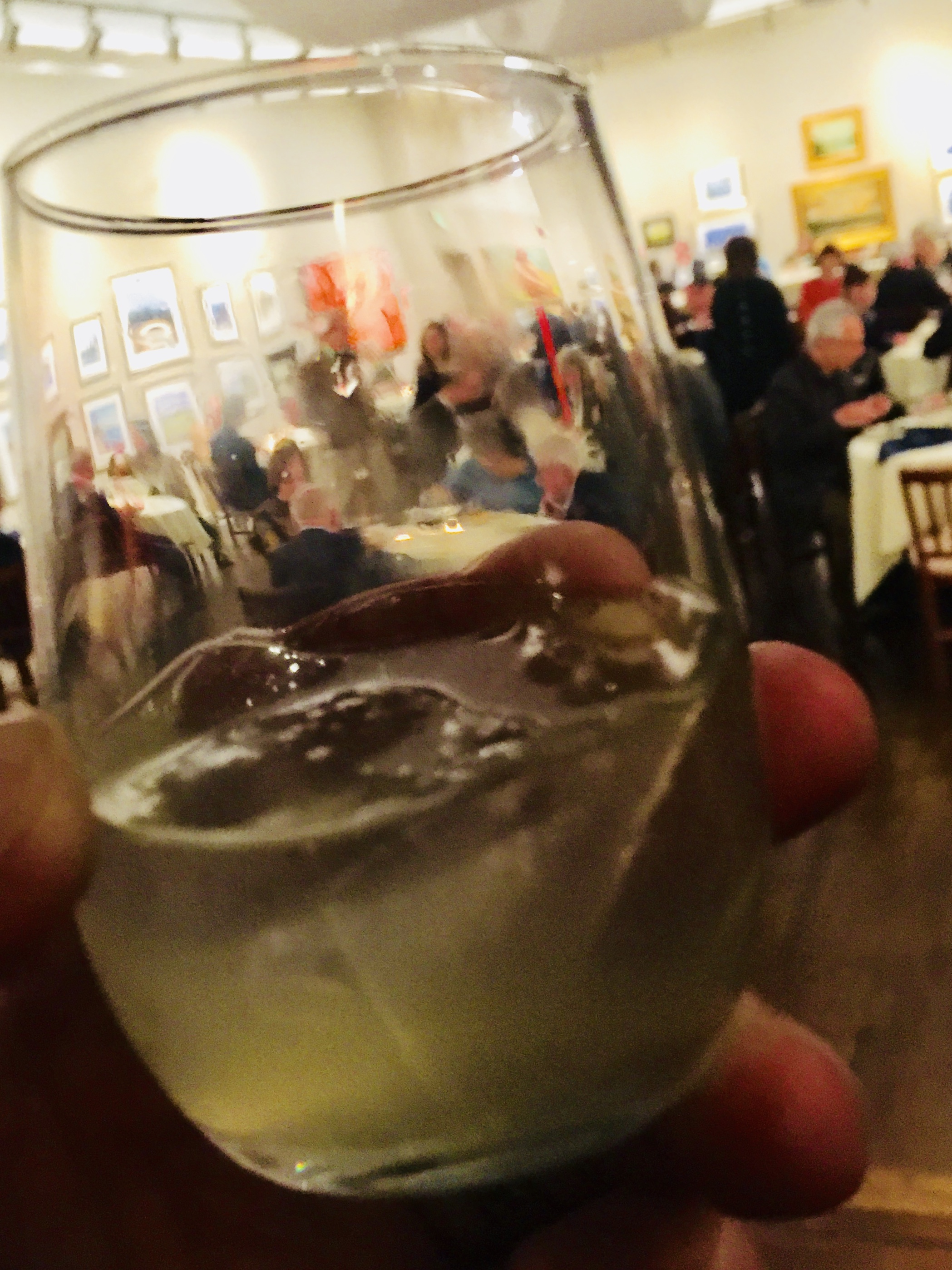
Toasting at the Providence Art Club with the Velvet Silhouette.


The original Silhouette was mighty tasty, but a bit too strong for some of the senior art club members. Nonetheless, a favorite of mine. Here’s the recipe…
image
2 oz. Eagle Rare 10-year bourbon
1 oz. Antica Formula sweet vermouth
1/2 oz. Campari
2 shakes Regan’s orange bitters

In a cocktail shaker with ice, stir the ingredients and then strain into a rocks glass with one large ice-cube.

Garnish with an orange twist.

Cheers!

As a kid, I used to read the side of a cereal box as I ate my breakfast. Nowadays, I tend to read the back label from my booze bottle as I take a sip.
There seems to be a lot of confusion about the spelling of whiskey and/or whisky, but the use of the letter “e” (or the lack thereof) is not random. Here’s the best explanation I’ve found…
whiskeywhisky
The spelling whisky (plural whiskies) is generally used for those distilled in Scotland , Wales , Canada , and Japan. Whiskey (with an e; plural whiskeys) is used for the spirits distilled in Ireland and in the United States. The BATF (Bureau of Alcohol, Tobacco and Firearms) in 1968 specified “whisky” as the official U.S. spelling, but allowed labeling as “whiskey” in deference to tradition.  Most U.S. producers still use the “whiskey” spelling, though as you can see, Maker’s Mark chooses not to.
International law reserves the term “Scotch whisky” to those whiskies produced in Scotland. Scottish law specifies that the whisky must be aged for a minimum of three years, in oak casks. Whiskies produced in other countries in the Scotch style must use another name. Similar conventions exist for “Irish whiskey,” “Canadian whisky,” and “Bourbon whiskey.” In North America, as well as in Continental Europe, the abbreviated term “Scotch” is usually used for “Scotch Whisky.” In England, Scotland, and Wales, the term “whisky” almost always refers to “Scotch Whisky”, and the term “Scotch” is rarely used by itself.
And while we’re on the topic, what is bourbon?
Bourbon is a type of whiskey.
Today, ‘bourbon’ has a specific legal meaning that has little to do with its geographic origins. That definition, now federal law, has existed in its present form only since about the end of the 19th century. According to federal law, bourbon must be at least 51% corn, distilled at less than 160 proof, and aged for at least two years in new, charred oak barrels. (There are some other requirements, but those are the main ones.) Bourbon also must be made within the United States. In other words, a foreign product that meets all the other requirements still cannot be sold in the U.S. as bourbon.
Contrary to popular belief, there has never been a legal requirement that bourbon be made in Kentucky, which is why most Kentucky producers call their product “Kentucky Bourbon.” 
Still confused? My advice is to sit back with your favorite glass of whisky, whiskey or bourbon…and just enjoy. Cheers!

Calamari is the official appetizer of the state of Rhode Island. And for good reason. Squid means big business, and what we catch in Rhode Island accounts for up to 50% of the east coast’s quota every year! Squid have a lifespan of 12 to 18 months, reproduce twice a year, and can be caught year-round, with very few catch limitations, making it lucrative for fishermen.

Great fried calamari is an art form. It may seem like a simple dish, but to make it light and crispy, you need to be on your game. That’s why it can be a real hit-or-miss item on most restaurant menus. And there’s nothing worse than getting what would have been a great plate of calamari had the chef not decided to pour sauce all over it, turning the crispy cephalopod into mush.

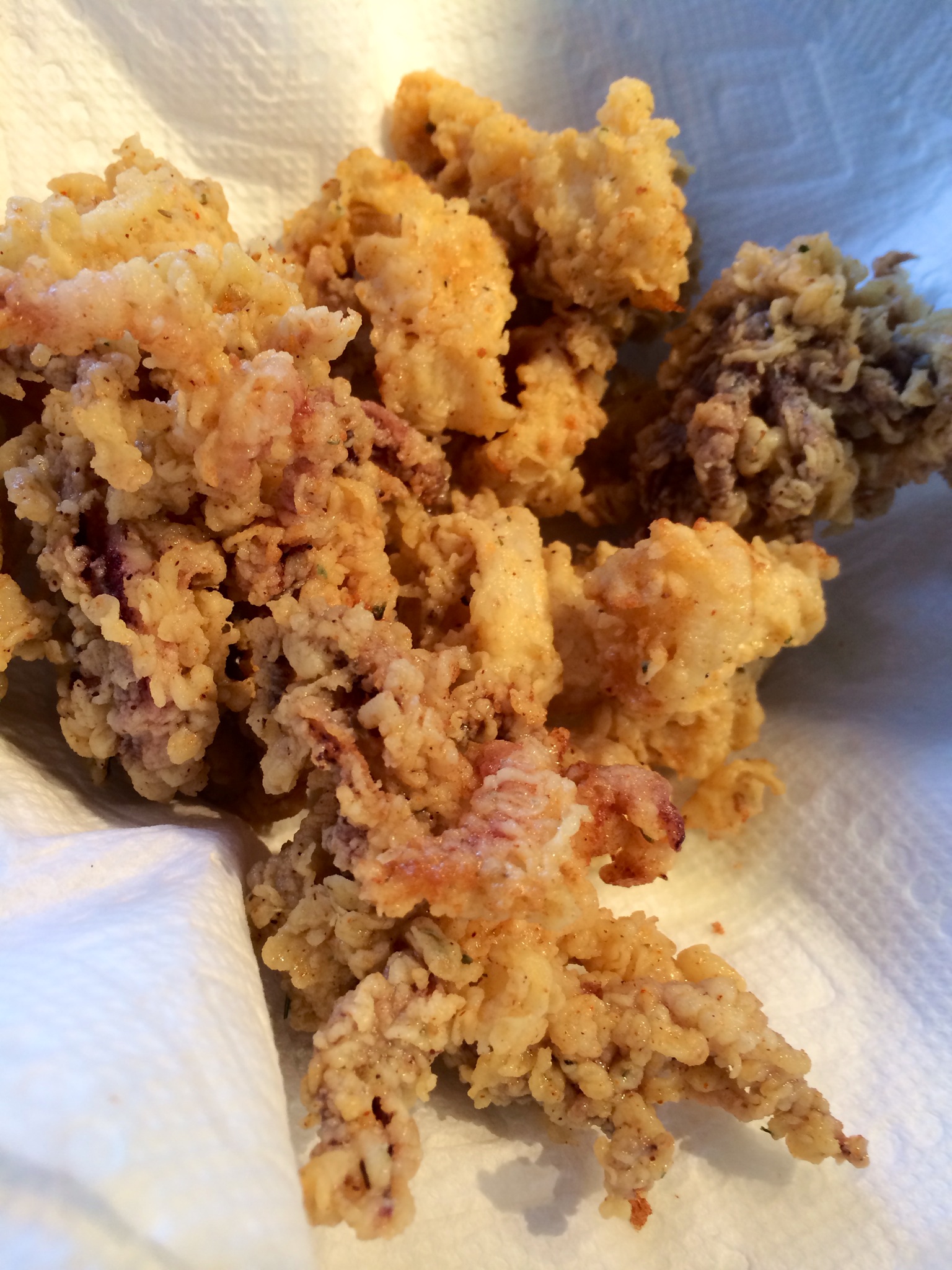
What makes great fried calamari are three basic elements: it needs to be wild-caught in the US (preferably Rhode Island!)…properly cleaned…it needs to be fried at the right temperature for the right amount of time so that it’s perfectly cooked and not greasy…and the coating needs to be light and crispy.

calamari


1 lb. wild caught cleaned squid (thaw if frozen)
1 cup flour (I use gluten-free these days)
1 teaspoon dried oregano
1  teaspoon paprika
1 teaspoon dried parsley
1/2 teaspoon granulated garlic
1 1/2 teaspoons salt
1/2 teaspoon black pepper
1 cup milk
1 large egg
oil, for frying (I use avocado oil)

Thaw the squid and slice them into bite-sized pieces. In a bowl, whisk the milk and the egg together. Toss in all the squid pieces into the bowl to coat. Place the bowl in the fridge for at least 15 minutes.

In another bowl, combine the flour, oregano, paprika, parsley, garlic, salt and pepper. Set aside.

Fill a large pan halfway with oil…or use a deep fryer if you have one. Heat the oil to 350 degrees.

Working in small batches, remove the squid from the milk and egg mixture, let some of it drip off, then place the squid in the flour mixture and toss to coat. Shake off any excess flour and place immediately into the hot oil. Fry them until they’re golden brown, about 4 minutes. Serve immediately with tartare sauce, tomato sauce, hot peppers, whatever you like. (But keep the sauces on the side for dipping.)

About the oil: I cook almost exclusively with olive oil. But for hot frying like this recipe requires, I go with avocado oil, which can take higher temperatures.

PRETZEL BREAD

Posted: January 16, 2018 in Food, Recipes, Uncategorized
Tags: , , , ,

I haven’t found a great gluten-free pretzel bread recipe yet, so I don’t make this recipe as often as I used to. (My wife needs to be on a gluten-free diet, so we tend to focus our meals to that end for everyone in the family.) But sometimes, you just can’t resist…

Making pretzel bread at home had one major stumbling block for me: the need for lye,  which has nasty corrosive qualities that I don’t want to deal with in my kitchen. Even special baker’s lye was not an option. So when I found a pretzel bread recipe that used baking soda, a much milder and safer alkaline ingredient that I could simply pour down my drain after using, I knew it was time to bake.


image


½ cup water
½ cup milk
2 tablespoons butter, softened
3 cups all-purpose flour
2 tablespoons brown sugar
1 tablespoon yeast
2 teaspoons salt
1 egg, separated
Cooking spray
¾ cup baking soda
Kosher salt for sprinkling

Combine the water, milk and butter in a glass container and microwave about 45 seconds to melt the butter and warm the milk. Set aside.

In a mixing bowl, combine the flour, brown sugar, yeast, salt and egg yolk. Slowly add the milk mixture and mix until the dough comes together. If it seems too dry, add small amounts of water. Knead the dough until it is smooth and springy, about 5 minutes.

Place the dough in a bowl sprayed with cooking spray. Flip it over so all sides get oiled, and then wrap the bowl with plastic wrap. Place in a warm place until the dough has doubled in size, about an hour.

Pre-heat the oven to 375 degrees.

Turn out the risen dough on a floured surface and divide it into equal pieces. You can make 15 small slider-sized buns, 8 burger buns, 8 hot dog buns or any other shape you like. Once all the pieces have been rolled, cover them with a clean dish towel and set them aside to rest.

While the dough is resting, heat about 12 cups of water in a large pot. When it comes to a gentle boil, carefully pour the baking soda into it. It will foam and bubble vigorously.

Add the rested pieces of dough to the simmering water and poach them for about 30 seconds and then flip them over for another 30 seconds. You may need to do this in batches.

With a slotted spoon or spatula, lift the poached buns onto a Silpat baking sheet (or a baking sheet sprayed with oil, then sprinkled with cornmeal.)

Froth the egg white with a fork, then brush each bun with the egg white.

Using a sharp knife, make a few slits on the top of the buns, about ¼-inch deep. Sprinkle them with Kosher salt, then bake for 20 minutes until golden brown.

I think I spent half of my childhood in the kitchen, watching my Mom and grandmother make koldūnai (kohl-doo-nayh), the Lithuanian version of a pierogi, by hand at lightning speed. They would roll a simple dough into a log about 1″ in diameter, then cut it into 1″ pieces, twirling each piece between their fingers to make a flat pancake, filling each with a small spoonful of meat or mushrooms, then fold it over, crimping the edges to make a crescent-shaped dumpling. It blew my mind that they could crank out over a hundred of these little masterpieces in no time, placing them on a cookie sheet and freezing them until it was time to cook.

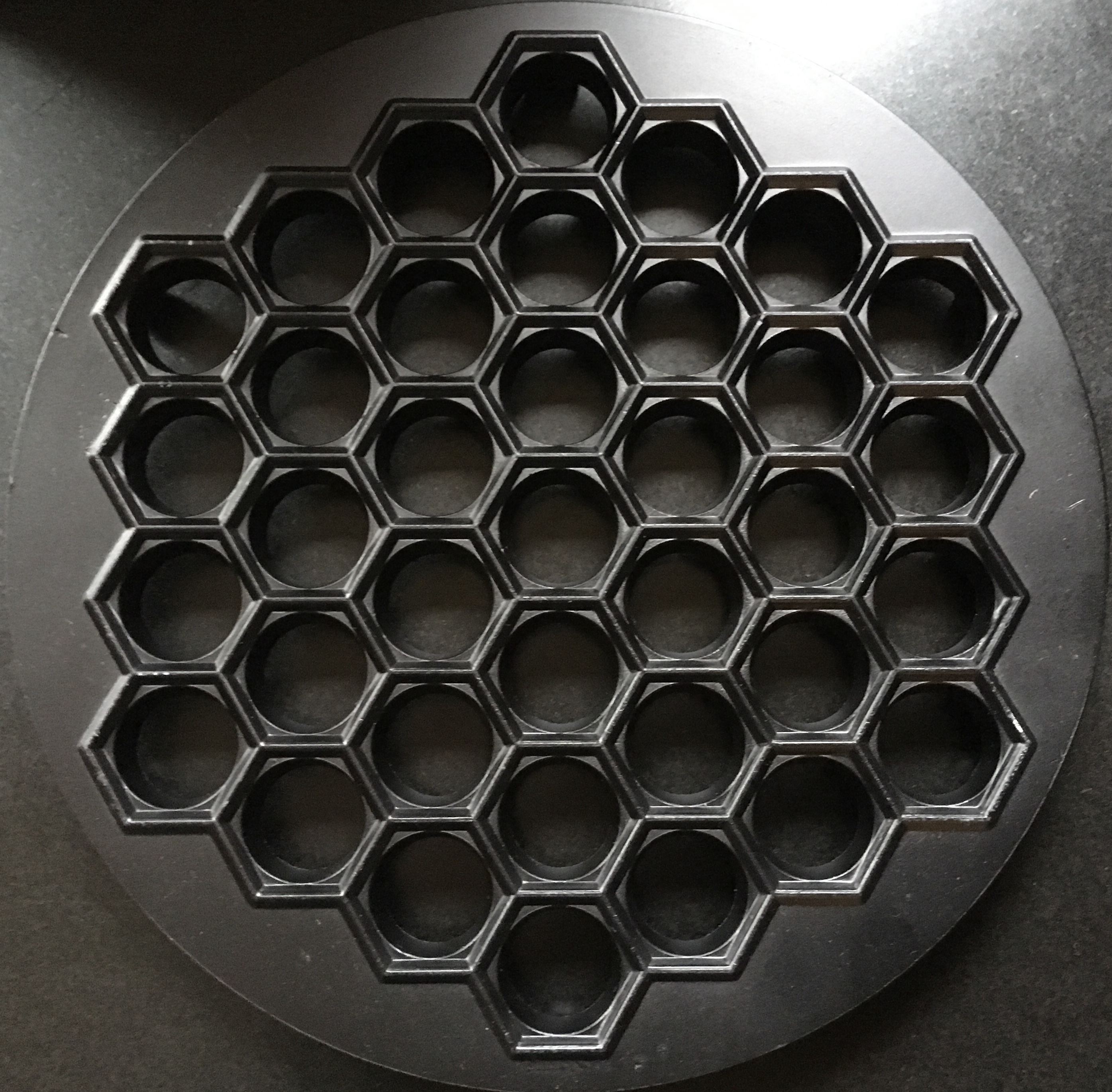
Always on the lookout to make my job easier, I discovered a new tool this year: a device that makes faster work of koldūnai production, though they do come out much smaller. It’s a ravioli maker, and the Lithuanian purists I chatted with on social media didn’t like it. I was willing to give it a try if it meant that I could save myself a lot of time.

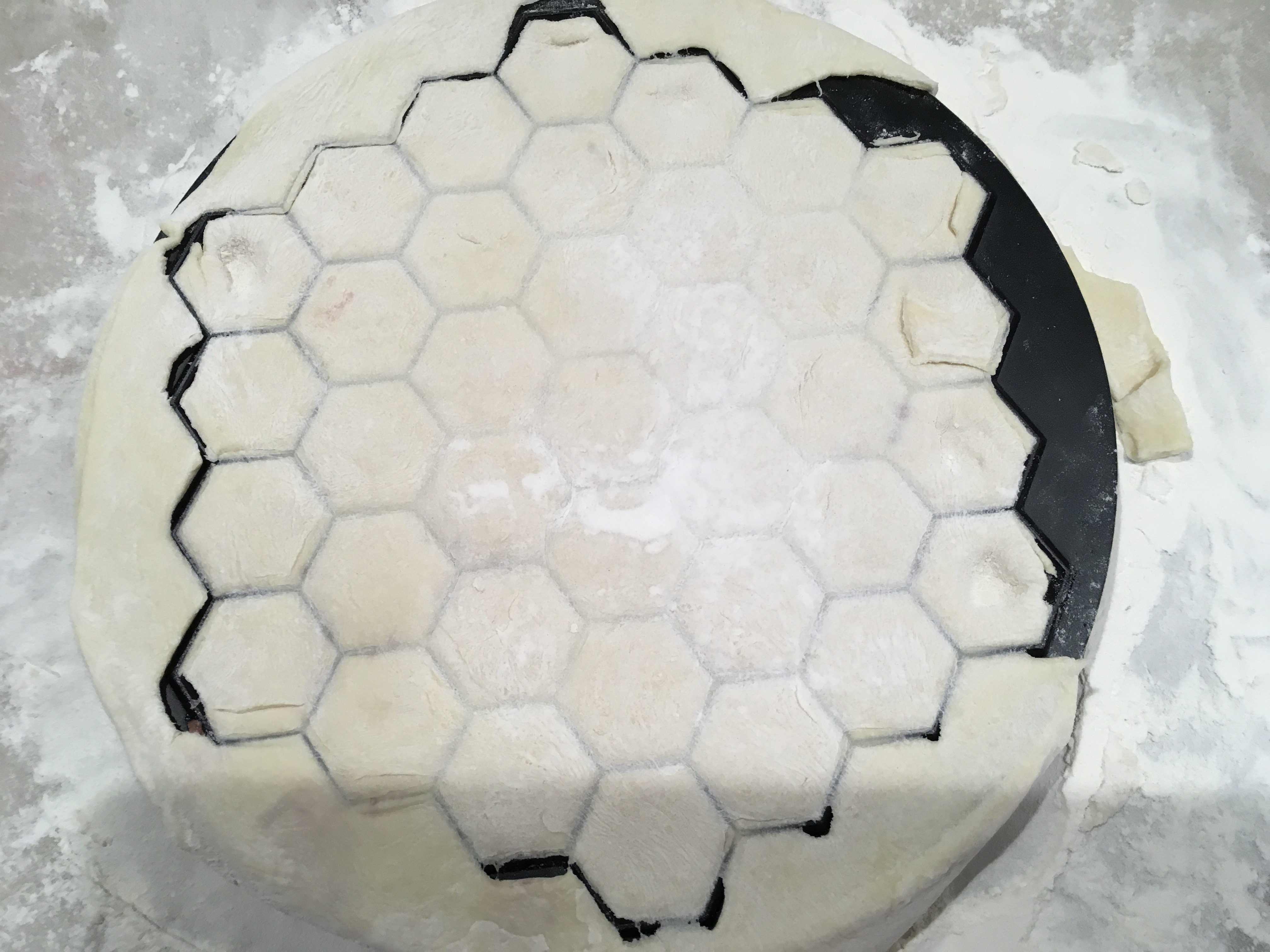
Simply roll out a sheet of dough on top of it.

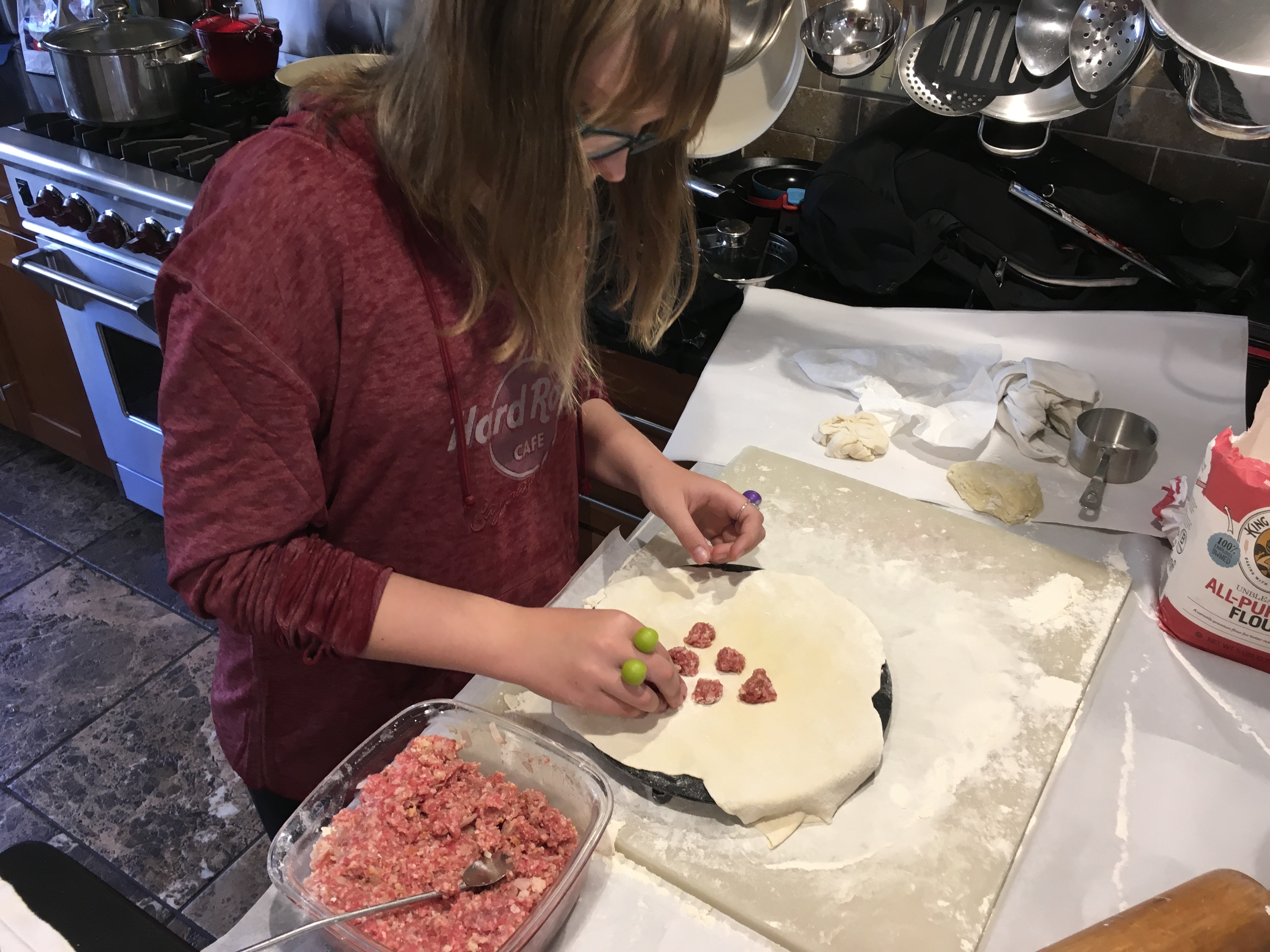
Add a spoon of filling (in this case, ground beef) in each area.

Then roll out another sheet of dough on top of that and press down with a rolling pin.

Voila! Out pop 37 mini-koldūnai at once!

I first tried it with gluten-free dough, with limited success. The dough needs to have elasticity for the device to work properly and that’s something that is sorely lacking in any gluten-free dough I’ve made over the years. Gluten-free dough tends to dry out quickly and simply break rather than bend. But, that said, I managed to make a decent amount of them so that my wife, who maintains a gluten-free diet, could enjoy them, too.


Always great to have a helper in the kitchen!


One of the main reasons Lithuanian koldūnai beat Polish pierogis is the filling. For me, standard pierogi fillings like potatoes, cheese, and sauerkraut just don’t cut it. My Mom would mix ground beef with chopped onions sautéed in butter, a couple of eggs, and milk crackers soaked in milk. She’d add salt and pepper, then spoon that mixture into her koldūnai.

The other stuffing, usually reserved for special holidays like Christmas Eve and Easter, was made from mushrooms. Italy may lay claim to the porcini, but the fact of the matter is, Lithuania is porcini heaven. And when they’re dried and reconstituted, their incredible flavor is so intense, you don’t need many of them to flavor a large amount of regular button mushrooms. We’d get our dried boletes from relatives in Lithuania every year…the real deal. Mom would place a handful in some boiling water and let them steep until they swelled up and could easily be chopped and added to the other mushrooms. She’d then pour the mushroom liquid into the pan as well, not wasting a bit of that magical porcini flavor. The mushrooms were simply sautéed in butter, cooled, then used to fill the koldūnai.


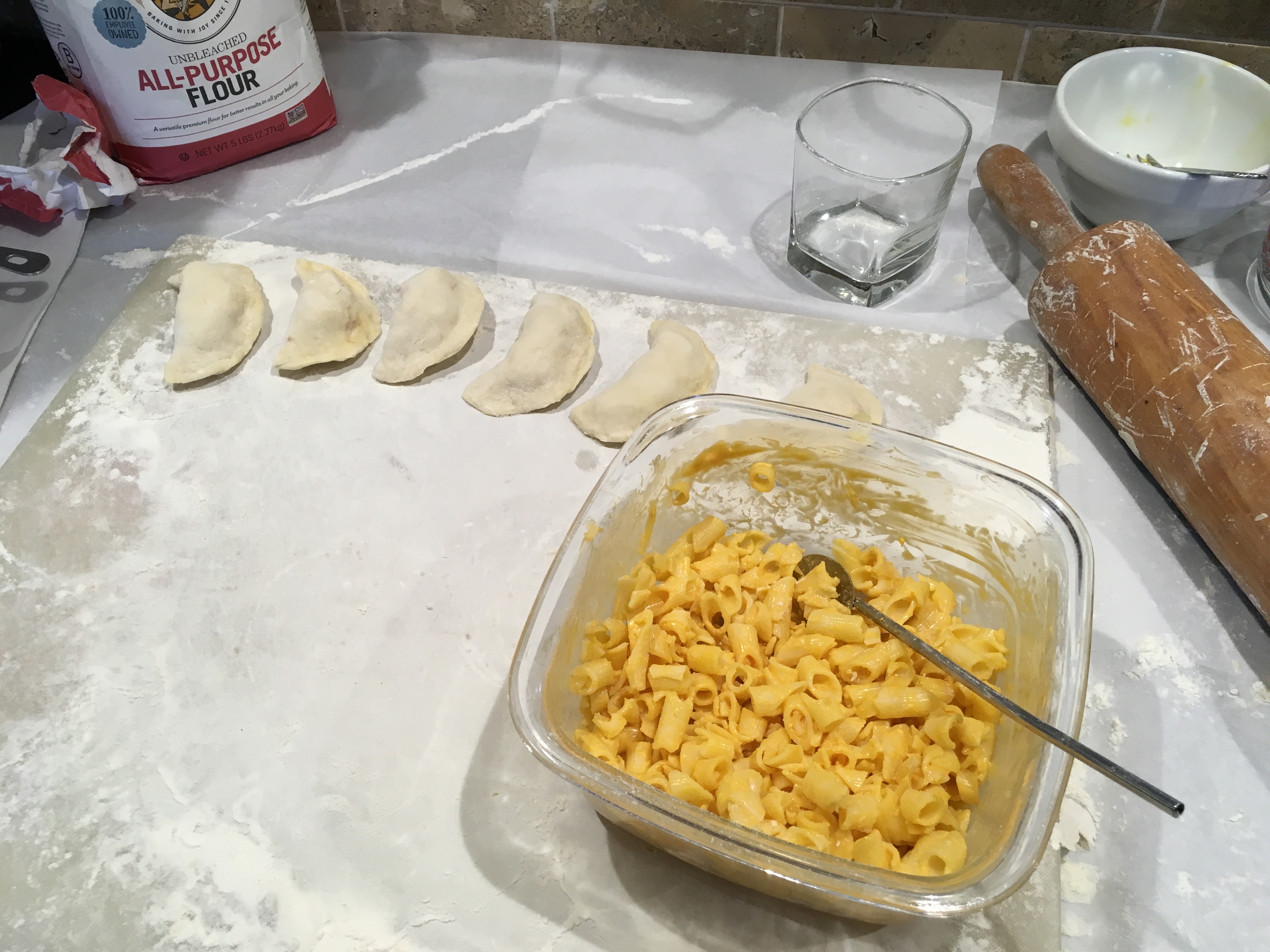
I found that my Mom’s log method was too much work. I rolled the dough out with a rolling pin, then cut with a glass. Yes, that’s mac-and-cheese in the forefront.

A few years ago, I decided it was time to try my hand at making koldūnai. As I recall, my Mom simply mixed water with flour and a little salt to make the dough, kneaded it into a log, and off she went. I decided to go with the rolling pin and glass cutting method, in addition to the ravioli maker, because I wanted to compare the classic crescent-shaped koldūnai with the newer mini’s.

The biggest challenges I had with making my own koldūnai was my clumsiness and lack of experience. Once I got the hang of it, things moved along steadily, and it didn’t take long for me to make a decent batch–not all perfect, but not bad for a first try.

Since my wife is allergic to mushrooms, I had to skip them this time around and used the ground beef filling instead. And, by my daughter’s special request, I also made mac-and-cheese koldūnai. (Patty’s Pierogis, a restaurant in nearby Fall River, Massachusetts, and featured on Food Network’s “Diners, Drive-Ins and Dives,” is where she first had them.)

I keep my fillings, whether it’s the mac-and-cheese or the ground beef, gluten-free, so I can use them in GF as well as regular koldūnai. There’s no difference in the taste. Gluten-free mac-and-cheese is easily found in a box in supermarkets everywhere. Here’s the beef recipe…


1/2 onion, finely chopped
1 pat of butter
1 lb. ground beef
1 egg
1/2 cup breadcrumbs (I use gluten-free)
1/4 cup milk


I make my gluten-free breadcrumbs with Udi’s frozen GF bread that I toast, then chop in a food processor. I think it tastes better than store-bought GF breadcrumbs in a can.

Finely chop the onion and saute it in the butter until translucent. Let it cool, then add it to 1 lb. of thawed ground beef. Add the egg, the breadcrumbs, and the milk. Season with salt and pepper. Mix the ingredients thoroughly and keep the meat in the fridge until you’re ready to use it.


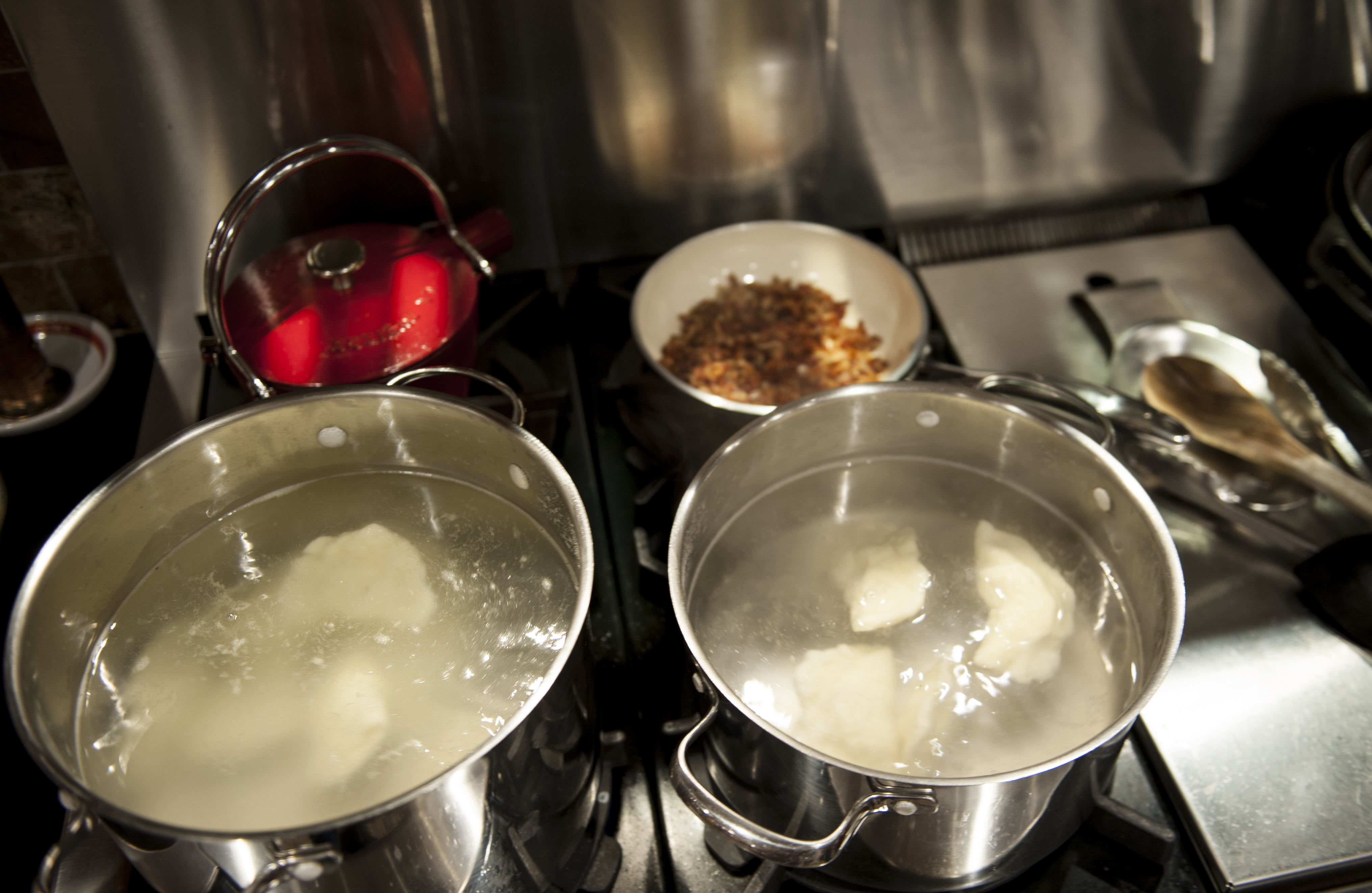
Two pots of boiling salted water: one for the meat-filled koldūnai, and one for the mac-and-cheese filled koldūnai.

Two pots of boiling salted water: one for the meat-filled koldūnai, and one for the mac-and-cheese filled koldūnai.


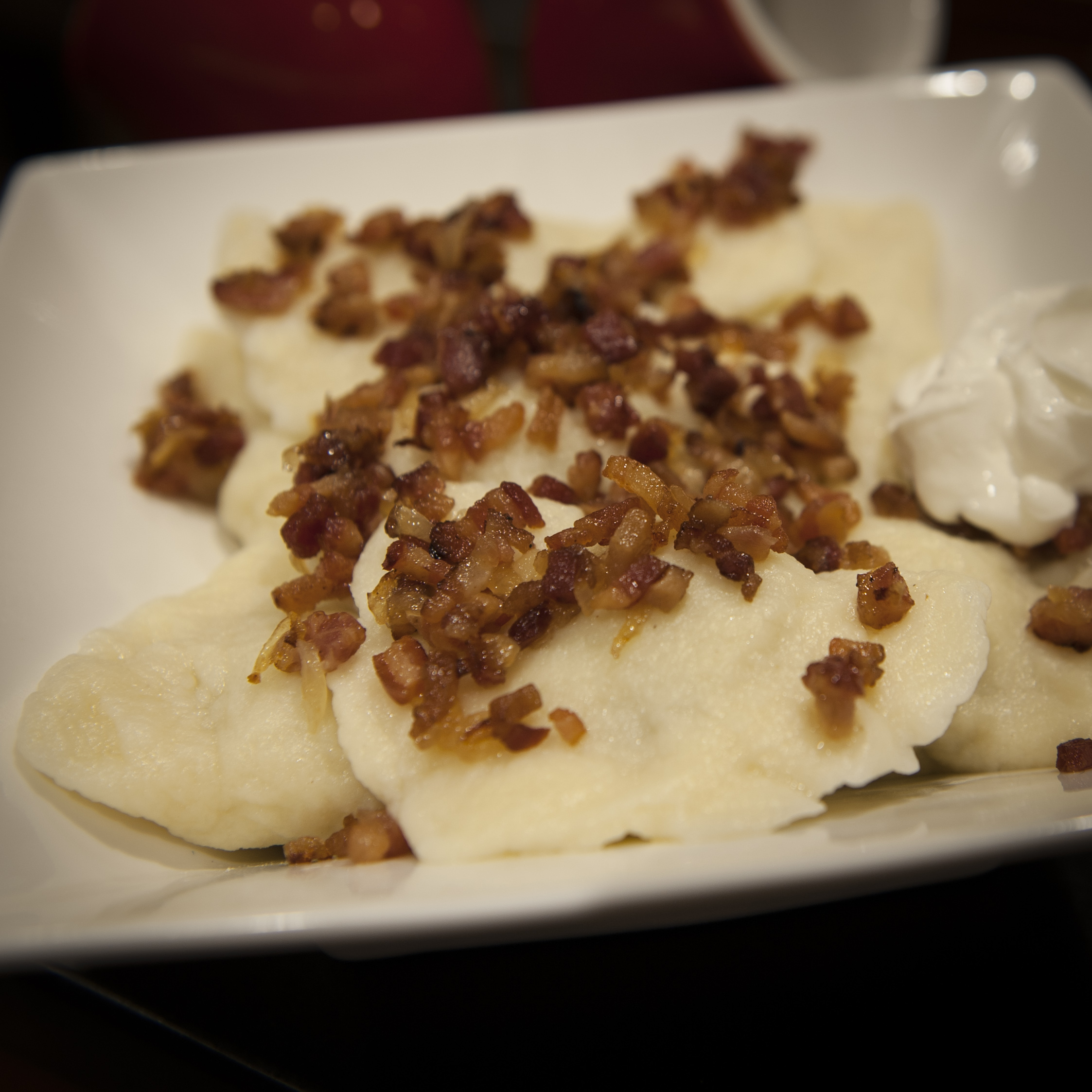
In my childhood home, you cannot possibly serve koldūnai without sour cream on the side and without spirgučiai (spir-guh-chay), chopped and fried bacon and onions that are sprinkled on top.

1 lb. bacon, finely chopped
1 large onion, finely chopped

In a large pan, fry the chopped bacon until it’s almost crisp. I don’t drain the fat, but you can if you’re a wuss. Add the chopped onions and cook until they are soft. Set aside.  (My Mom always kept a stash of spirgučiai in a container in the fridge, and sprinkled them on anything and everything.)


duni 4

Making the dough is simple. I add an egg to my Mom’s original recipe.

2 cups all-purpose flour (gluten-free or regular)
1 cup water
1 teaspoon salt
1 raw egg, scrambled


Combine the ingredients in a bowl, mixing with your hands. Keep adding flour in small amounts until the dough isn’t wet and sticky. When it forms a nice ball, remove it from the bowl and place it on a floured surface and knead it a bit more. Cut the ball into quarters, and work with these smaller pieces of dough.

If you’re using the ravioli maker method, each quarter will  make one sheet of dough for the top or bottom of the ravioli maker. If making them by hand, each sheet will give you about 8 crescent-shaped koldūnai.

For the rolling-pin method, roll each quarter out until the dough is about 1/8″ thick. Using a rocks glass as your cutter, cut circles out of the dough. Add a small spoonful of filling in the center of the dough, then fold the edges over and pinch them with your fingers. Flip it over and pinch again, making sure none of the filling seeps out. A tight edge means the koldūnai won’t break open when you put them in boiling water.

Some stuffed with mac and cheese!


Place the koldūnai on a sheet pan lined with parchment paper, and when you’re done, place the sheet pan in the freezer.

Get a large pot of salted water boiling. Drop the koldūnai in gently, being careful not to overcrowd them. If the dough is thin, the koldūnai will be ready when they float up to the surface. A thicker dough will need longer cooking. The best way to know if they’re done is by taking one out, cutting it open and having a look (and taste!)

When plating, sprinkle generously with spirgučiai, and serve with sour cream on the side.


My conclusion: When all is said and done, the old ways are still the best. Although the ravioli maker did a good job, in many ways it was just as time-consuming. And the finished mini-raviolis did not have the dough-to-filling ratio that I find so satisfying with classically made koldūnai. We sampled both side-by-side, and there really was a difference. I’m sticking with the classic methods for now! Mom will be proud.


The hand-painted Christmas trees in the photos are from our friend, Don Cadoret, an artist here in Tiverton, RI. Check out all of his work at: http://www.doncadoret.net.


It takes a few weeks for this limoncello recipe to be ready, so plan ahead!

Many years ago, my wife and I visited the Amalfi coast, and we spent several nights on the beautiful island of Capri. On our last night, we dined at the legendary Grand Hotel Quisisana, and our incredible meal ended with a glass of the most delicious limoncello I ever had.

I asked the waiter if it was possible to get the recipe of the limoncello, and he made a big deal about the recipe being a “secret.” Though disappointed, I understood, and I left Capri thinking that I would never taste that limoncello again.

Two weeks later, now back at home, I was reading the latest issue of Conde Nast Traveler, and there in black and white, was the Quisisana limoncello recipe! WTF?

After making many batches of this limoncello, I started experimenting with other citrus, and the most successful by far was with grapefruit. Now I make a batch of each every year. Note: the recipe calls for 100-proof vodka. Most vodka is 80-proof, so you’ll need to go to a liquor store with a better selection to find it.


Four ingredients, easy to make. The toughest part is waiting for it to mellow a bit.


4 lbs. lemons, zest only
2 750-ml bottles 100 proof vodka (I prefer Absolut)
5 1/2 cups sugar
6 cups filtered water

Peel the zest off all the lemons, making sure you don’t get any of the white pith that could make the limoncello bitter. Place all the zest in the bottom of a glass jar with a lid that can hold all the vodka.

Pour the vodka on top of the lemon zest pieces, seal the container, and keep at room temperature for a week, swirling the jar around gently once a day.

On the sixth day, combine the sugar and water in a pot over medium-high heat, and stir until all the sugar completely dissolves. Remove from the heat, cover, and let it thoroughly cool to room temperature (overnight is best.)

On day seven, strain the lemon zest, pouring the infused vodka into a clean glass jar. Discard the lemon zest.

Pour the sugar/water mixture into the vodka and mix well.

At this point, you can pour the finished product into individual bottles, but let it mellow for about a month before drinking.

I keep my limoncello refrigerated.

Clam fritters, conch fritters, lobster fritters…I suppose you could fritter anything. But the first time I had them with mussels, I knew that I would never fritter my life away with any other!

It was a fall afternoon in Newport, Rhode Island, at the now-defunct Newport Yachting Center’s annual Oyster Festival. We’re gorging on freshly shucked oysters and clams, boiled shrimp, and…what have we here? I never heard of a mussel fritter before, but once I took a bite, there was no turning back.

They couldn’t be easier to make, but it is crucial to have the right fritter batter. And that starts with a Rhode Island product called Drum Rock fritter mix. If you live in New England, you can find it in just about any seafood department at Whole Foods. If you live further away, you can check out their website (www.drumrockproducts.com) or try your luck with a local brand of fritter mix.

fritter ingredients


If you’re using fresh mussels, be sure to clean them well and remove the beards. Steam them in a pot over a small amount of water. As they open, they will release their flavorful juices and you want to save every drop of that broth for the fritters. Here in New England, frozen mussel meats are available in some seafood stores. All you need to do is thaw them, steam them saving the broth, and you’re ready to go.

For the fritters:
1 lb. fritter mix
2 cups cooked mussel meats
1/2 cup mussel broth (saved from steaming mussels)
1/4 to 1/2 cup good quality beer (I use Sam Adams Boston Lager)
Avocado oil or lard for frying (I don’t use canola or vegetable oils)


Steam the mussel meats until they’re just cooked. Remove the mussel meats, and reserve 1/2 cup of the broth. Pulse the mussel meats in a food processor, but leave ’em chunky…or chop by hand.

Put the fritter mix in a large bowl. Add the mussel meats, mussel broth, and beer. Stir gently until just mixed. Let it sit for 10 to 15 minutes and do not stir again. (If you’ve got guests coming, you can prepare up to this part ahead of time, covering the bowl with a wet towel, and leaving it at room temperature.)

Using a thermometer, heat the oil in a deep pan to 350 degrees, and using a small spoon or scoop, drop the fritters in the hot oil, turning gently, cooking 3 to 4 minutes until golden.

Drain them on paper towels, and season with salt and pepper immediately. Serve right away!


IMG_3043


An easy, delicious dipping sauce:
1 cup mayonnaise
1/4 cup Ponzu sauce

The perfect dipping sauce for these mussel fritters is made from two ingredients: mayo and Ponzu sauce, a citrus-based soy sauce. Combine both ingredients in a bowl. Keep it in the fridge until you’re ready to use it.