The 151st running of the Kentucky Derby is today and although I’m not a big horse racing fan, I am a huge fan of the official drink: the Mint Julep!

The Mint Julep is such a perfect, classic and historic bourbon drink, it seems silly to wait until Derby Day to have one. Of course, as any aficionado of spirits will tell you, there are as many right ways as wrong ways of making one.

The first step in my Mint Julep is making the simple syrup. Learning from one of my old radio buddies, my pal Rick O’B, I infuse mint into my simple syrup to take my cocktail to the next level. I use the standard ratio of 1 cup of clean, filtered water to 1 cup of sugar. I place the sugar and water in a saucepan and heat until just boiling. I’ve found that it needs to reach this stage for the sugar to really dissolve.

Waiting for the sugar to dissolve.

As soon as it starts to boil, I remove the saucepan from the heat, and throw in a handful of freshly picked mint leaves, stirring to make sure the mint gets in there, and then I leave the saucepan to cool to room temperature.


Once it’s at room temp, I strain the simple syrup into a bottle with a tight sealing lid, and place it in the refrigerator to cool. It will keep for about a week.

An equally important ingredient for a perfect Mint Julep is the ice: specifically, crushed ice from clean, filtered water. Don’t even think of using tap water for any cocktail much less this one. Why ruin an expensive bottle of bourbon by going cheap on the ice? I make my own ice cubes, then put them in an untreated canvas ice bag and bash them with a mallet to the perfect crushed size. But if you don’t want to go through all the trouble, just buy a bag of good ice. Untreated canvas bags for crushing ice can be purchased online from bar supply companies for about $30. I got an untreated canvas tool bag (the exact same shape and size) at Home Depot for 3 bucks.


Da bag.


The next step is a little tougher: which bourbon to choose. The explosion of choices on the bourbon market has made it all but impossible for the average imbiber to know which bourbon is best for their tastes. If you’re a beginner, I suggest you go to a trusted bartender and explain that you’re new to the bourbon world, and could you have the tiniest of tastes and sniffs of what he’s got at his bar. Chances are, you’ll get a sampling of some of the better known brands: Maker’s Mark, Woodford Reserve, perhaps Buffalo Trace or Bulleit, and the standard Jim Beam. This is a very good start. (Also, hinting to wife and friends that “I’m trying new bourbons” around your birthday or Father’s Day inevitably gets you a few bottles as well!)

My go-to bourbon for Mint Juleps used to be Eagle Rare 10-year-old when it was around $32.99 a bottle. Now it’s up to $80! My latest go-to bourbon is 1792 Small Batch. At $29, it’s almost unbelievable, like someone made a mistake in the stock room! Very tasty on its own and great for mixing. Others that work well and are around the same price range include Buffalo Trace, and Larceny.

Finally, a Mint Julep needs a metal–not glass– Julep cup. Made of pewter or aluminum, it frosts on the outside as you stir your drink, keeping your beverage ice-cold on even the hottest of days.


3 oz. bourbon
1 oz. mint-infused simple syrup
crushed ice
Julep cup
Fresh mint for garnish

Crush the ice and pack it into the Julep cup, even letting it dome slightly over the top. Don’t worry…the alcohol will melt it.

I like to add 1.5 ounces of bourbon, then the ounce of simple syrup, another 1.5 ounces of bourbon on top, and then a quick squirt of simple syrup to top it off. Break off a few mint leaves from the stem and push them into the ice. A beautiful layer of frost will form on the outside of the cup. Add more ice, if necessary, and garnish with a sprig of mint.


A nice selection of bourbons. This is an old photo: that Pappy Van Winkle is long gone…but I saved the bottle!


So much bourbon, so little time!


Lamb seems to be one of those meats that people either love or hate. Growing up in a home where my Mom served it pretty often, and did a pretty good job of cooking it, I happen to love it, and actually crave it now and again.


I buy much of my meats from Cooks Venture, a company that humanely raises a special breed of chickens, and also sources high quality meats from all over the world.

When I saw a New Zealand boneless lamb shoulder roast on their website, I had to buy it. Though New Zealand lamb can be a bit gamey to many people, I love that flavor, and there is no better quality of lamb than that from the land of the kiwi.


I knew I wanted to marinate the roast, and there was no way the marinade would penetrate into the meat if it was rolled and tied like it came in the package. So I decided to cut the string that wrapped the lamb roast, and unroll it, so that every inch of that lamb would make contact with the marinade.

Tied…


Untied and unrolled.


Once I marinated the lamb overnight, I rolled it back up, retied it as best I could, and cooked it in a 350 degree oven until the roast registered 120 degrees on my meat thermometer: medium rare.

I finished the lamb on my outdoor grill over hardwood charcoal to get a little smokiness and char.

The marinade I used can be used for any cut of lamb you might want to cook. (I love the small lamb chops that look like mini t-bones. Their flavor is incredible.)

1/2 cup olive oil
1/2 cup balsamic vinegar
1 tablespoon fresh rosemary, chopped
1 tablespoon fresh thyme leaves, chopped
1 tablespoon Kosher salt
1 tablespoon maple syrup
1 tablespoon Dijon mustard
1 teaspoon black pepper
1 teaspoon dried oregano
3 cloves garlic, sliced thin

Combine all the marinade ingredients in a bowl, mixing well.


Lamb and marinade ready for an overnight in the fridge.


Place the lamb in a Ziploc bag, and pour in the marinade. Seal the bag tightly, squeezing any excess air out of it, and squish it around carefully, so that the marinade makes contact with every part of the lamb.

Place the bag on a pan (to prevent accidents in the fridge) and place it in the fridge overnight. Give it a squish every few hours if you can.

The next day, remove the pan from the fridge and let the lamb come up to room temperature.

Pre-heat the oven to 350 degrees.

Carefully remove the lamb from the bag (I do this over the sink), discarding the marinade.


Marinated, seasoned, re-rolled and re-tied. Ready for the oven.

If you’re using an unrolled lamb roast, like I did, roll it our flat on a cutting board and season it with salt and pepper.

Carefully roll the roast up the way it was originally and tie it with string, as best you can.

Place the roast on a baking sheet and bake it until the meat reads 120 degrees on a meat thermometer…that’s medium-rare.

Out of the oven and onto the grill…


While the roast is in the oven, start a hardwood charcoal fire.

When the roast is out of the oven, place it on the grill and grill it on all sides until it has some nice grill marks and char.


Let the roast rest for at least 15 minutes before slicing. (Cut the strings off before you do.)


When I first told my friends that I grew up in a Lithuanian family, that we only spoke Lithuanian at the dinner table, that I went to Lithuanian Saturday school for 8 years, that I was a Lithuanian boy scout…they looked at me with a bit of disbelief. On the surface, I looked just like any other American-born kid that grew up in the suburbs. But the home life was vastly different.

Few things were stranger to my friends than the food we ate. While all my “American” friends had PB&J’s for lunch, I had a liverwurst sandwich on dark Lithuanian bread. While my friends struggled with broccoli, I was force-fed beets. And while my friends ate macaroni with jarred tomato sauce or Kraft mac & cheese, my Mom served us macaroni with sour cream and butter. (Nobody called it pasta back then.)


img_0048


Few things prove you are a true Lithuanian more than an appetite for herring. (Silke (sil-keh) in Lithuanian.) I loved it at an early age. Didn’t matter if it was in a cream sauce with onions, in a tomato casserole with chopped boletes, or perhaps my favorite: this appetizer my Mom prepared only twice a year when my Dad’s buddies came over to play rounds of bridge all night.

Years later, when I was just out of college and in my first years of radio, I shared an apartment with my college buddy, Don. One evening, I prepared this dish for him when he came home from work. We both had the next day off (smart move, considering the vodka!) and I explained to him my family history behind this strange-looking appetizer. (I don’t think he’d ever had herring before.) Though it looked bizarre, he knew he had to trust me when it came to food, and he popped one of those bites into his mouth. I could see he wasn’t sure whether he liked it or not…a moment of many sensations hitting him all at once…confusion in his eyes…do I spit it out or swallow it?…so I poured him the vodka. He swallowed the food…took a shot of the vodka…and instantly had a moment of clarity. It all came together. It was indeed magical. I’ll never forget that look on his face!

There are a few basic ingredients that make this appetizer work…

First and foremost, you need a bottle of good vodka in the freezer. Despite their lack of love for anything Russian, Lithuanians like their vodka, and Stolichnaya was my Dad’s favorite back in the day. Even now, with hundreds of vodkas to choose from, I still go to the red-labeled Stoli bottle for this dish. (Though it’s now distilled in Latvia.) I find a space in the freezer…jam that bottle in there…and let it get nice and cold.

Obviously, good quality herring is essential. Though I can get them fresh when I’m back home on Long Island, the usual choice is from a jar. For me, there’s no better quality than Acme products out of Brooklyn, NY. (If you saw the episode of “Bizarre Foods America” with Andrew Zimmern where he visited a salmon processing plant in Brooklyn, that was Acme Smoked Fish.) You can find them in many supermarkets. The excellent Blue Hill Bay herring in dill sauce is an Acme product and can be found at Whole Foods.

Next: hard-boiled eggs that have cooled in the fridge. Get out the old egg slicer that’s been sitting in the kitchen drawer for the last decade and use it for this appetizer.

Red onion, sliced thin. How much you use is up to you. But it’s gotta be red and it’s gotta be raw.

And finally, Lithuanian bread. Yes, there is such a thing. It’s easy to find in most Polish or German food stores in the New York area. I also recently discovered an Eastern European food store in Hyannis, on Cape Cod, where I can stock up . I buy a loaf and then keep it in the freezer to enjoy throughout the year. Lithuanian bread is like the lovechild of rye bread and pumpernickel, so either one of those will work in a pinch.


img_0051

To make the appetizer, simply place a small piece of Lithuanian bread, about 1 1/2″ square, on a plate. Place a slice of hard-boiled egg on top of it. On top of that, some red onion. Then finally, a piece of herring.


img_0046


Pop the whole thing in your mouth, and wash it down with a small amount of frozen vodka. No shots–this isn’t a frat house. Besides, you won’t make it to the end of dinner. Then again, you may not care at that point!

I never learned how to play bridge, but I’m sure my Dad would be proud that I remembered this treat.

A COUPLE-A CHUCK ROASTS

Posted: April 27, 2025 in Uncategorized
Tags: , , , ,

Chuck roast is an inexpensive cut of beef, but it requires a little TLC to make it tender and tasty. I had a couple of grass-fed chuck roasts in the freezer, and decided to try two different ways of seasoning them before cooking them low and slow.

With the first, I used Asian spices…

2 lb. chuck roast, preferably grass-fed
1 tablespoon Chinese five spice
1 tablespoon Kosher salt
1 tablespoon granulated onion
1 tablespoon granulated garlic
1 teaspoon black pepper
2 tablespoons hoisin sauce
1 teaspoon sesame oil

Pre-heat the oven to 250°.

Let the chuck roast come to room temperature before cooking.

Combine the Chinese five spice, salt, onion, garlic and pepper in a bowl.

Rub the spice mixture all over the chuck roast, and then wrap the roast in aluminum foil. Place the foil in an oven-proof pan and bake the chuck roast for about 2 hours, until it’s tender. Carefully pour of the fat before the next step.

In a separate bowl, mix the hoisin sauce and sesame oil, and brush it all over the chuck roast. Put the roast back in the oven, uncovered, for about 15 minutes, until a nice glaze forms on the meat.

Let it rest for 15 minutes. Slice the chuck roast on the diagonal for maximum tenderness.

With the second chuck roast, I went with Italian style seasonings, also with tasty results.

2 lb. chuck roast, preferably grass-fed
olive oil
1 tablespoon Kosher salt
1 tablespoon granulated garlic
1 tablespoon granulated onion
1 tablespoon oregano
1 teaspoon black pepper

Pre-heat the oven to 250°.

Rub the chuck roast with olive oil, and then rub the spices all over it, placing it in the foil and wrapping it. Place the foil in an oven-proof pan and bake it for about 2 hours, until tender.

Carefully pour off the fat, and let the meat rest for 15 minutes before slicing on the diagonal.

ROASTED POTATOES

Posted: April 26, 2025 in Uncategorized

As much as everybody loves mashed potatoes, these potatoes take things to the next level. The crunch on the outside, and the softness on the inside of these potatoes, is hard to beat.

I like using small, whole organic potatoes for this recipe. No peeling needed. Just give them a good rinse, then put them in a big pot of water, bring it to a boil, and cook them until they are fork tender.
Drain the potatoes into a colander, and let them sit there for a few minutes to dry out.
Meanwhile, preheat the oven to 350°.
Get a baking pan and pour in a little bit of olive oil, a splash of red wine vinegar, salt and pepper, and some chopped fresh rosemary.
Dump in the potatoes, and toss all of the ingredients together.

They look a bit like olives!

Place the pan in the oven and bake for 30 minutes.
After 30 minutes, take the pan out of the oven and gently squash the potatoes with a flat object, like a glass. (I used my mint julep cup!) Toss them around again in the pan, and then return it to the oven for another 25 to 30 minutes.

The crunch, the texture of these potatoes is unreal!

When I gain some weight and need to go back on the diet, one of the major changes in my eating habits is to incorporate more seafood and less meat into my meals. Seafood has a lot more protein and fewer calories. In fact, shrimp, lobster and oysters are some of the most delicious low-calorie foods you can enjoy, running about 1 calorie per gram. It’s what you add to them–oils, melted butter, batter–that make them high in calories.

I’ve always loved sushi, but again, on a diet, I need to limit my intake of unnecessary calories, and rice is on that list. I’ve found that I can use a lot less rice, or maybe none at all, when I make poke…and I get all the satisfaction of sushi or sashimi.

My two favorite fishes to eat raw are ahi tuna and wild-caught Alaskan salmon, like sockeye. There are many great purveyors of this super-high quality seafood online, and I usually buy a decent amount of fish at one time–hermetically sealed and frozen in 4-ounce packages–to last me a long time. (The price is often much better when you buy in quantity, because they have to be shipped frozen overnight.)

Yes, please.


There are many ways to prepare poke, and the only limitations are what’s in your fridge. The first recipe, using salmon, is closer to a traditional poke recipe you’d find in a restaurant.


6.5 ounces wild-caught Alaskan salmon, in the refrigerator (thawed, if previously frozen)
1 tablespoon soy sauce
2 teaspoons sesame oil
1 teaspoon rice vinegar
1/2 teaspoon fresh lemon juice
1/3 cup chopped raw cashews
1 scallion, green and white parts finely chopped

Keep the thawed salmon in the refrigerator. Remove the salmon from the fridge, and remove the skin if it is still on the fish. Cut the fish into half-inch cubes. I like to place the salmon cubes on a clean paper towel to absorb excess moisture from thawing. Then I place the salmon cubes in a bowl and put it back in the fridge while I combine the other ingredients.

In another bowl, combine the soy sauce, sesame oil, rice vinegar, and lemon juice. Whisk them together.

Chop the cashews and add them to the bowl, mixing them in.

Cut the root ends off the scallions, chop the green and white parts finely, and add them to the bowl, mixing them in.

Add the salmon to the bowl, mixing gently, so that you don’t damage the fish.
Let it sit for 10 to 15 minutes, if you can wait that long, and then: eat!
My tuna poke recipes have also used similar ingredients…
More recently, I mixed up a batch of what I call my “Asian Mix,” a blend of five Asian flavors that really work well together: soy sauce, hoisin sauce, chili garlic sauce, rice vinegar, and sesame oil. I let my tuna or salmon marinate in this mix for about ten minutes before adding the other ingredients and feasting.

Tuna poke with lettuce, onion, pine nuts, black and white sesame seeds, rice and my “Asian Mix.”

But my proudest achievement was taking my favorite sandwich from my home town of New York, and making it into a bowl. The sandwich is an everything bagel with salmon and cream cheese, and my poke version uses just a bit of the bagel, yet you still get the flavor without all the calories. The secret is a seasoning you can buy already prepared.
3 oz. wild-caught Alaskan sockeye salmon, cubed
1 tablespoon capers
1/2 small Vidalia or sweet onion, sliced very thin
1/2 tomato, seeds removed, sliced thin
1/4 of a toasted plain bagel
1 tablespoon cream cheese
2 teaspoons Everything Bagel seasoning
1 chopped hard boiled egg
Cut the salmon into small 1/2″ cubes and place it in a bowl. Add the tablespoon of capers (including some of the brine), chopped onion and tomato. Mix gently.
Toast the bagel and use only 1/4 of it (I use that little for the sake of calories. But you can use more, if you like!) Spread the tablespoon of cream cheese on the toasted bagel, then carefully chop it up into small cubes. Add this to the bowl. Sprinkle in the Everything Bagel seasoning and the chopped hard-boiled egg, and give it all one last gentle toss.
Then take a forkful, close your eyes, and imagine you’re in your favorite New York deli!

ONE TON OF WONTON

Posted: April 20, 2025 in Uncategorized
Tags: , , , ,

I love wonton soup. So every once in a while, I make my own version of it in large batches at home. The great thing about wonton soup is you can put whatever you want in it. After all, it’s your recipe.

I use whatever homemade stock I happen to have in the freezer. I’ll go out and buy some veggies, but I also use whatever veggies I might happen to have in the fridge that need to be used up. And I use a LOT of them.

I always have Asian spices and seasonings in the fridge or on the shelf, so that’s never a problem. And then it’s a matter of meat or seafood, or in this case, a little bit of both.

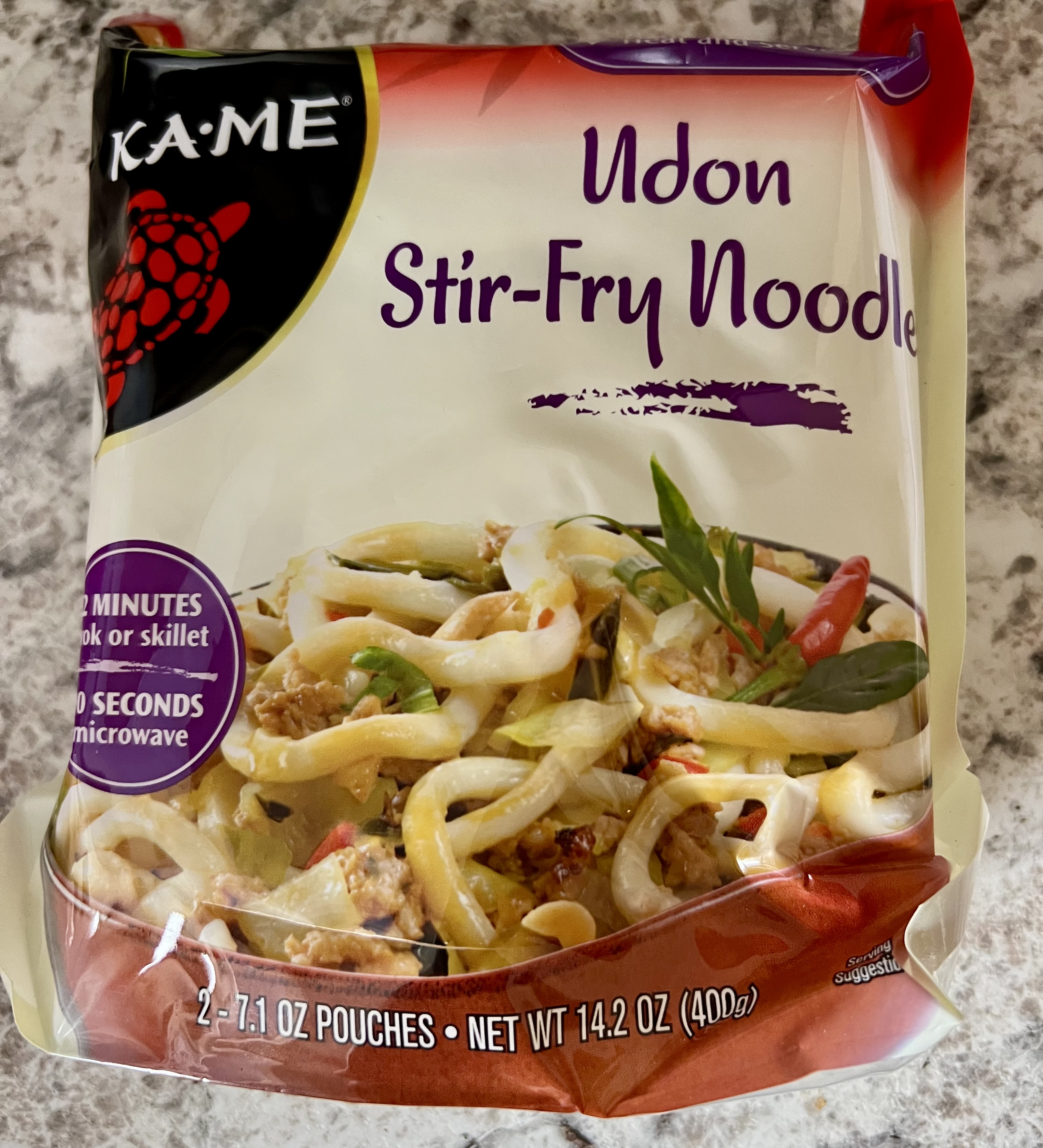
I had homemade chicken and pork stock in the freezer, so those went into the pot. I had a couple of pork chops in the freezer, so I decided to use those. I also had some frozen shrimp. And my cheat is frozen chicken dumplings, which add great flavor and pasta to the soup.

I found these at my local store, but any dumplings you like will work.

There are no exact measurements for this, because it really is based on what you have, how much you want to make, and what flavors you like. But this is the basic rundown of how I made my last batch…

16 ounces homemade chicken stock
8 ounces homemade pork stock
24 ounces water
2 medium onions, diced
2 carrots, diced
1 medium head of broccoli, chopped
1/2 head of a medium cabbage, finely sliced
2 6-ounce boneless pork chops
soy sauce
hoisin sauce
Chinese garlic sauce
rice vinegar
sesame oil
oyster sauce
frozen peeled and deveined wild-caught American shrimp
frozen chicken and vegetable dumplings

I thawed the chicken and pork stock and poured it into a large pot along with the water. I put it on high heat.

I diced the onions and the carrots and put them in the pot. I chopped the broccoli and put it into the pot. I prefer to slice the cabbage thinly with a knife, so that it still retains some texture. I put that into the pot.

I let the pot come to a boil and let it roll until the veggies started to get tender.

Meanwhile, I thinly sliced the two pork chops into strips and placed them in a bowl. I added the soy sauce, hoisin sauce, chili, garlic sauce, rice vinegar, and sesame oil to the pork and tossed it around it to marinate.

While the veggies were boiling, in a frying pan, I added some oil and stir-fried the marinated pork. Once it was nice and caramelized, I poured it into the pot with the veggies.

It’s very easy to overdo the salt with this recipe, so I seasoned as I went, adding a little more soy sauce, hoisin, and oyster sauce, tasting all the time.

Once the veggies became tender, but still had a bite to them, and the liquid in the pot had reduced a bit, the soup was officially done. It was at this point that I decided what else I wanted to add to it.

For this particular meal, I decided I wanted the shrimp and the dumplings. So I took a handful of frozen shrimp, cutting them into smaller pieces, and put them in the bottom of a sauce pan. I also took about a dozen of the frozen dumplings and added them to the same sauce pan.

Because there is a lot of soup in the large pot, I ladled out the amount I wanted into the sauce pan with the frozen shrimp and dumplings, and brought all it to a boil over high heat. The dumplings cooked in just a few minutes, and the shrimp even more quickly than that. The soup was done.

Because the dumplings cook so quickly, as does the shrimp, I chose not to add them to the large pot, because reheating the soup would make all of that mushy. When I reheat the soup, I can add new batches of dumplings and shrimp, so that they are perfectly tender and flavorful. (Or simply leave them out altogether, depending on my mood.)

I put some of the leftover soup in containers to freeze, and some in the fridge to enjoy the next day, reheating it with whatever ingredients I chose the next time.

BLUEBERRY NEGRONI

Posted: April 18, 2025 in Uncategorized

I recently read a recipe where a chef infused blueberries in gin for a barbecue sauce. As interesting as that was, I thought it would also be interesting to use that infused gin in a Negroni, and I was right! The blueberries round the drink out and don’t overpower the drink.

I used frozen wild blueberries for this, because the farmed ones just don’t have the flavor.

I used Bluecoat American Dry Gin for this recipe, because that’s what I had! I don’t think you need to spend big bucks on a fancy gin for this recipe. Another excellent choice would be a somewhat neutral gin, like Ford’s gin, from England.

16 ounces gin, your favorite brand
1/4 cup frozen blueberries

I poured the gin into the mason jar, and added the blueberries. I let the flavors infuse for several hours at room temperature. Then I strained the blueberries out of the gin.
I put the blueberries in a sealed container in the freezer, where they got cold, but didn’t freeze solid. I skewered them as a garnish for the drink. (Of course, if you want, you can just eat them!) I keep the gin in a sealed jar in the refrigerator.

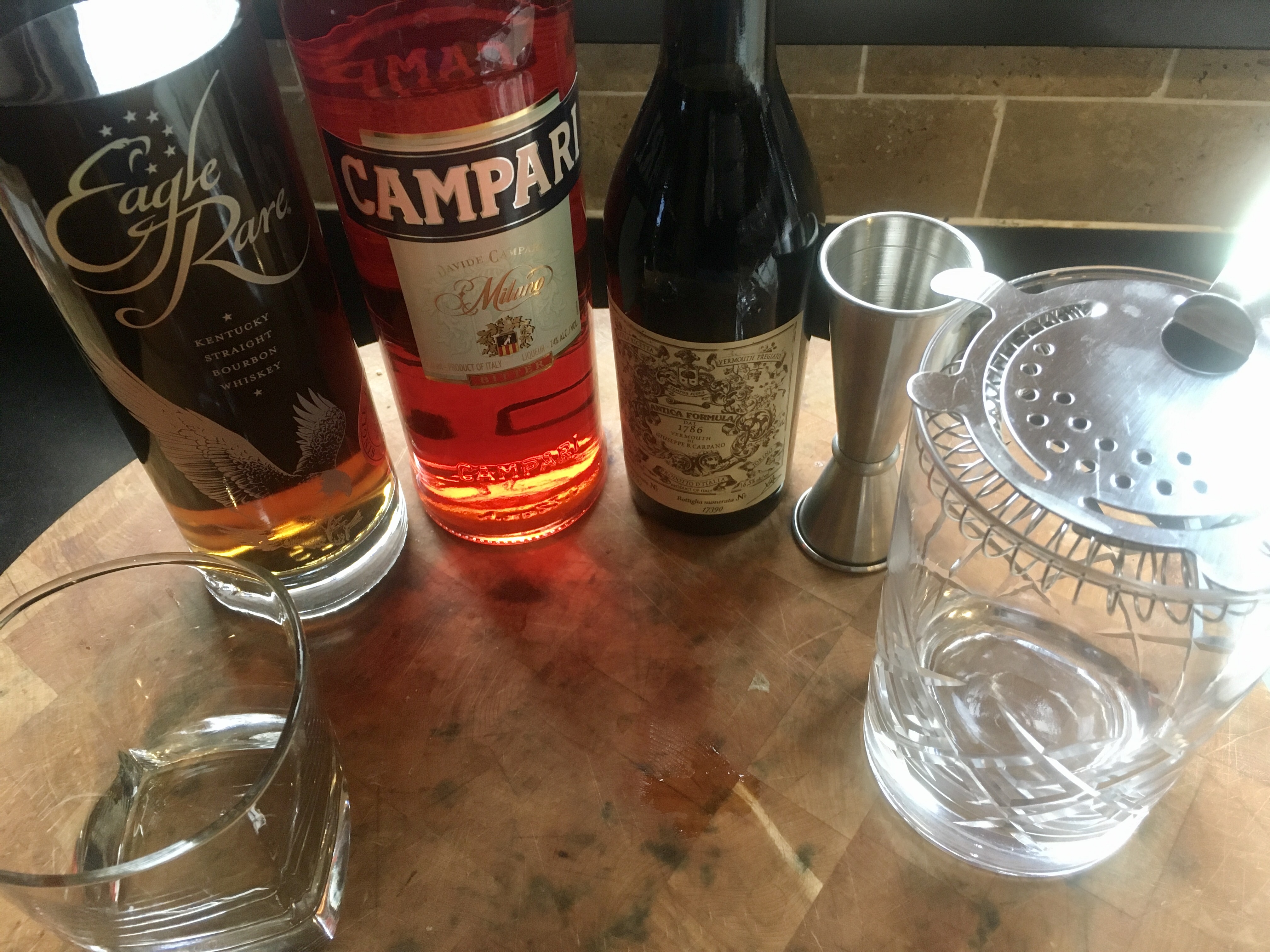
For my Negroni, I don’t use the standard 1-1-1 ratio, because I want a real drink!

3 ounces blueberry infused gin
1 ounce Campari
1 ounce sweet vermouth, preferably Antica Formula or Cocchi

Combine the ingredients over ice, and stir well.

Get a rocks glass, and put a big cube in it. Strain the Negroni into the glass with the big cube. Skewer as many blueberries from the infusion as you like to top the drink off.

NEPTUNE OYSTER, BOSTON

Posted: April 16, 2025 in Uncategorized

If you’re a fan of movies based in Boston, you’ve probably seen Neptune Oyster and didn’t even know it. This landmark in Boston’s North End has been featured in films like “The Town,” “The Equalizer,” “Good Will Hunting,” “The Departed,” and many more.

My friend, John, who lives in the Boston area and knows the town, suggested we go there recently to enjoy some incredible seafood. And incredible, it was. Sure, we stood on line for over an hour outside, since they don’t take reservations, but once we were inside, it was worth it.

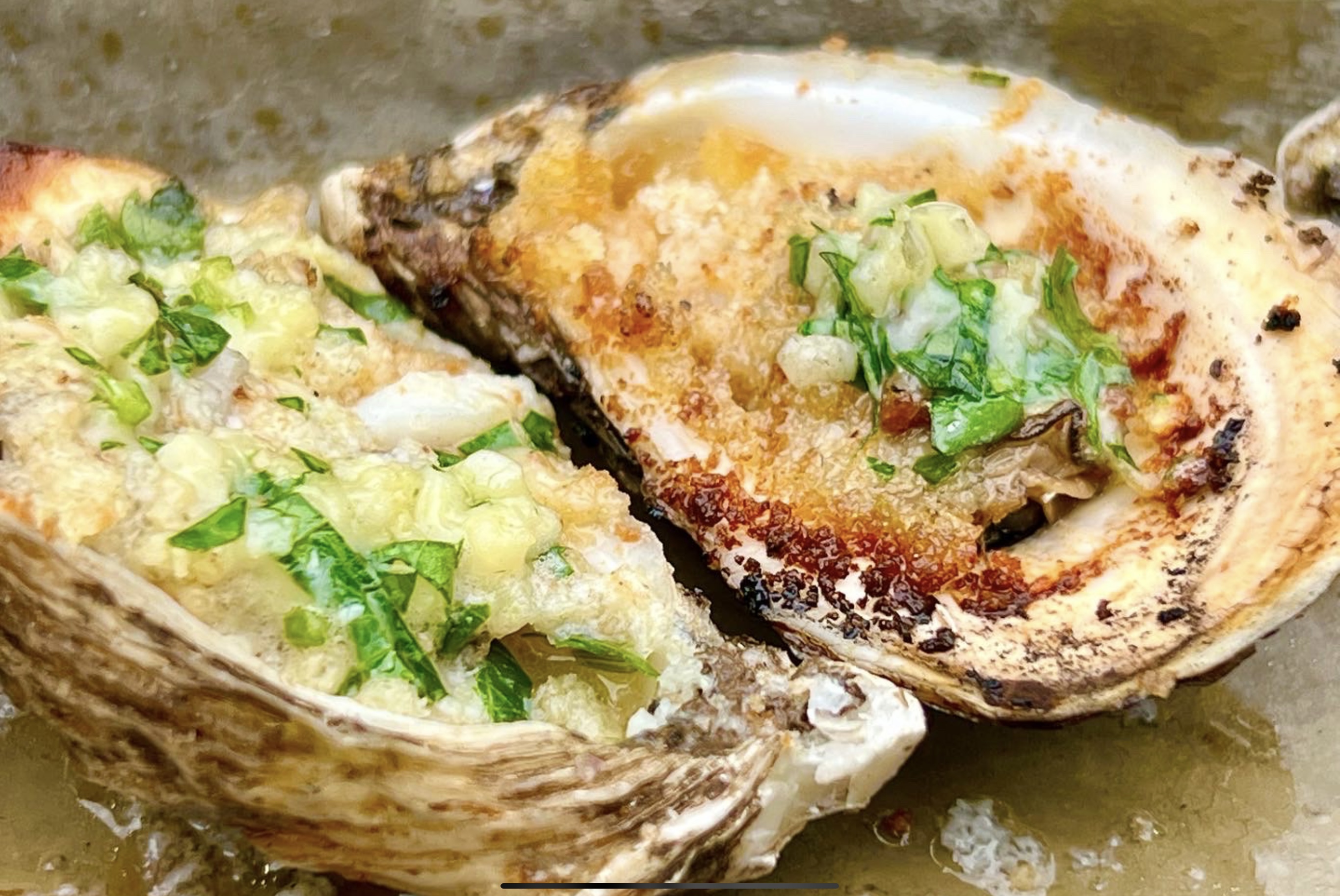
We had oysters, crudo, lobster cocktail, and lobster pasta, along with some craft beers for John and Txakoli, a wonderful refreshing white wine from the Basque region of Spain, for me.


Great food and drink, lively conversation, and atmosphere that was buzzing right up until closing time, made for a great night! This is one place to return to!

ASIAN-STYLE PORK CHUNX

Posted: April 12, 2025 in Uncategorized
Tags: , , , ,

These delicious “chunx” of pork are full of fantastic Asian flavors and go great with broccoli and rice…or just by themselves. Plus, I used inexpensive boneless pork sparerib meat, which saves a few bucks.

3 pounds boneless pork ribs
1/2 a large onion, diced
1/2 cup soy sauce
4 tablespoons hoisin sauce
1 teaspoon Chinese chili garlic sauce
Zest and juice of 1 lemon
2 star anise
2 cinnamon sticks
1/2 cup maple syrup
4 cups chicken broth, preferably homemade

This recipe is similar to my Asian bacon recipe, only it uses a cheaper, easier to find, cut of pork: boneless sparerib meat. You can usually find packages of this meat in a 3-pound size at most supermarkets.

The rib meat is fatty, however, and often has some gristle. So I trim as much of that away as I can to keep the tasty bites tender. 

I cut the pork into 1-inch cubes, and toss them in a bowl with the diced onion. I add the soy sauce, hoisin sauce, and Chinese chili garlic sauce to the bowl and mix everything really well.

I will let the pork marinate for 2 hours at room temperature, remixing every half-hour or so. (If the pork needs to stay out longer, I put it in the refrigerator, bringing it back to room temperature when I’m ready to cook.)

I preheat the oven to 350°.

I line a baking pan with nonstick aluminum foil and place the pork and onion pieces on it in a single layer, reserving any leftover marinade for later.

I bake the pork and onions for 30 minutes.

While the pork is in the oven, I get a large pot and place the lemon zest, lemon juice, star anise, cinnamon sticks, maple syrup, and chicken broth in the pot. I bring it to a boil, then reduce it to a simmer.

After the pork and onions have cooked for 30 minutes, I remove them from the baking pan and place them in the pot, pouring in all the juices that might be in the baking pan. At this point, I can add any leftover marinade into the pot as well.

Bringing the heat under the pot back on high, I continue cooking until the liquid in the pot starts reducing. As it reduces, I turn the heat down as well, so I don’t burn any sugars in the pot. I stir the pork pieces once in a while.

Soon, the liquid will be reduced to a glaze. I keep tossing the pork in that glaze until it looks nice and shiny and gooey and sticky. And that’s when they’re ready!

Serve the pork chunks immediately!