REUBEN SEUP

Posted: October 12, 2016 in bacon, cheese, Food, Recipes, sauerkraut
Tags: , , , ,

As the weather gets cooler here in Southern New England, nothing sounds better than a hot bowla soup and a sandwich!

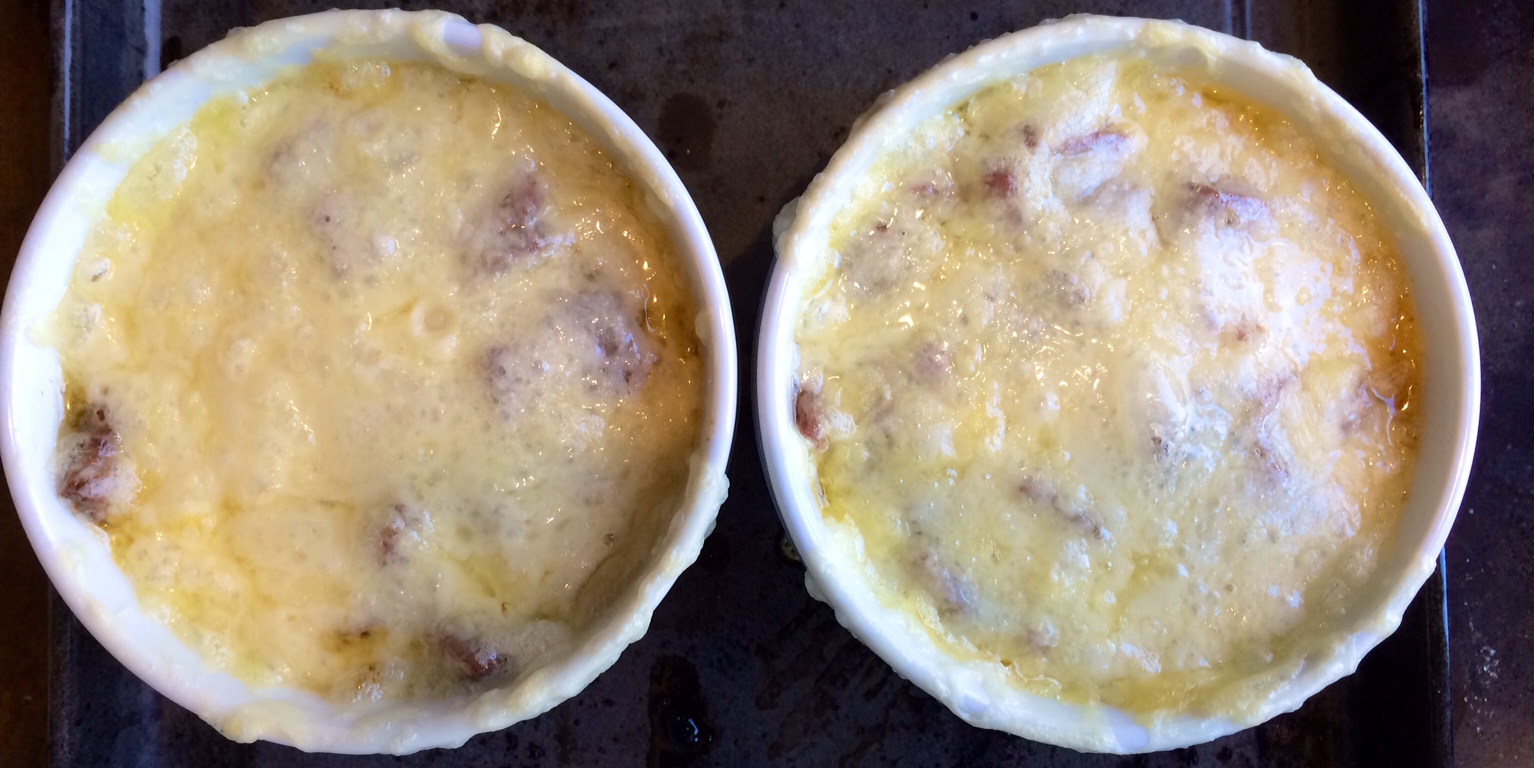
But why have soup and a sandwich when your soup can be your sandwich? I had all the ingredients to make a Reuben sandwich. But I wanted soup. So I made Reuben Seup…I mean Soup!

Think French onion soup, but using Reuben ingredients…

rye

Take an oven-proof soup bowl. Line the bottom with some rye bread.

kraut

On top of that, place a nice helping of sauerkraut. I use sauerkraut that’s been rinsed and drained, then sauteed with some onions and bacon until lightly caramelized.

stock

Slice pastrami as thinly as possible, and simmer it in a pot of homemade chicken stock until tender. Season stock with salt and pepper, if needed. Pour the stock and pastrami over the sauerkraut.

swiss

Layer slices of Swiss cheese over the top of the bowl. Place under broiler until melted.

melty

Eat!

eat

It satisfied my soup and sandwich craving!


Yesterday, October 6th, was National Noodle Day. But I find any excuse to chow down on a great noodle dish!

There’s something about Asian noodle dishes that make them incredibly addictive. They’re great hot or cold, and easy to make at home, which is important to me because I live in the boonies, about 30 miles from my favorite Asian restaurant. I store an arsenal of basic Asian ingredients in my pantry, so slapping this together is no effort at all.


Asian noodles


4 tablespoons creamy peanut butter
2 teaspoons sesame oil
2 tablespoons Satay sauce
1 teaspoon Chinese chili garlic sauce
12 oz. package Chinese noodles (use rice noodles to make it gluten-free)

Combine the peanut butter, sesame oil, Satay sauce, and chili garlic sauce in a bowl. Set aside.
Boil the noodles until al dente. Drain.
Mix noodles with the sauce. Devour.

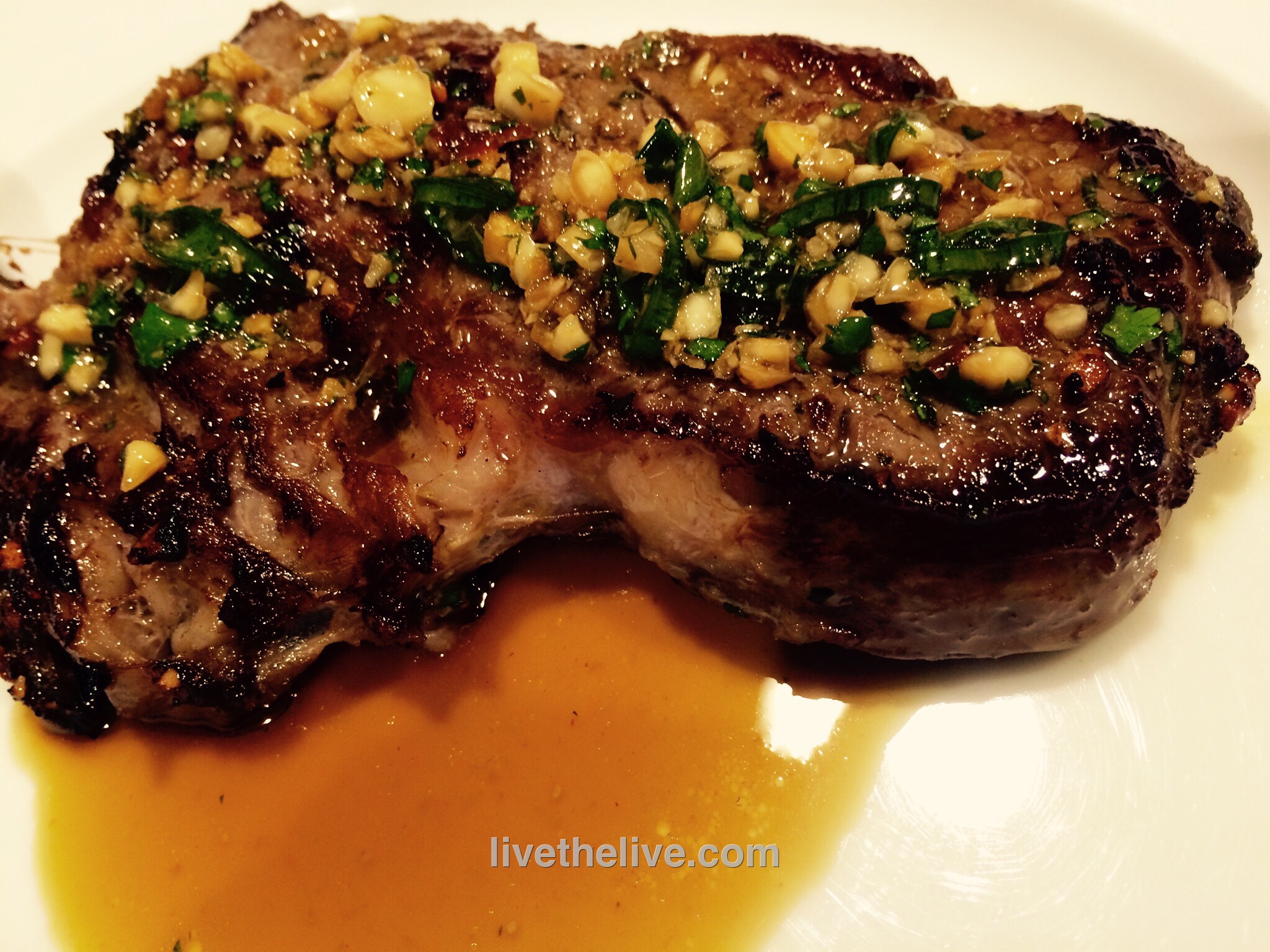
Ideally, a thin cut like a skirt steak works best for this recipe. But I didn’t have any in my freezer. What I did have was a fat ribeye, so once I thawed it, I sliced it lengthwise to get two large, thin steaks which would easily suck up the marinade I was going to make. And the ribeye was nicely marbled, so it stayed juicy and tender.

image


1/4 cup toasted sesame oil
1/4 cup soy sauce
2 tablespoons each finely chopped ginger, garlic, cilantro and unsalted dry roasted peanuts
2 scallions, minced
1 tablespoon each of light brown sugar, lime juice and chile oil
2 lbs. beef ribeye
1/4 cup chicken stock

To make the marinade, whisk together the sesame oil, soy sauce, ginger, garlic, cilantro, peanuts, scallions, sugar, lime juice and chile oil in a bowl. Transfer half of it to a shallow dish.
Add the steak to the dish and turn to coat well with the marinade. Cover and refrigerate overnight. Refrigerate the remaining marinade.
The next day, light a grill. While it’s warming up, add the chicken stock to the reserved marinade. This will be the dipping sauce for the beef. (I like it at room temp.)
Take the steak out of the fridge and bring it to room temperature. Season it with salt and pepper, and grill it over high heat until medium-rare, about 5 minutes.

If it’s too cold to light a grill, heat a cast iron pan, add a few drops of avocado oil, and sear the beef on both sides before placing it in a pre-heated 375-degree oven to finish cooking.


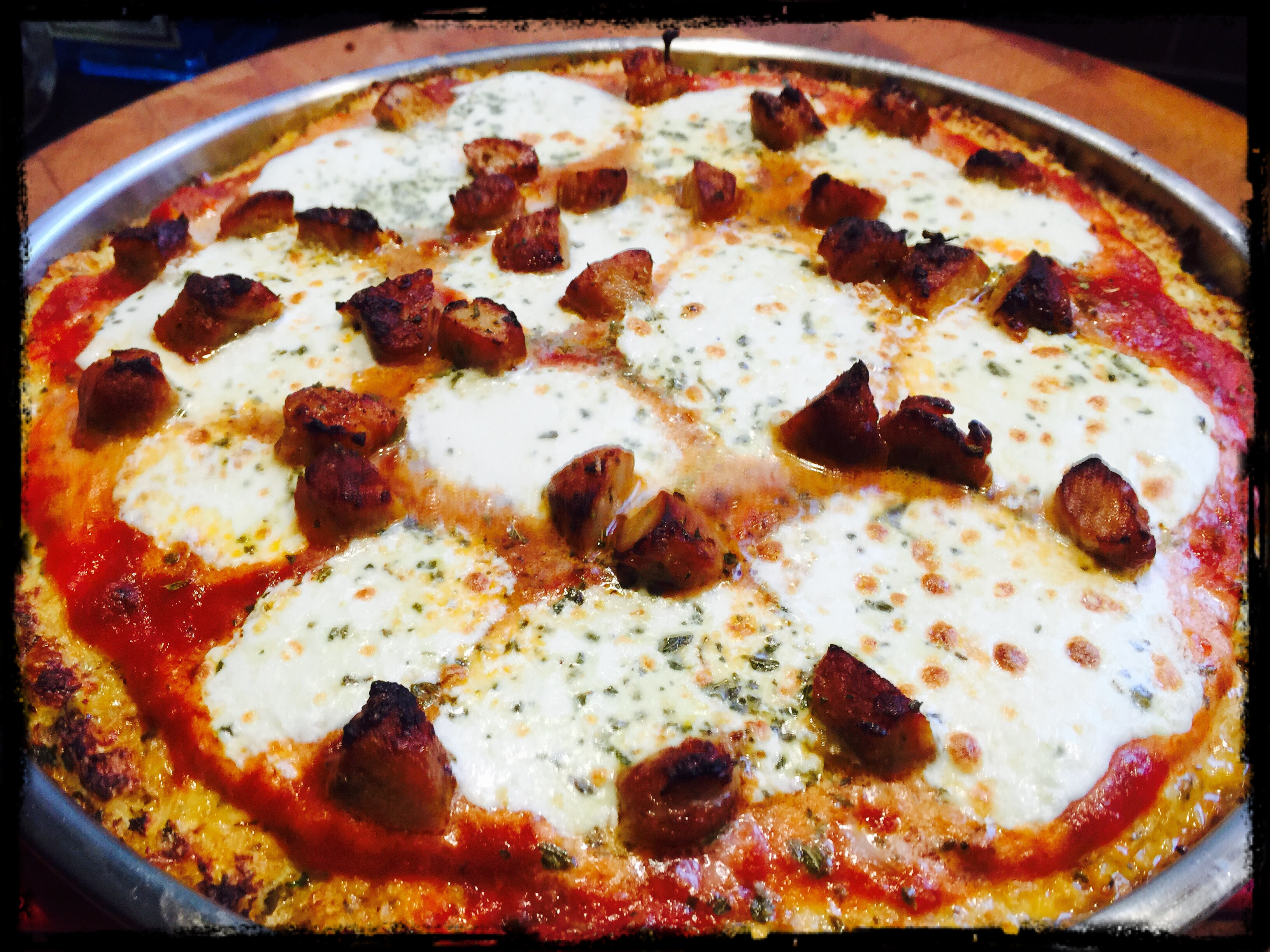
The latest rage in food is finding new uses for cauliflower. Personally, I love the taste of it so I don’t really need alternatives. But my wife’s on a gluten-free diet, I need to reduce my carbs, and we both love pizza. It seemed that maybe a cauliflower crust could be the answer.

The key to the crispiest crust possible is to make sure you bake it thoroughly before you put the toppings on.  Even if the crust comes out a bit soggy, all is not lost. Just grab a knife and fork… It’ll still taste pretty darn good.

img_2654

2 cups riced, then cooked cauliflower
1 cup grated parmesan cheese
2 eggs, beaten
1 teaspoon garlic salt
1 teaspoon oregano
1 teaspoon parsley
mozzarella cheese
tomato sauce
additional pizza toppings of your choice


Cut the cauliflower florets into chunks and toss them in a food processor. Pulse until you get the consistency of rice. Don’t over-process, or you’ll get mush.

img_2656


Microwave the riced cauliflower in a bowl for about 6 minutes on high. No need to add water. Depending on the amount of liquid in your cauliflower, you may need to transfer it to a fine mesh strainer to let it drain. Once it has drained, transfer it to a clean dish towel and wrap the sides around the cauliflower, gently pressing out the excess water. You want to get it as dry as possible. Dry = crispier crust. But be careful…let the nuked cauliflower cool first or you could burn your hands!

Pre-heat your oven to 450 degrees. (I like to use my large toaster oven, with the convection feature turned off.)

In a large bowl, use 2 cups of the cauliflower. (Depending on the size of the cauliflower head, you may have a little left over.) Add the parmesan cheese, the eggs, garlic salt, oregano and parsley. Mix well until it forms a sort of ball of “dough.”

img_2655

Grease a 9″ stainless pizza pan with olive oil. (Lining it with non-stick foil first is an option.) Take your ball of “dough” and press it evenly into the pan, making sure you don’t get it too thin, or you’ll get holes.

Bake the “dough” in the oven for 20–25 minutes, until it looks brown and crispy and is fully cooked. You don’t want it to be soft or soggy.

Remove the pizza from the oven, and add the tomato sauce, cheese, and whatever other toppings you like. (I used some pre-cooked chicken sausage and a sprinkling of oregano.)

Return the pizza to the oven, only this time place it under the broiler, and cook until the toppings have browned and the cheese has melted. Keep an eye on it…be careful not to burn it!


HOMEMADE MUSTARD

Posted: September 25, 2016 in Food, mustard, Recipes, spicy
Tags: , , ,

It’s so easy to make your own mustard. And really good mustard. Mustard that hasn’t been sitting on the store shelf for a year. Mustard with real flavor.

Once the mustard is made, you’re supposed to wait a few weeks before using, letting its heat mellow a bit. But I enjoy it right from the start. Feel the burn!


mustard

The great thing about this recipe is that you make it with your favorite beer, so use what you drink and you’ll have a mustard like no one else. I used Samuel Adams Boston Ale for this recipe.


1/4 cup yellow mustard seeds
1/4 cup brown mustard seeds
3/4 cup Sam Adams Boston Ale
1/4 cup apple cider vinegar
2 Tbsp. honey
2 Tbsp. brown sugar, firmly packed
2 garlic cloves, smashed
1 bay leaf
2 tsp. fleur de sel
1/8 tsp. freshly ground pepper


Put the yellow and brown mustard seeds in a bowl and pour in 1/2 cup of the beer. Push the mustard seeds down to submerge them in the beer. (I lay a sheet of plastic wrap down on top to keep them submerged.) Cover and refrigerate for 24 hours.

Combine the remaining 1/4 cup of beer, the vinegar, honey, brown sugar, garlic, bay leaf salt and pepper in a small saucepan. Bring the mixture to a boil over medium-high heat, stirring to dissolve the honey and the sugar. Boil for 1 minute, the immediately remove the pan from the heat and let it cool to room temperature.

Toss the garlic and the bay leaf in the trash and pour the liquid into a blender. Add 3/4’s of the plumped mustard seeds and blend to break the seeds. Add the remaining 1/4 of the mustard seeds and pulse just once to mix. You want the mustard thick, with some whole seeds remaining.

Put the mustard in an airtight container in the fridge for at least 3 days, and up to a week, depending on how mellow you want it and how much waiting you can tolerate! After about 3 weeks, the mustard will be at its peak…but it will keep in the fridge for several months. (I can’t imagine it will last that long.)

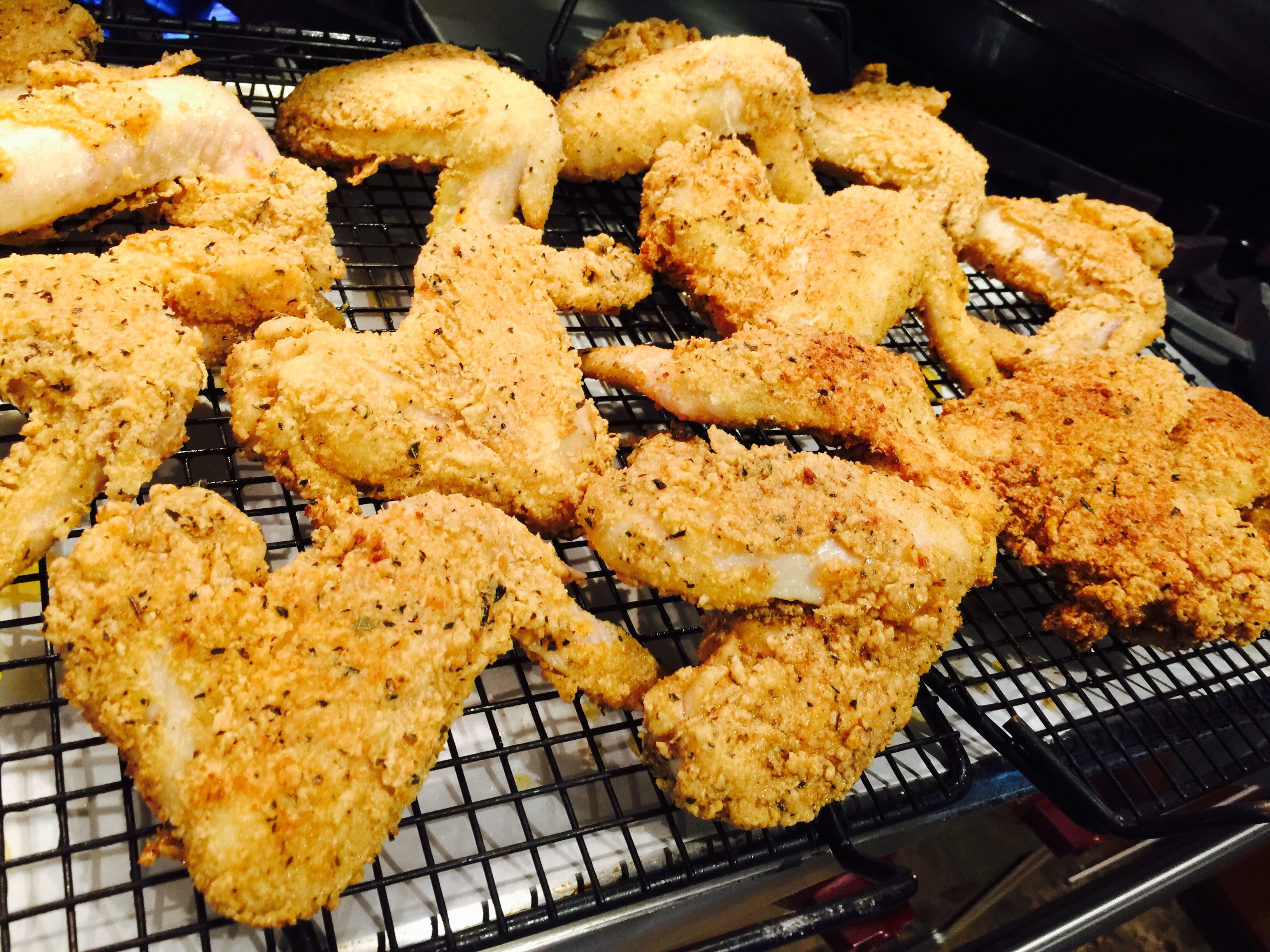
These tasty, crispy wings get fried just enough to brown, then get finished in an oven. The result is crispy, salty chicken wings that will be devoured in no time. Your only regret will be that you didn’t make enough! My gluten-free version tastes just as good as the original…you’ll never know the difference!

fullsizerender-5

3 lbs. chicken wings
1/2 cup whole milk
2 teaspoons hot sauce (I use Frank’s)
1/3 cup breadcrumbs (I toast Udi’s gluten-free bread til dry and crisp, then put it in a processor)
2/3 cup all-purpose flour (I use Cup4Cup GF flour)
1 tablespoon sea salt
1 teaspoon black pepper
1 teaspoon oregano
1 teaspoon basil
1 teaspoon granulated garlic
1 teaspoon granulated onion
1 teaspoon paprika
oil for frying (I use a combination of lard and olive oil)


Pour the milk into a bowl and add the hot sauce. Mix well, then add the chicken pieces and toss to coat well. Let the chicken sit in the milk at room temp for an hour. (I’ve found that whole milk–or even 1/2 & 1/2–works better than thinner, low-fat milk. It sticks to the chicken better.)

In a separate bowl, combine the bread crumbs, flour, salt, pepper, oregano, basil, garlic, onion and paprika.

Heat the oil in a pan until it reaches 350 degrees.

fullsizerender-6


One by one, carefully move the chicken from the milk mixture to the seasoning bowl and coat well with the seasonings, shaking off any excess. Gently place the wings in the oil and fry until both sides are golden, just a few minutes.  (You’re not cooking the chicken, just making the skin crispy.) Place the fried chicken wings on a metal screen raised above a sheet pan lined with foil or parchment.

Pre-heat the oven to 350 degrees, and when all the chicken has been fried and put on the sheet pan, place the pan in the oven and finish cooking, about 30 minutes.


Yesterday was National Cheeseburger Day!

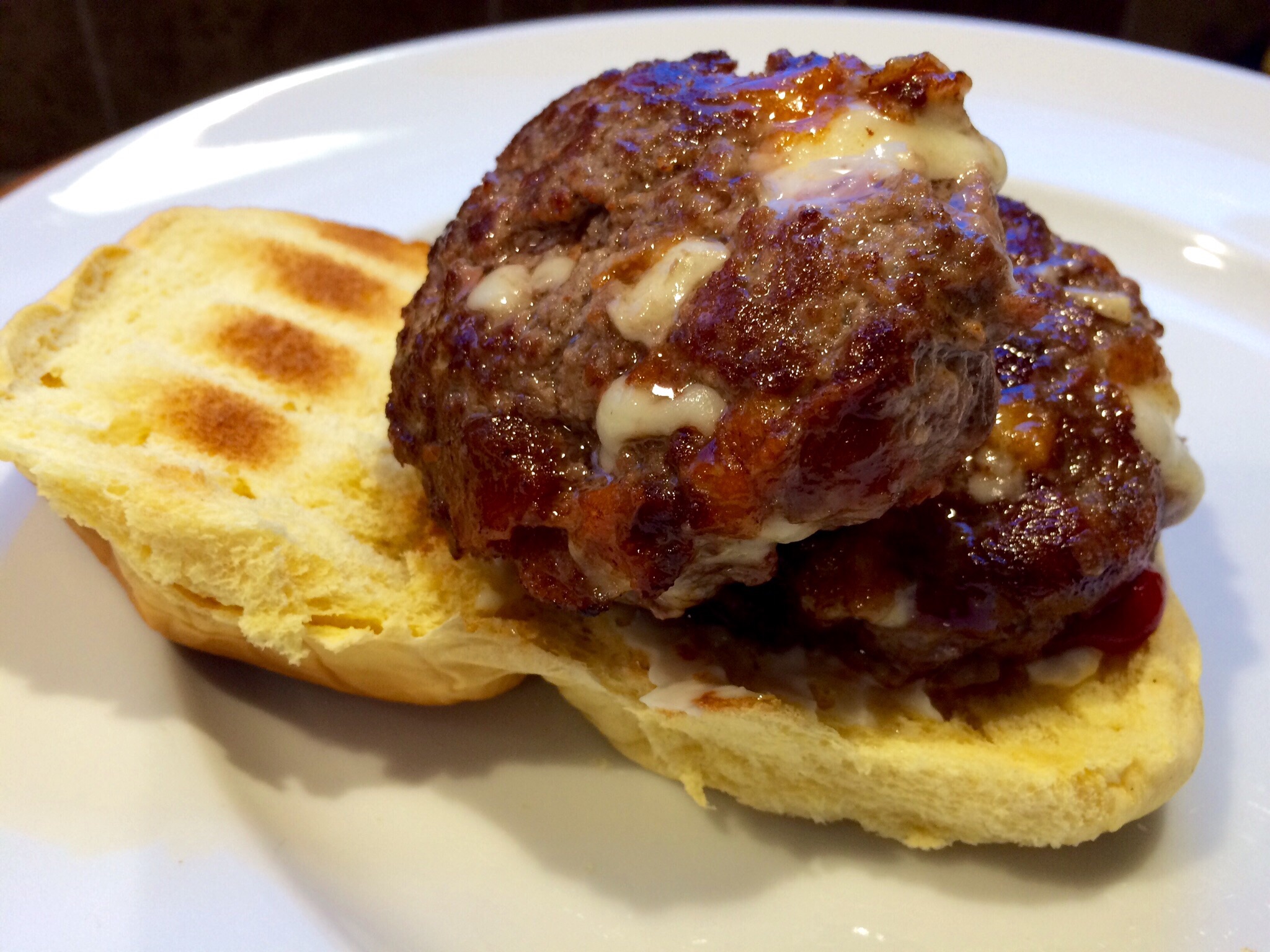
My inside-out burger is not a very complex idea. I just put the stuff that’s usually on the outside, on the inside of my burgers. Why? Why not?

Instead of dealing with a package of bacon and a package of cheese and a stack of burgers, I’ve got all the ingredients conveniently inside the patties. And as the burgers cook, the fat from the bacon and the gooey cheese melt and combine with the burger meat to make a really tasty and moist burger.

I cook these on the grill, but the cast-iron skillet method, described below, works really well,  too.

I make 2 lbs. of burgers at a time, using humanely-raised local grass-fed beef, from my friends at Simmons Organic Farm in Middletown, RI.  Support your local farmers when you can!

image

2 lbs. ground grass-fed beef
1/2 cup sharp cheddar cheese, cut into 1/4″ cubes
1/2 lb. bacon, cooked crisp, cooled and crumbled
garlic salt
avocado oil or pork fat


In a bowl, combine the beef, the cheese and the bacon, mixing well so that all the ingredients are evenly incorporated.

Form the beef into 1/4 lb. patties or larger. Refrigerate them until you’re ready to cook to firm them up.

Heat a cast iron skillet and add a drop of oil or pork fat. Place the burgers in the hot skillet to sear and sprinkle with the garlic salt. When browned, flip the burgers and place the skillet in a 350-degree oven to finish cooking.

image


Like hot dogs and Slim Jims, jerky is one of those “mystery meats” we love but don’t really know how it’s made or what part of the animal it comes from.
Really excellent beef jerky is a rare treat, and once you have it, you will never go back to that rancid, preservative-filled dog meat you find in a bag at the supermarket. And the best part is: it’s easy to make.
Shop around for a really nice slab of London broil or similar cut. You don’t need to buy an expensive piece of grass-fed beef, but the better the meat, the better the jerky. Remove all the gristle and fat that may be on the meat and then slice it against the grain and on a diagonal, into 1/4″ thick slices. Toss all the meat in a Ziploc bag. Once you’ve done that, all you need to do is make the marinade, marinate the beef overnight, and then dry it the next day. Your final product will be a flavorful beef jerky that is so good, you’ll find it very hard to stop eating it…or to share it.
If you use gluten-free soy sauce and teriyaki sauce (La Choy is the brand I use, found in any supermarket), this recipe can be considered gluten-free. Be careful: regular soy sauce, and even some tamari sauces, have wheat in them. Read the label!
image
1 tablespoon salt
1 1/2 tablespoons granulated garlic
1 teaspoon black pepper
1 teaspoon fresh minced peeled ginger
2/3 cup brown sugar
1 cup teriyaki sauce
1 cup soy sauce
8 lbs. raw, lean beef, like London broil, cut into 1/4″ thick diagonal slices, against the grain of the meat
Mix all the ingredients except the meat in a large bowl. Place the meat in a large Ziploc bag, pour the marinade inside, seal, and refrigerate overnight. Squish the bag around once in a while, to make sure all the meat surfaces make contact with the marinade. Keep the bag in a bowl to prevent any accidental spillage in your fridge!
The next day, pour off the marinade and discard it. Using a food dehydrator, dry the meat by laying strips in a single layer. You can also dry them in a 140 degree oven on racks slightly elevated off a baking sheet. Drying could take several hours to half a day, depending on how dry and chewy you like your jerky.
Jerky in the dehydrator.

Jerky in the dehydrator.

This recipe makes a lot of jerky, but it stores really well in the freezer. I put small amounts into individual freezer bags, then place all of them in one large freezer bag. Thaw as needed.

The corn is still out on farm stands in my neighborhood, and it’s really hard to resist, despite the fact that corn is at the top of the loaded-with-pesticides list of veggies. Organic farmers struggle with corn because it demands a lot and produces little in return, but you can find it if you look hard enough. It’s easier to find it frozen, but that’s something you don’t want to do in season, especially when you see those beautiful ears just waiting for you at the local farm stand!

By now, I’m sure you’ve seen those videos where the person takes corn still in the husk, pops it in the microwave, and then slips out a perfect ear of corn without any silk minutes later. If you haven’t, here’s one of them…

There are 2 problems with this method: 1) It takes forever to do a dozen ears…and 2) It ruins the damn corn!

corn1

Why would anyone who’s passionate about fresh corn, stick it in a microwave and nuke the living hell out of it? Fresh corn needs a minimalist approach. It should be eaten practically raw…not bombarded with gamma rays and dehydrated in to shriveled kernels.

I love my corn right off the cob…and I still stick to the tried-and-true method of putting it in a pot of water and boiling it for a very short time. Do I get a few strands of silk? Sure. That’s part of the deal. Real corn has silk…just like real fish has bones. Get over it.

My wife and daughter like their corn off the cob. In that case, I shuck the corn, standing the raw ear up in a bowl or bundt pan, slicing down with a knife to remove the kernels. I then lightly saute the corn in a pan with unsalted organic butter and a pinch of Fleur de Sel. Those pieces that have several rows of kernels stuck together, across and down, are the favorites.

corn2


One other way I’ve cooked corn is the “cooler corn” method, which is great when you have a really large crowd to feed. Get your favorite cooler and make sure it’s clean inside. Shuck your corn and place the ears in the cooler. Boil a large pot of water on the stove and then pour the hot water over the corn. Close the cooler lid tightly and let it sit for about 20 minutes. You’ll have perfect corn for a crowd every time.


I always thought that spaghetti squash was a sort of “gimmick” vegetable. But once I roasted it, I realized just how delicious it could be. And I hit the “squash lottery” the other day, when my friend, Karen, stopped by with a bunch of beautiful spaghetti squash straight from her and her husband, Bill’s, garden. It was time to cook!

FullSizeRender

Cooking them is easy. I wash them, cut them in half, and remove the seeds and membrane stuff with a spoon. I flip them onto their backs, skin side down, and drizzle some extra virgin olive oil on them. A little sea salt and pepper, and then I flip them back down, skin side up, on a sheet pan lined with non-stick aluminum foil. Into a pre-heated 350 degree oven for 30–40 minutes. When they’re soft to the touch, I remove the sheet pan from the oven, flip them back over again, and let them cool to room temperature. Then I simply scrape out the flesh with a fork, and it comes out in strands, like spaghetti.

image

While the squash roasts in the oven, I make the meatballs…


1 lb. ground grass-fed beef
1 lb. pastured ground veal (substitute ground beef if you can’t get this)
1 cup breadcrumbs (I use gluten-free)
2 eggs, cracked and scrambled
2 tablespoons dried parsley
2 tablespoons dried oregano
1 tablespoon dried basil
1 tablespoon granulated garlic
1 tablespoon granulated onion
1 teaspoon black pepper
2 teaspoons salt

Mix all the ingredients in a large bowl and form into meatballs. Place them in a hot pan with 1/4 cup of extra virgin olive oil. Cook until the meatballs are browned on all sides.


And you need homemade sauce…

2 cans (28 oz.) of tomatoes, pureed
olive oil
1/2 onion, finely chopped
1 tablespoon dried parsley
1 tablespoon dried oregano
1 teaspoon dried basil
1 teaspoon granulated garlic
2 teaspoons salt
1/2 teaspoon fennel seeds

In a large pot, saute the onions in a little olive oil until translucent. Add the pureed tomatoes and cook at medium heat until the foam disappears.

Add all the herbs and spices and mix well. Continue cooking on medium heat, lowering to a simmer if the sauce seems to be boiling too hard.

Add the meatballs to the sauce when the meatballs have been browned on all sides. Pour the entire contents of the meatball pan, including the olive oil and fat, into the tomato sauce pot.

Make sure all the meatballs are covered with the sauce. Place a lid on the pot, and simmer for at least an hour, until the meatballs are cooked all the way through.
image


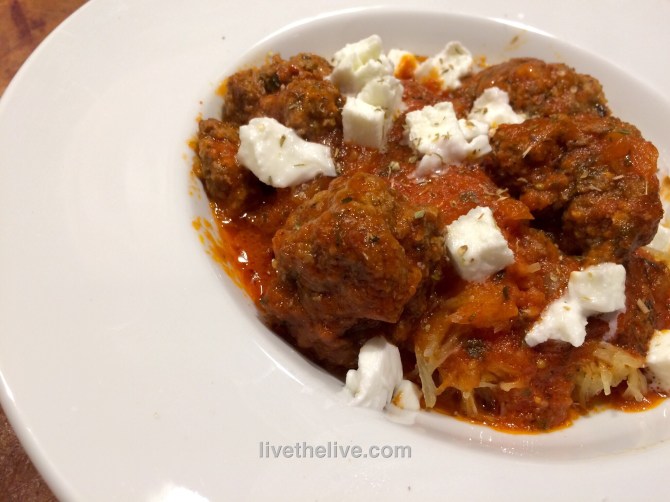
Scrape the spaghetti squash with a spoon and place a mound of it in the center of the serving dish. Top it with the meatballs and sauce. Grate some Parmigiano-Reggiano over the top, or do what I did this time, and cut a slab of mozzarella di bufala into small cubes and toss on top. A little sprinkle of oregano and olive oil for good measure on top.