Archive for the ‘frying’ Category

On our recent trip to Spain, croquettes were served in just about every restaurant we went to. My 7-year-old daughter fell in love with them, and they became the “chicken nugget” of our trip: the go-to kid food we knew we’d always find on the kids menu.

image

Once we got home to the States, I started looking for them and only found them on-line, not in stores. And since they’re shipped frozen, it required a large purchase: a major hassle to buy them.

Luckily, I found a great recipe in Saveur magazine, and decided to try it out. I was a bit clumsy at making them at first–they do need a bit of finesse–but by the end of the batch, I got the hang of it.

image


Ingredients:


2 lbs potatoes, peeled and cut into 1″ cubes

4 tablespoons unsalted butter

1 onion, minced

1/4 to 1/2 cup heavy cream

6 oz cheddar cheese, grated

6 oz ham, finely chopped

salt and pepper

1 cup all-purpose flour

2 eggs

2 cups Panko breadcrumbs

avocado oil (or vegetable oil–for frying)


image

Peel the potatoes, cut them into 1″ cubes and boil them in salted water until tender. Drain and set them aside.

Melt the butter in the same pot the potatoes were in, then add the onions and saute until translucent. Put the potatoes back in the pot and add 1/4 cup of the heavy cream. Mash the potatoes with a potato masher until smooth. Add more cream, if needed.

Add the cheese and mix until it has melted in. Add the ham and mix again. Season with salt and pepper.

Pour the contents of the pot into a metal bowl and place in the freezer to cool, stirring every 10 minutes until the mashed potato mix is cold, but not frozen.

Line up three bowls: flour in the first bowl, eggs (scrambled) in the second bowl, Panko in the third.

Remove the mashed potato mix from the freezer, and with floured hands, grab enough to gently roll a small meatball in your hands. (I’ve found that starting with a round shape makes it easier to work with.)

Roll the ball in the flour, then the egg, then drop in the Panko and roll again. With the ball in your hand, gently squeeze into a tubular shape, and then place it on a sheet pan lined with non-stick aluminum foil. Continue with the rest of the potato mixture. (You may need to add another egg or two if you run out.)

Once you’ve rolled all the croquettes, place them back in the freezer for 20 minutes to firm up. (I use a sheet pan lined with non-stick aluminum foil.)

Heat a pan with 2″ of oil to 350 degrees. Remove the croquettes from the freezer, and working in small batches, fry them until golden brown. Place on paper towels, and quickly season lightly with salt while hot, if desired.

image


The croquettes freeze really well, so this batch goes a long way. Once they’ve been fried, let them cool completely to room temp. Place them in Ziploc freezer bags and store in the freezer. When it’s time to cook them, let them thaw for about 15 minutes, then place in a pre-heated 325 degree oven for another 15 minutes.


December 2nd is National Fritters Day!

Clam fritters, conch fritters, lobster fritters…I suppose you could fritter anything. But the first time I had them with mussels, I knew that I would never fritter my life away with any other!

It was a fall afternoon in Newport, Rhode Island, at the Newport Yachting Center’s annual Oyster Festival. We’re gorging on freshly shucked oysters and clams, boiled shrimp, and…what have we here? I had never heard of a mussel fritter before, but Wendy, the lovely lady behind the counter, convinced me that her secret recipe would knock my socks off. I took one bite, then another, then another…there was no turning back.

They couldn’t be easier to make, but it is crucial to have the right fritter batter. Here in Rhode Island, that starts with a product called Drum Rock fritter mix.

fritter ingredients


If you’re using fresh mussels, be sure to clean them well and remove the beards. Steam them in a pot over a small amount of water. As they open, they will release their flavorful juices and you want to save every drop of that broth for the fritters. Here in New England, frozen mussel meats are available in some seafood stores. All you need to do is thaw them, steam them saving the broth, and you’re ready to go.


Ingredients:


1 lb Drum Rock fritter mix (or other brand)

2 cups cooked mussel meats

1/2 cup mussel broth (saved from steaming mussels)

1/4 to 1/2 cup good quality beer, such as Sam Adams Boston Lager

Peanut oil for frying


Be sure to let the batter rest. If you're waiting for guests to arrive, just cover the batter bowl with a moist towel and it will keep for several hours at room temperature.

Be sure to let the batter rest. If you’re waiting for guests to arrive, just cover the batter bowl with a moist towel and it will keep for several hours at room temperature.


Steam mussel meats until just cooked. Remove mussel meats, and reserve 1/2 cup of the broth. Pulse mussel meats in a food processor, but leave chunky…or chop by hand.

Put fritter mix in a large bowl. Add mussel meats, mussel broth, and beer. Stir gently until just mixed. Let it sit for 10 to 15 minutes and do not stir again.

Using a thermometer, heat oil to 350 degrees, and using a small spoon or scoop, drop fritters in hot oil, turning gently, cooking 3 to 4 minutes until golden.

Drain on absorbent paper, and season with salt and pepper immediately. Serve right away!

IMG_3043


The perfect dipping sauce for these mussel fritters is made from two ingredients: mayonnaise and Ponzu sauce, which is a citrus-based soy sauce. Combine both ingredients in a bowl. How much you use of each is a matter of personal preference. I usually use a ratio of 4 parts mayo to 1 part Ponzu.


Well, that’s what I call it. Sometimes the most interesting creations happen by accident, and this is one of them.

My plan was to make my Chinese Style Honey Ribs (http://wp.me/p1c1Nl-i7) for dinner. But I accidentally took a slab of pork belly out of the freezer instead. I only realized my mistake when I thawed it and started cooking it, so I decided to continue the process with the pork belly instead. The results were pretty damn tasty.

image


 Ingredients:
Marinade: ¾ cup light soy sauce
                     6 Tablespoons hoisin sauce
5 lbs pork belly
Zest and juice of 1 lemon
2 whole star anise
2 cinnamon sticks (3”)
1/2 cup honey
4 cups chicken broth
image
Mix marinade ingredients. Set aside.
Cut the pork belly into pieces that are about 3 inches square. Place in a large pot. Cover with water and bring to a boil. Boil for 5 minutes. Drain.
Place pork belly on a sheet pan with a rack and coat with marinade. Let sit for 10 minutes.
Pre-heat oven to 350 degrees. Bake pork belly pieces on foil-lined sheet pan for 30 minutes.
While the pork belly is baking, start sauce in a large non-stick pan or pot: combine lemon zest and juice, star anise, cinnamon sticks, honey and chicken broth. Bring to a boil, then reduce to a simmer.
When the pork belly pieces have finished baking, add them to the sauce pot and simmer (covered) for at least 15 minutes or until meat is tender.
Turn heat on high, uncover pot and cook until the sauce is reduced to a glaze that coats the ribs. Reduce heat as sauce thickens to avoid sugars in honey from burning. When the pieces are sticky and gooey, they are ready!
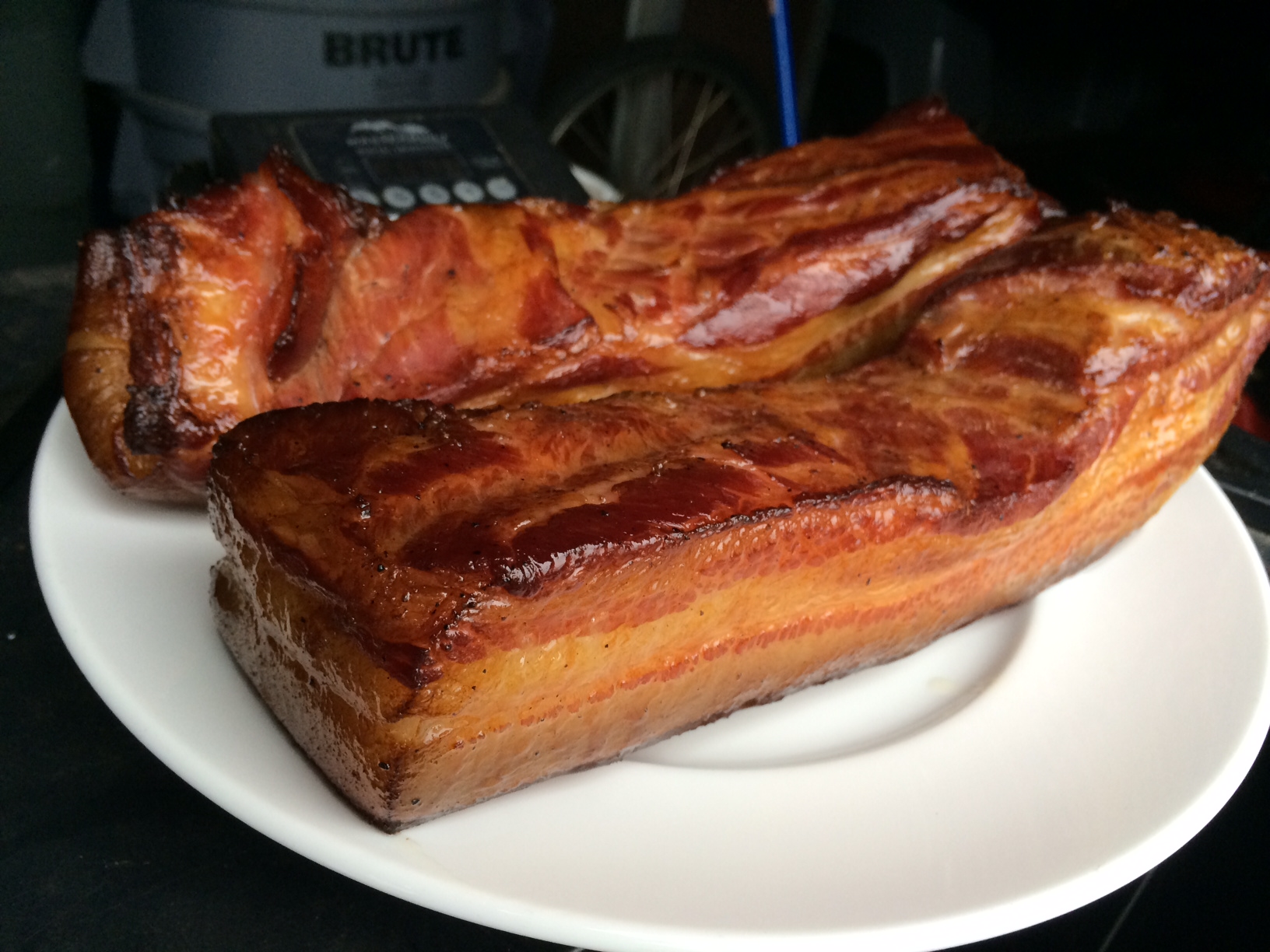
Let a piece of pork belly cool…then slice to desired thickness and fry like regular bacon. Makes an amazing omelet!
image

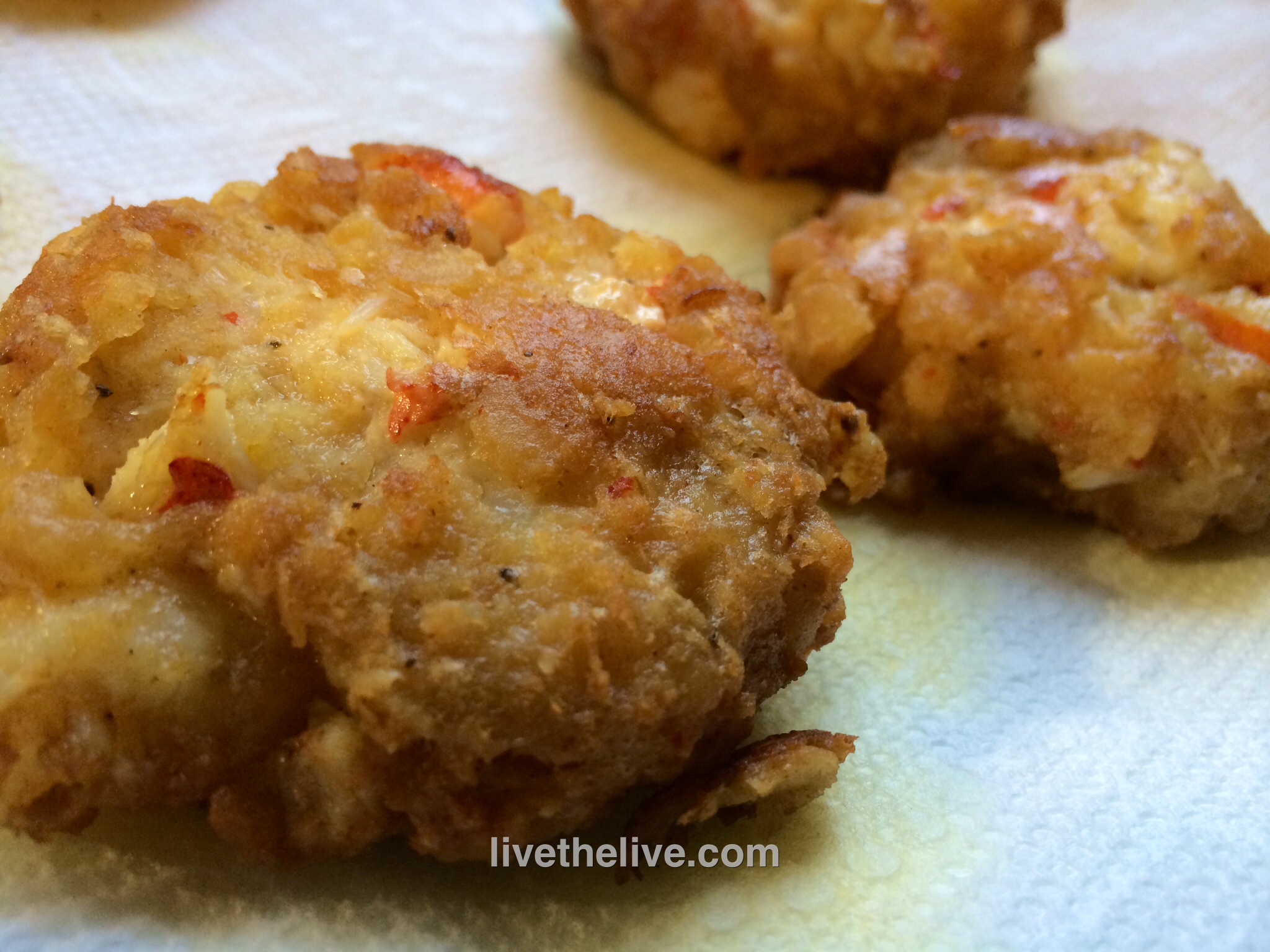
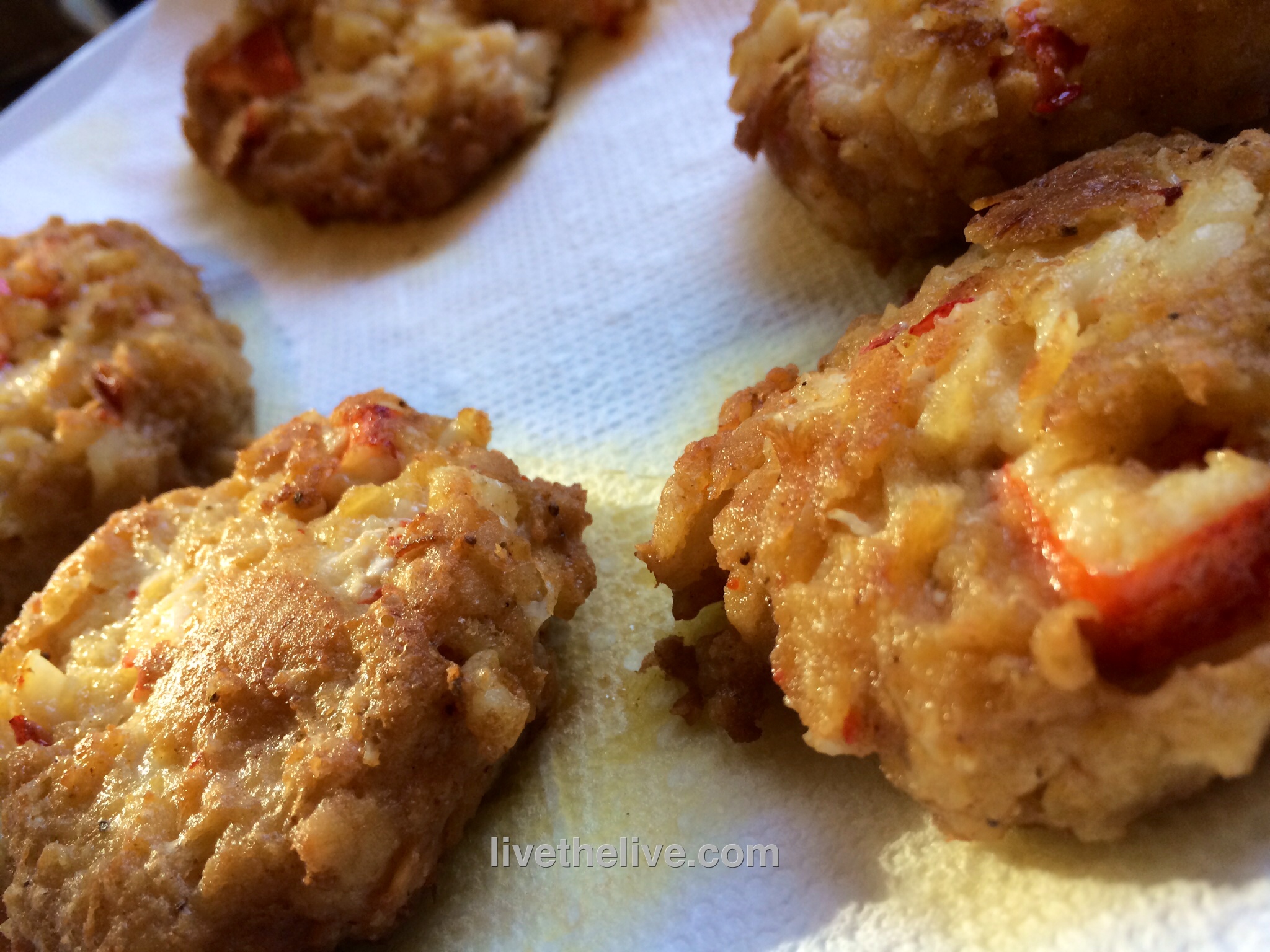
I had a pound of leftover lobster meat (I know, I know…how could you ever have leftover lobster?!) So I wrapped it tightly and kept it frozen. When I had a craving for crab cakes, I figured I’d try my recipe out with lobster instead. So good, I sprained my arm patting myself on the back!

lobstercake2


Ingredients:

1 lb cooked lobster meat (thawed, if frozen)

1 cup mayo (I like Hellman’s)

1/4 cup Dijon mustard (I like Maille)
3/4 cup saltine crackers or oyster crackers
1 teaspoon old Bay seasoning
Olive oil

In a bowl, combine mayo, mustard and Old Bay Seasoning.

Chop the lobster into small pieces and add it to the mayo/mustard mix.

Pulse the crackers in a food processor until it resembles oatmeal. Add it to the bowl and gently combine the ingredients.

Form small patties. I use either a small beef slider mold or the lid from a small mouth Mason jar. I won’t kid you: it gets messy, but it’s worth it! Place the patties on a sheet pan lined with Reynold’s non-stick aluminum foil.

Place the sheet pan in the freezer for about 15 minutes to stiffen up the patties.

Heat some olive oil in a pan. Cook the patties on both sides until golden brown.

lobstercake1

Clam fritters, conch fritters, lobster fritters…I suppose you could fritter anything. But the first time I had them with mussels, I knew that I would never fritter my life away with any other!

It was a fall afternoon in Newport, Rhode Island, at the Newport Yachting Center’s annual Oyster Festival. We’re gorging on freshly shucked oysters and clams, boiled shrimp, and…what have we here? I had never heard of a mussel fritter before, but Wendy, the lovely lady behind the counter, convinced me that her secret recipe would knock my socks off. I took one bite, then another, then another…There was no turning back.

They couldn’t be easier to make, but it is crucial to have the right fritter batter. And that starts with a product called Drum Rock fritter mix. If you live in New England, you can find it in just about any seafood department at Whole Foods. If you live further away, you can check out their website (http://www.drumrockproducts.com/index.php) or try your luck with a local brand of fritter mix.

fritter ingredients


If you’re using fresh mussels, be sure to clean them well and remove the beards. Steam them in a pot over a small amount of water. As they open, they will release their flavorful juices and you want to save every drop of that broth for the fritters. Here in New England, frozen mussel meats are available in some seafood stores. All you need to do is thaw them, steam them saving the broth, and you’re ready to go.


Ingredients:


1 lb Drum Rock fritter mix

2 cups cooked mussel meats

1/2 cup mussel broth (saved from steaming mussels)

1/4 to 1/2 cup good quality beer, such as Sam Adams Boston Lager

Peanut oil for frying


Be sure to let the batter rest. If you're waiting for guests to arrive, just cover the batter bowl with a moist towel and it will keep for several hours at room temperature.

Be sure to let the batter rest. If you’re waiting for guests to arrive, just cover the batter bowl with a moist towel and it will keep for several hours at room temperature.


Steam mussel meats until just cooked. Remove mussel meats, and reserve 1/2 cup of the broth. Pulse mussel meats in a food processor, but leave chunky…or chop by hand.

Put Drum Rock fritter mix in a large bowl. Add mussel meats, mussel broth, and beer. Stir gently until just mixed. Let it sit for 10 to 15 minutes and do not stir again.

Using a thermometer, heat oil to 350 degrees, and using a small spoon or scoop, drop fritters in hot oil, turning gently, cooking 3 to 4 minutes until golden.

Drain on absorbent paper, and season with salt and pepper immediately. Serve right away!

IMG_3043


The perfect dipping sauce for these mussel fritters is made from two ingredients: mayonnaise and Ponzu sauce, which is a citrus-based soy sauce. Combine both ingredients in a bowl. How much you use of each is a matter of personal preference. I usually use a ratio of 4 parts mayo to 1 part Ponzu.


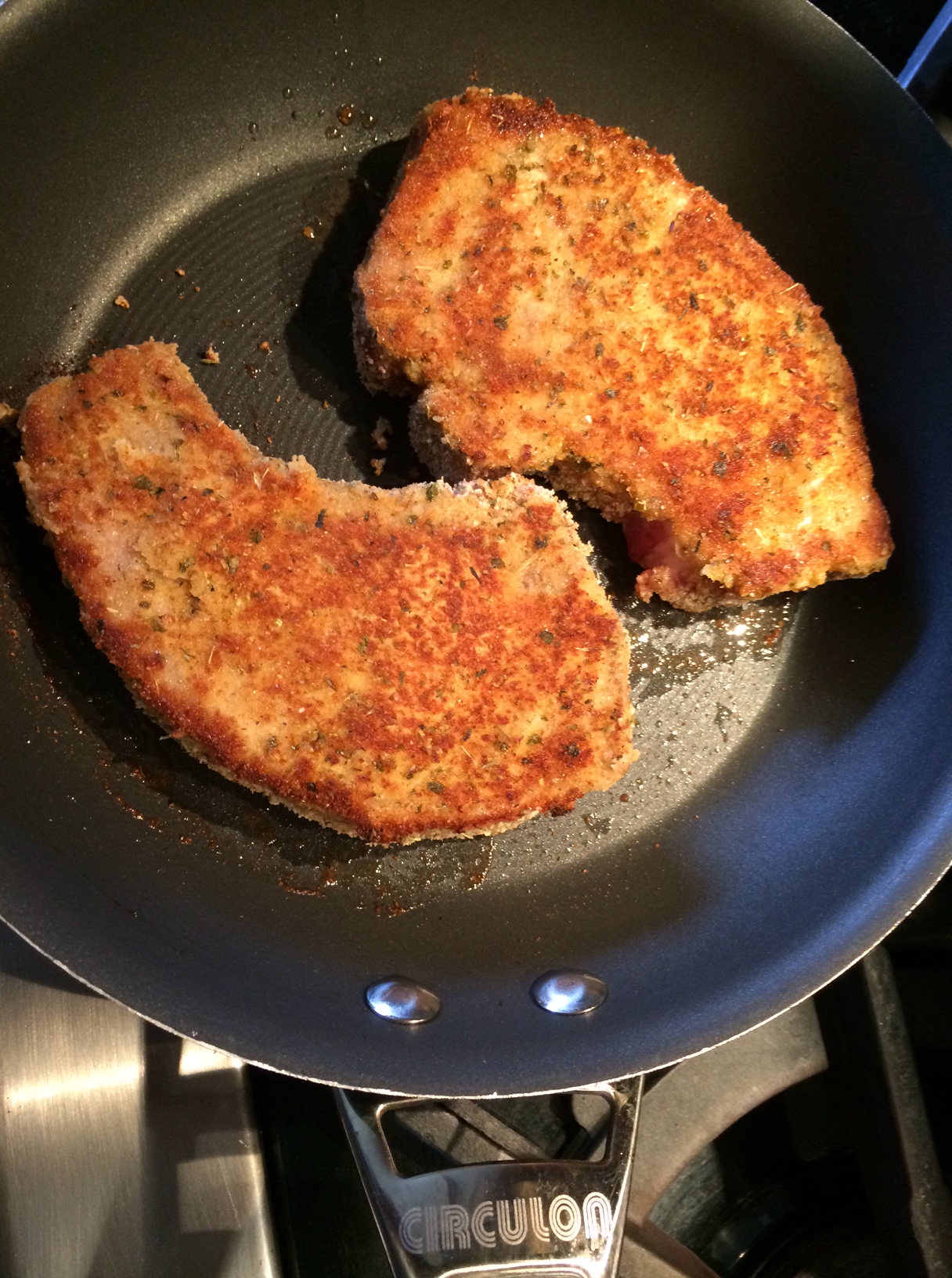
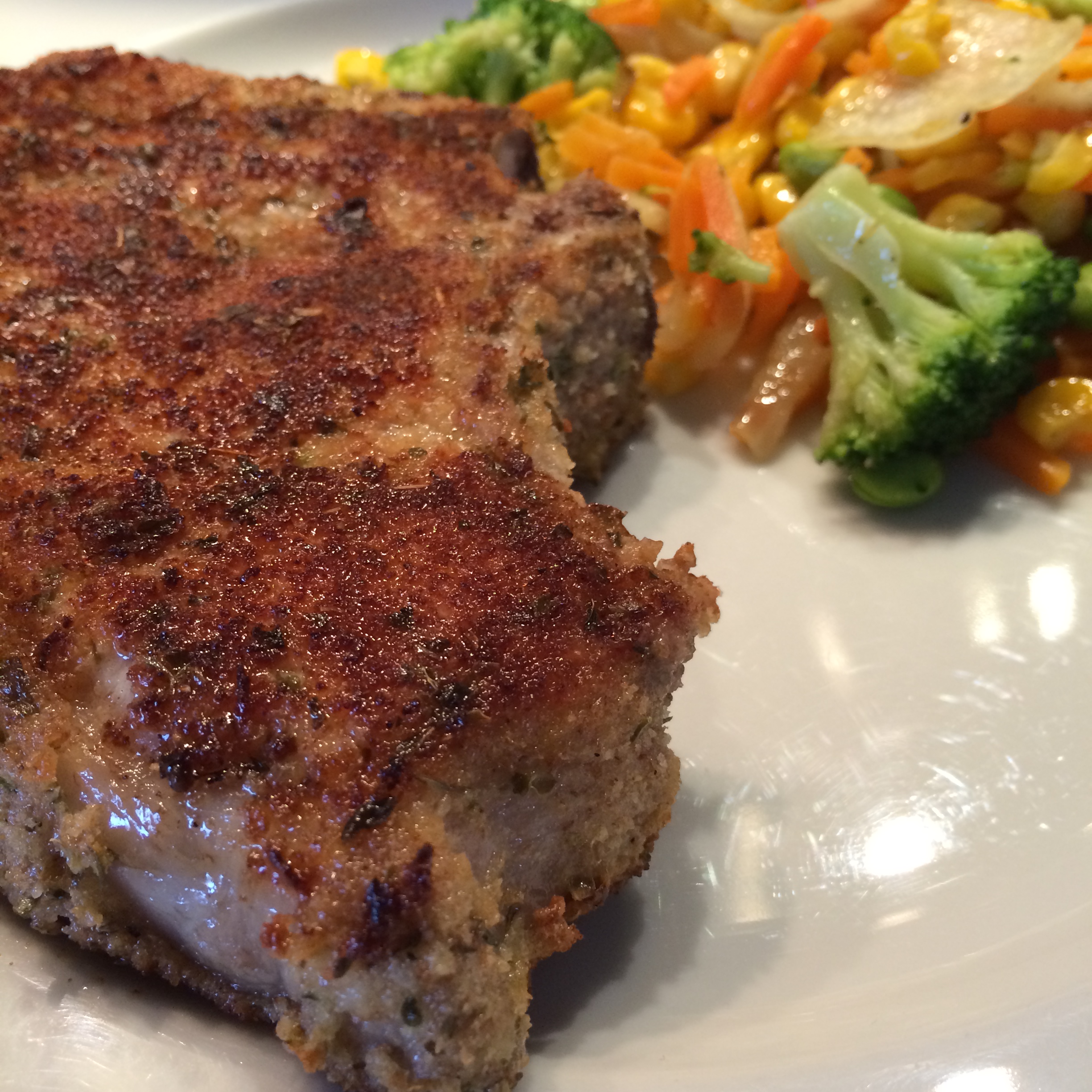
Pork chops were a favorite of mine growing up, but my Mom cooked them only one way: breaded and fried in a pan full of oil. They were good, but they were greasy, and my Mom was not big on seasonings. It was time to improve on the original.

chop 1


Ingredients:

2 Berkshire pork chops

1 egg

1/2 cup plain bread crumbs

1 teaspoon salt

1/4 teaspoon pepper

1 teaspoon dried oregano

1 teaspoon dried parsley

1/2 teaspoon granulated garlic

1/2 teaspoon onion powder

olive oil


Pre-heat the oven to 350 degrees.

Set up 2 bowls. In one, crack and scramble the egg. In the other, combine salt, pepper, oregano, parsley, granulated garlic and onion powder.

Place an oven-proof pan on medium-high heat and add a little olive oil. Once the oil is hot, cover the pork chops in the egg wash and then coat with the bread crumb mixture. Place in the hot pan to brown and sear. Do this with both chops.

After a few minutes, flip the chops over in the pan and place the pan in the oven to finish cooking.

chop 2

Remember, good pork does not need to be cooked until well done!


I love avocado, but I never thought of cooking with it until I saw this recipe. It was a very simple burger that had only a handful of ingredients, and so I thought: “Oh, I don’t need to write this down!” After I made the burger patties and put them in the fridge to chill, I took a look at the recipe on line and realized I forgot one of the ingredients! The original recipe called for a 1/2 cup of Panko breadcrumbs mixed in. My burger tastes fantastic without it…plus now it’s low or no carb. So I will leave it out.

chicken2

Ingredients:

1 lb ground chicken

1 ripe avocado, sliced into small cubes

1/2 teaspoon salt

1/4 teaspoon black pepper

pinch granulated garlic

chicken1

Combine the ingredients in a bowl and mix thoroughly but carefully so that you don’t squash the cubes of avocado. Form the meat into burger patties. It will be a bit sticky, but just make sure you get the avocado evenly distributed. Chill the patties in the freezer for about 10 minutes before cooking to firm them up.

Pre-heat the oven to 350 degrees.

Heat a little oil in an ovenproof pan, and place burgers in it when hot. Let the burgers sear on one side, then flip them. Place the pan in the oven to finish cooking.

Serve with a slice of bacon and Awesomesauce! (http://wp.me/p1c1Nl-gT)

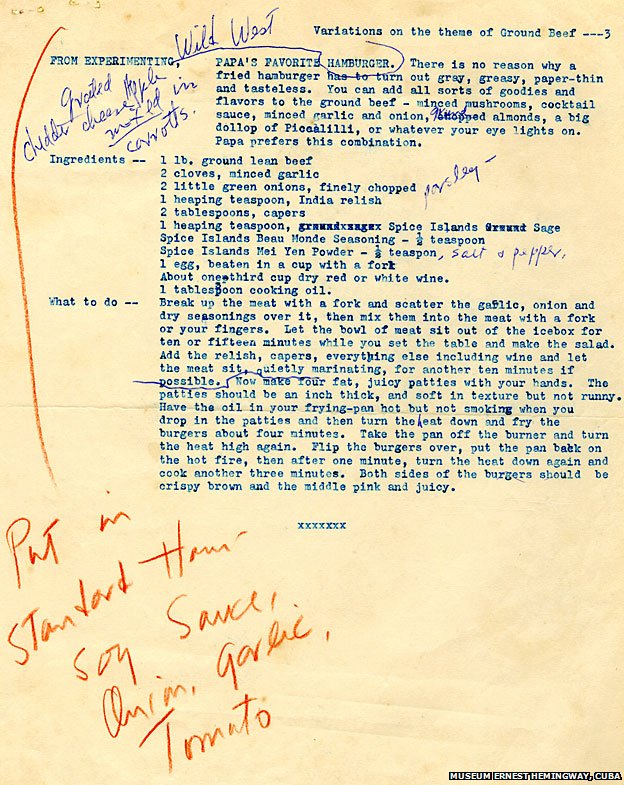
Ernest Hemingway loved his burgers…and he loved to put all kinds of crazy ingredients in them. Following the basic guidelines of his recipe, seen below, I put my own spin on it.

Hemingway's burger notes

Hemingway’s burger notes

I skipped the India relish. Didn’t have it in my pantry.

Beau Monde Seasoning is readily available, but I made my own at home:

1 tablespoon cloves

1 1/4 teaspoon cinnamon

1 tablespoon salt

1 tablespoon Bay leaf powder

1 tablespoon allspice

2 tablespoons black pepper

1 teaspoon nutmeg

1 teaspoon celery seed

1 tablespoon white pepper

Combine all these ingredients, grinding to a powder whatever you have as whole pieces: cloves, bay leaves, nutmeg, etc. Store in a tightly sealed glass jar.

And Mei Yen Powder can be replaced with equal parts salt, sugar, and MSG (which I leave out.) To this I add some soy sauce.

So here’s my take on it:

Ingredients:

1 lb. grass-fed ground beef

2 garlic cloves, squeezed through a garlic press

2 tablespoons minced red onion

1 tablespoon capers

1 teaspoon dried sage

3/4 teaspoon salt

1/2 teaspoon sugar

1 1/2 teaspoons soy sauce

1/2 teaspoon homemade Beau Monde seasoning

1/3 cup white wine (I use Alice White chardonnay)

1 raw egg

Combine all ingredients and let it sit in the fridge for an hour. The meat may be a bit mushy, but you can form 4 equal sized patties. Place them in a hot ovenproof pan that has a little oil and sear on one side. Flip burgers, and sear on the other side. Place pan in a 350-degree oven and cook until desired doneness.

The verdict: Hemingway was crazy! Though the burger had some exotic flavors–it tasted almost like a burger from the Middle East–my personal choice is still to go with a relatively plain burger of exceptional quality, season it lightly, and cook it to medium-rare. Toppings like caramelized onions or sautéed mushrooms are always welcome, but in many ways, less is more. Hemingway clearly thinks more is more…but maybe his burger meat wasn’t all that good and he need to mask the bad flavor. Anyway…a fun experiment!

THE BATTLE OVER CANOLA OIL

Posted: February 6, 2014 in Food, frying
Tags: , , ,

image

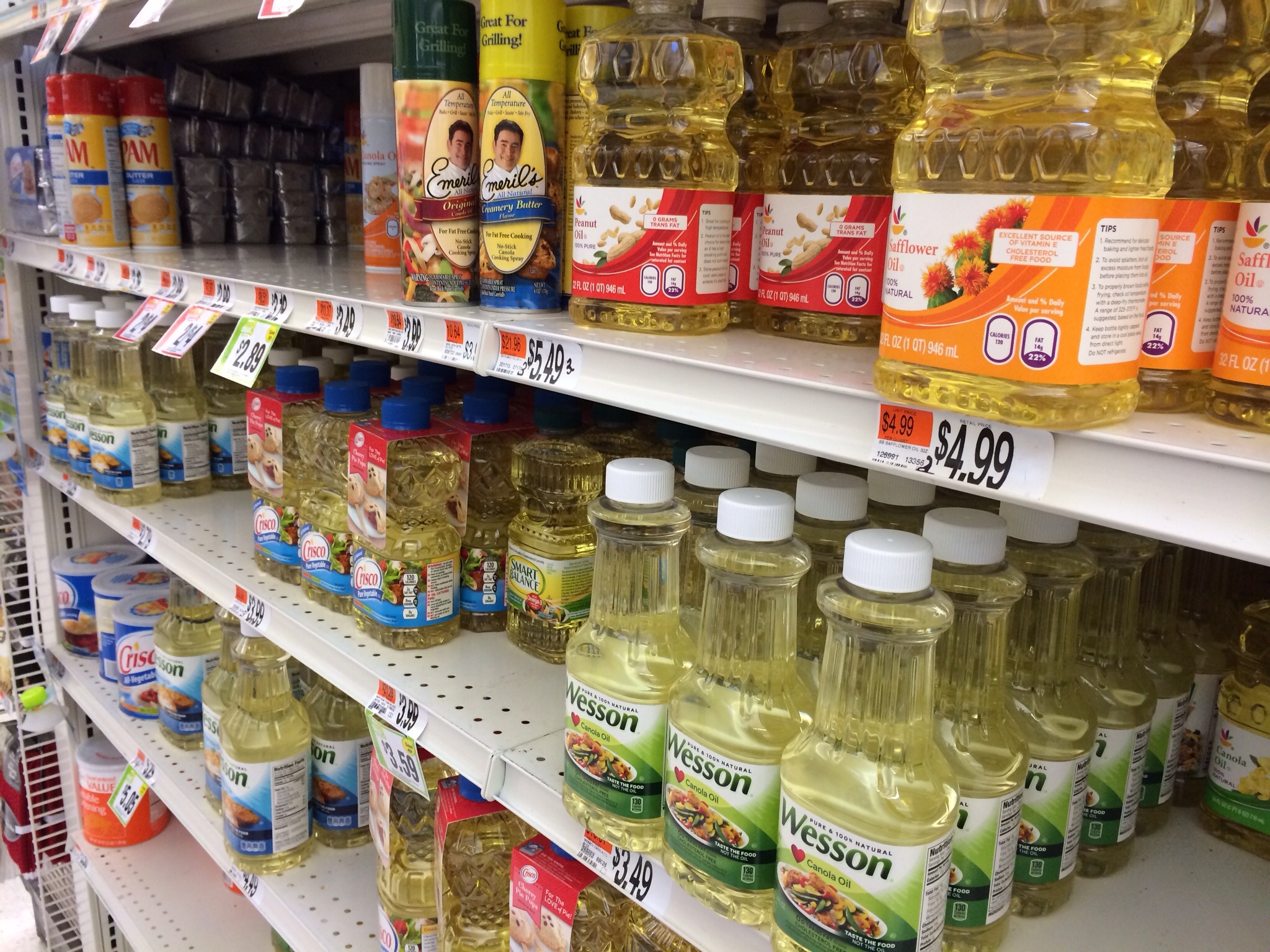
There is a huge battle going on about the safety of canola oil. The majority of canola oil is made with genetically modified seeds, so if you’re trying to avoid GMO’s in your family’s diet, you have 2 choices: stop using canola oil or buy non-GMO canola oil. Until a few hours ago, I didn’t know the latter even existed.

Canola gets its name from “Canada” and ‘Oil.” There is no “canola plant.” There is, however, something called rapeseed, which canola oil comes from. The “rape” comes from the latin “rapum,” which means “turnip,” but you can see how something called rapeseed oil wouldn’t work with the general public. So: Canola it became.

Rapeseed plants have been grown for thousands of years, not for edible oils, but for lamp oils and lubricants. The presence of erucic acid, some nasty stuff that nobody really wants to eat, made it unsafe for human consumption. But rapeseed oil was in high demand during World War II for its industrial applications. After the war, the demand for rapeseed oil diminished, and it was only in the 1970’s that scientists were able to wean out the erucic acid out of rapeseed to make canola. (This was done without genetically modifying the plant. That technology did not exist yet.)

It was in 1998 that the GMO was born when scientists developed a strain of rapeseed that could withstand herbicides, which is what about 85% of canola is made from today. Personally, I don’t want to eat any plant that can withstand (and certainly absorb) gallons of herbicides or pesticides. No thanks, Monsanto.

So what about the other oils out there? If you’re staying away from canola oil because of GMO’s, I’ve got news for you: you need to stay away from so-called vegetable oil (which is soybean oil), corn oil, safflower oil, sunflower oil, and even peanut oil. 

The best oils to cook with: olive oil, avocado oil, and unrefined coconut oil. There are such things as good fats, and these oils have them.

As for non-GMO canola oil? I’m a bit skeptical, but I’m willing to give it a chance. After all, I still need my occasional fried food fix once in a while.

On an episode of “Top Chef,” Wolfgang Puck had the competing chefs make an omelet, something you would think they could do blindfolded. They all failed. An omelet may be a simple dish, but creating a really great omelet is an art form. It’s the same with fried calamari. When I see it on a menu, I almost always order it, because it’s my litmus test for the meal ahead. If the chef screws it up, I know he or she either doesn’t have the chops, or doesn’t care, and that will reflect on the other food served as well.

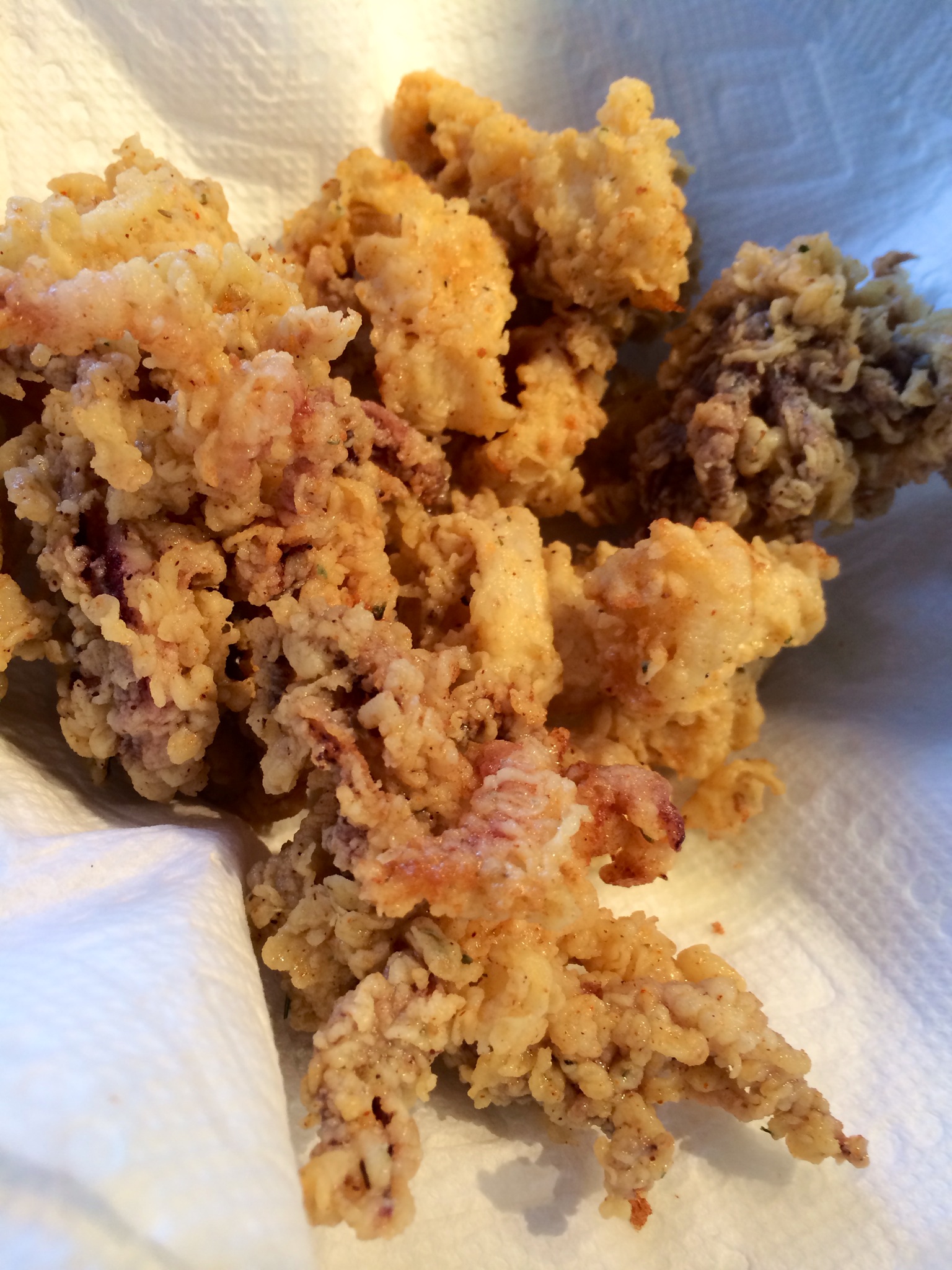
To me, what makes great friend calamari are three basic elements: it needs to be wild caught in the US and properly cleaned…it needs to be fried at the right temperature for the right amount of time so that it’s perfectly cooked and not greasy…and the coating needs to be light and crispy. This recipe does it for me…

calamari

Ingredients:

1 lb. wild caught cleaned squid (thaw if frozen)

2 cups flour (I use 00 flour, but all purpose is OK, too)

2 teaspoons dried oregano

1 1/2 teaspoons paprika

1 teaspoon dried parsley

1/2 teaspoon granulated garlic

1 1/2 teaspoons salt

1/2 teaspoon black pepper

1 cup milk

1 large egg

oil, for frying ( I use non-GMO canola oil or peanut oil)

Thaw the squid and slice into bite-sized rings. In a bowl, whisk the milk and the egg together. Toss in all the squid pieces into the bowl to coat. Place the bowl in the fridge for at least 15 minutes.

In another bowl, combine flour, oregano, paprika, parsley, garlic, salt and pepper. Set aside.

Fill a large pan halfway with oil…or use a deep fryer if you have one. Preheat the oil to 350 degrees.

Working in small batches, remove the squid from the milk and egg mixture, let some of it drip off, then place the squid in the flour mixture and toss to coat. Shake off any excess flour and place immediately into the hot oil. Fry until golden brown, about 4 or 5 minutes. Serve immediately with tartare sauce, tomato sauce, hot peppers, whatever you like.

Commentary on oil: I cook almost exclusively with olive oil. But for hot frying like this recipe requires, I go with non-GMO canola oil…or peanut oil if that’s not available. Despite what you read, most oils that are hailed as “healthy:” regular canola, corn, soybean, sunflower, safflower…are bad for you. But if you fry your food at the proper temperature using good clean oil, very little oil will stay on your food.