Posts Tagged ‘food’

I love salmon in all forms but cooked. To me, cooking changes the true flavor of this fantastic fish, so I enjoy it raw (as in sashimi), smoked, and cured.

The best smoked salmon uses the gentle process of cold smoking. It’s something that the average homeowner can’t really do successfully, so I simply buy cold-smoked salmon when I crave it. I’ve made hot-smoked salmon at home with some success, but the fish is so delicate, you really have to keep an eye on it. It takes no time for a juicy, perfectly smoked piece of salmon to turn into a dry, overcooked hockey puck.

Curing, which is how you get Gravlax, is really quite simple. You just need to have enough patience to wait a few days before you can eat it.

There are many gravlax recipes out there.  Some use peppercorns, fennel, caraway, even Aquavit in the curing process.  My opinion is: if you’ve got a beautiful piece of fish, why mask the flavor of it? I go with the simplest recipe possible, featuring just 3 ingredients that cure the salmon: salt, sugar and fresh dill,  and I lean toward the salty versus sweet side.

The first step, of course, is to get the right piece of salmon. What you want is that beautiful, vibrant, almost-orange wild-caught Alaskan or Pacific salmon that costs more than you thought you were going to spend. Wild-caught means the salmon has eaten the foods it loves, a balanced diet consisting of bugs, fish, shrimp, and small invertebrates. A natural diet gives the meat of the fish that beautiful color and incredible flavor. What the salmon eats is very important because you are eating the salmon. Wild-caught salmon is high in Omega-3’s…the good fats.

A beautiful piece of wild-caught salmon laying on a bed of the cure.


I avoid Atlantic salmon at all costs. Unfortunately, most restaurants on the east coast serve Atlantic salmon because it’s less expensive. There’s a reason for that. Atlantic salmon is farmed in the USA, Canada and Europe, which means the fish are kept in crowded underwater pens and are fed food pellets that contain a number of nutrients and additives. Often, farmed fish are treated to prevent sea lice, and are given antibiotics to prevent diseases caused by their tight living quarters. When you buy Atlantic salmon in the fish store, you can spot it a mile away, because it’s pale with a tinge of gray, and its flavor is bland and lifeless. Farmed salmon is much lower in Omega-3’s.

If it doesn’t say wild-caught Alaskan or Pacific salmon, it isn’t! Previously frozen vs. fresh fish matters less than where it came from and how it was raised.

2 lbs. wild-caught salmon, skin on, pin bones removed
2/3 cup (100g) Kosher salt (I use Diamond Crystal)
1/3 cup (80g) sugar (I use natural beet sugar)
1 large bunch fresh dill, washed


If your fish monger hasn’t removed the pin bones from your salmon filet, you’ll need to get a pair of long-nose pliers and remove them. It’s not the worst thing in the world to leave them in there, but you really don’t want to be spitting bones out later.

The reason I mention that I use Diamond Crystal Kosher salt is because all Kosher salt does not weigh the same. Morton Kosher salt, for example, is much heavier by volume, so it weighs more even though you’re using the same cup measurement. In the case of Diamond Crystal, 2/3 cup weighs 100g. Same rules apply to the sugar.  This is really important point to keep in mind when you’re curing anything, fish or meat.

Get a non-reactive tray long enough to hold the salmon filet. I prefer glass.

Mix the salt and the sugar together, and sprinkle half of it evenly on the bottom of the glass tray. Lay the piece of salmon down on the cure, skin side down, and cover the top of the salmon with the rest of the cure evenly.

Lay the sprigs of dill on top of the cure, covering the entire piece of fish.
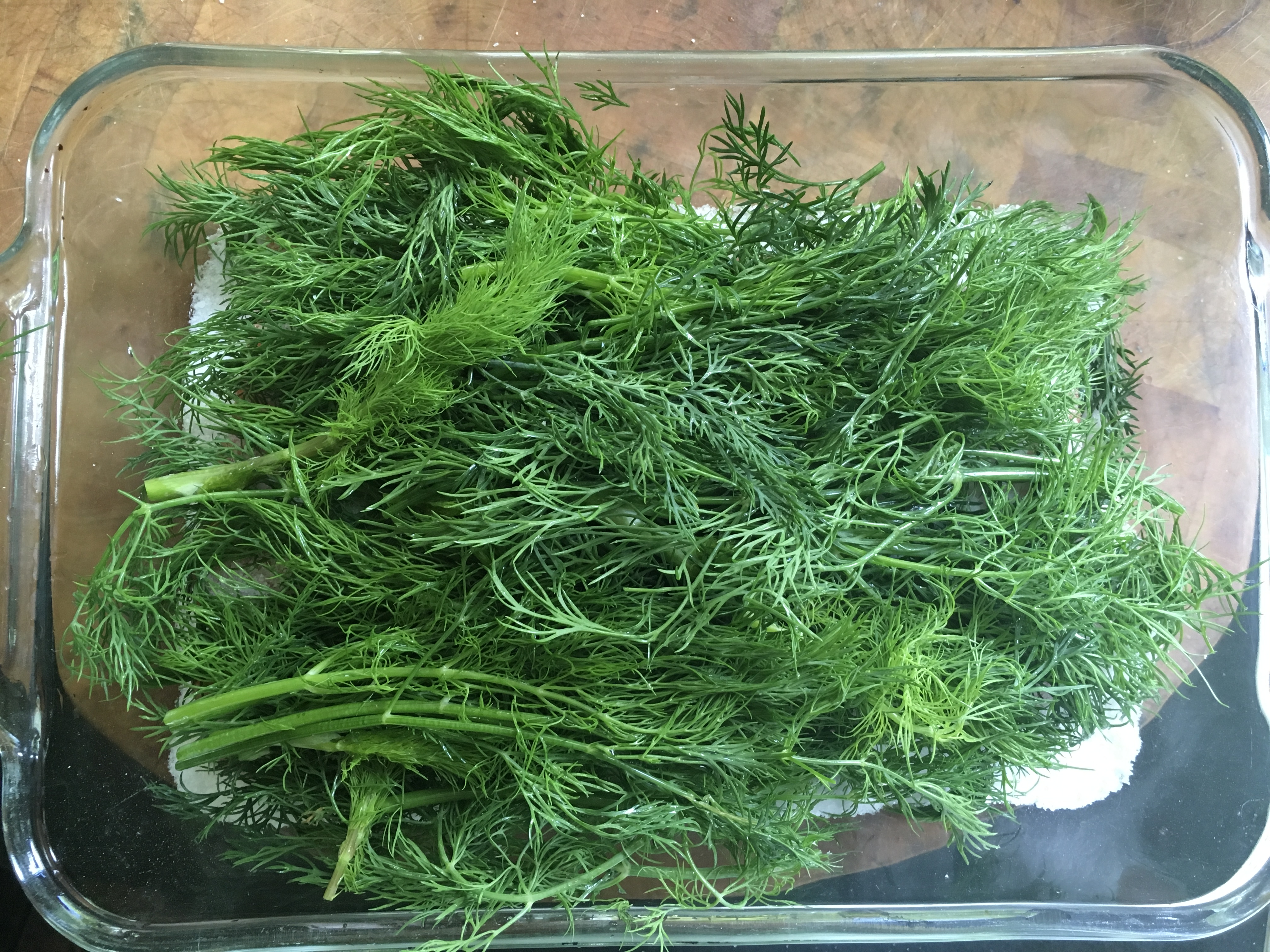
Cover everything with several layers of plastic wrap, pushing it down and tucking it into the corners for a tight fit.

Find a flat board or something similar (I used a clear plastic tray) and lay it on top of the plastic wrap.

Add heavy weights on top to press down evenly on all surfaces. I used cans of tomatoes.
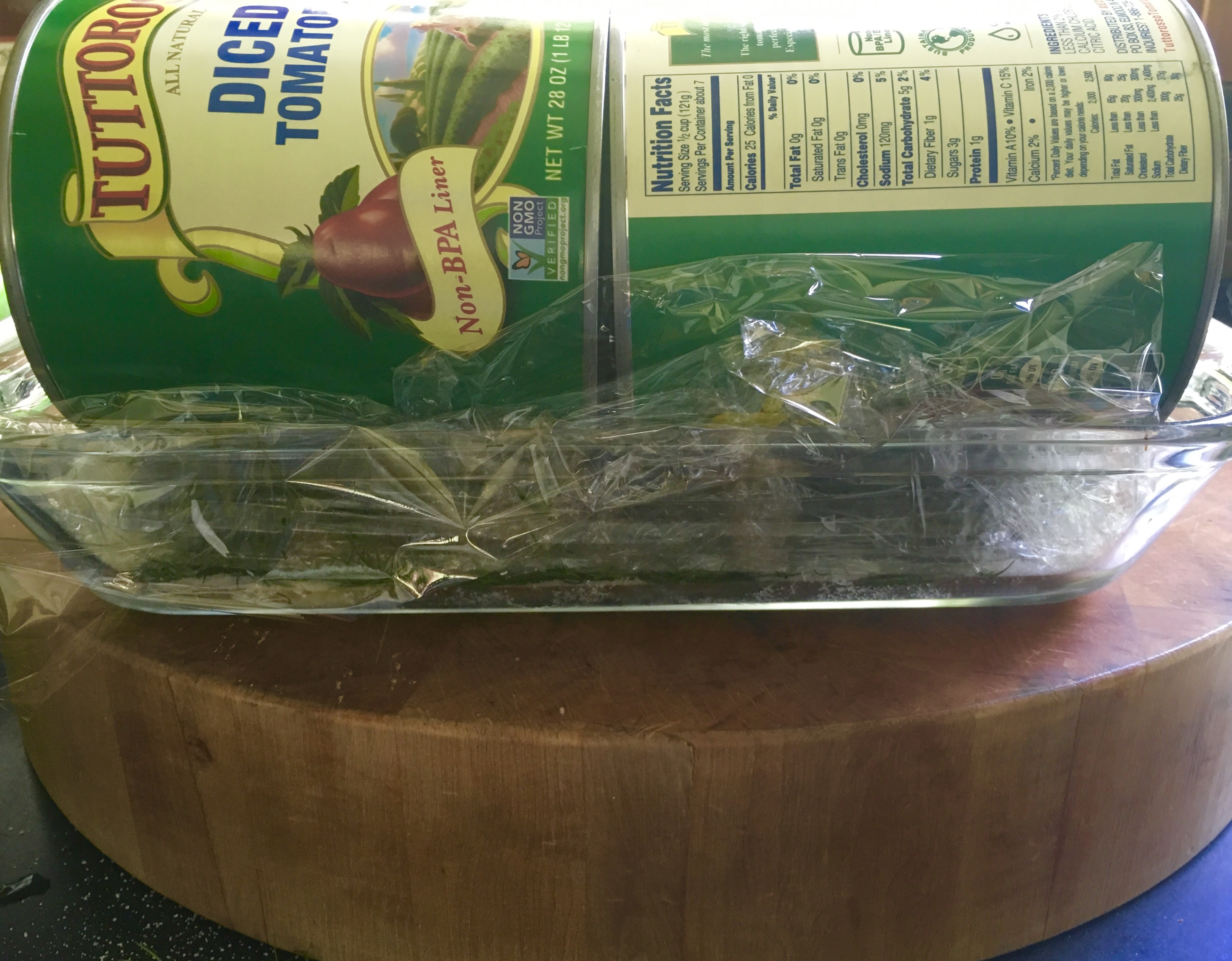
Side view.

Place the tray in the fridge for 48-72 hours.

After 24 hours, remove the plastic wrap and, tilting the tray, baste the dill-covered salmon with the brine juices that have formed. Put clean plastic wrap on top, add the weights, and put it all back in the fridge for another 24 hours. Repeat that process at the 48-hour mark, if needed.


You’ll know the fish is fully cured when the thickest part of the filet is firm to the touch.

Unwrap the salmon, discarding the salt and sugar brine and the dill. Rinse the filet under cold running water and pat dry with paper towels.

I don’t like a ton of chopped dill imbedded into my gravlax as some do, but if you do, simply chop a bunch of dill, spread it out onto a board, and press the salmon into it flesh-side down.

To serve, place the gravlax skin-side down on a board. With a long, sharp narrow-bladed knife, slice the fish against the grain, on the diagonal, into thin pieces. Serve with mustard-dill sauce, chopped onion, capers, hard-boiled egg, bread, whatever you like.

Refrigerate any remaining gravlax immediately, wrapped in plastic wrap, for up to 2 weeks.


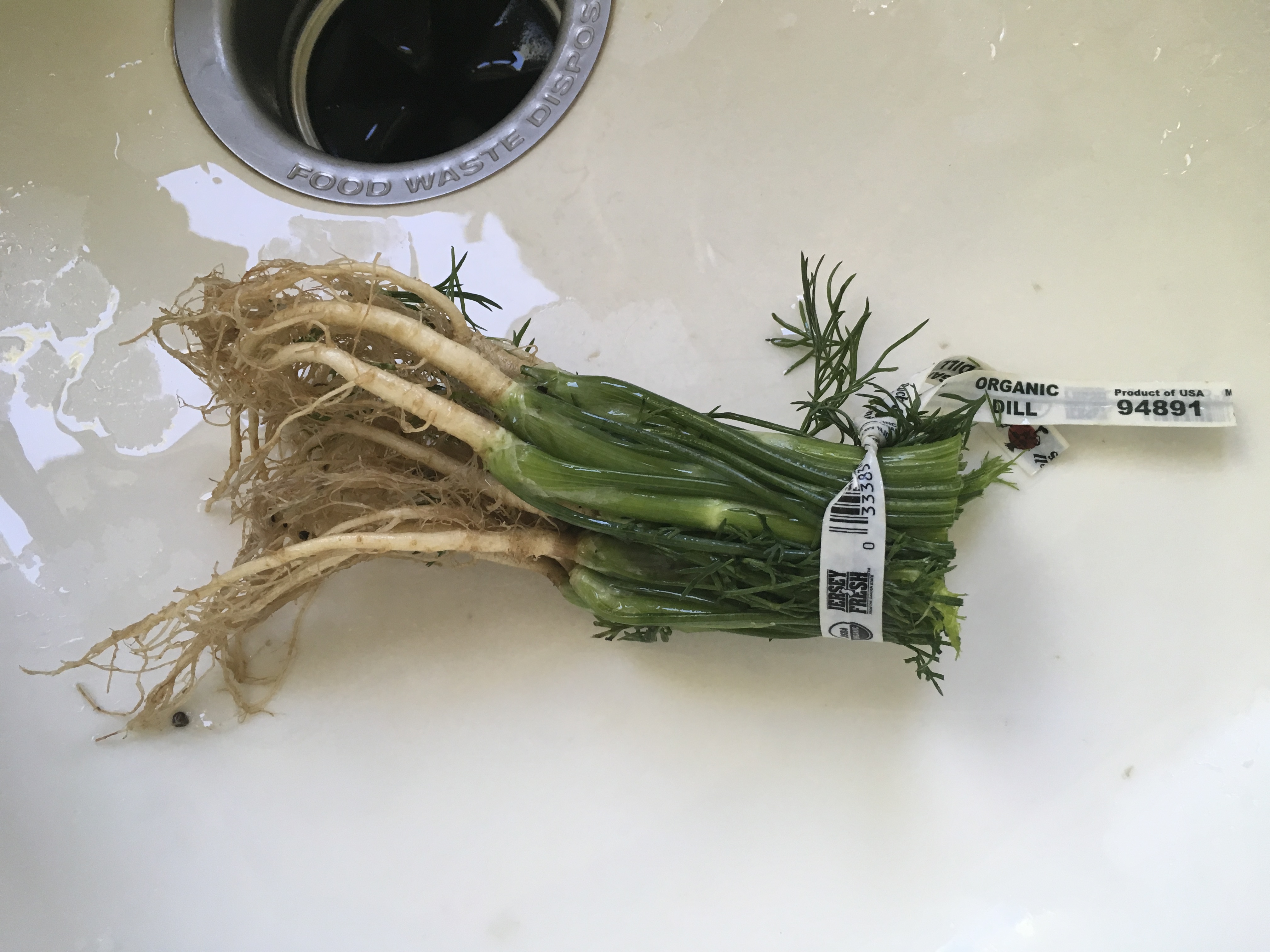
(My fresh dill bunch came with the roots intact, so I cut them off and placed them into the soil in my herb garden. New dill will sprout up quickly!)


 Over the years, I’ve tweaked this Asian marinade recipe, adding more ingredients. Feel free to use more or less according to your own taste. After all, that’s how any recipe becomes truly your own.
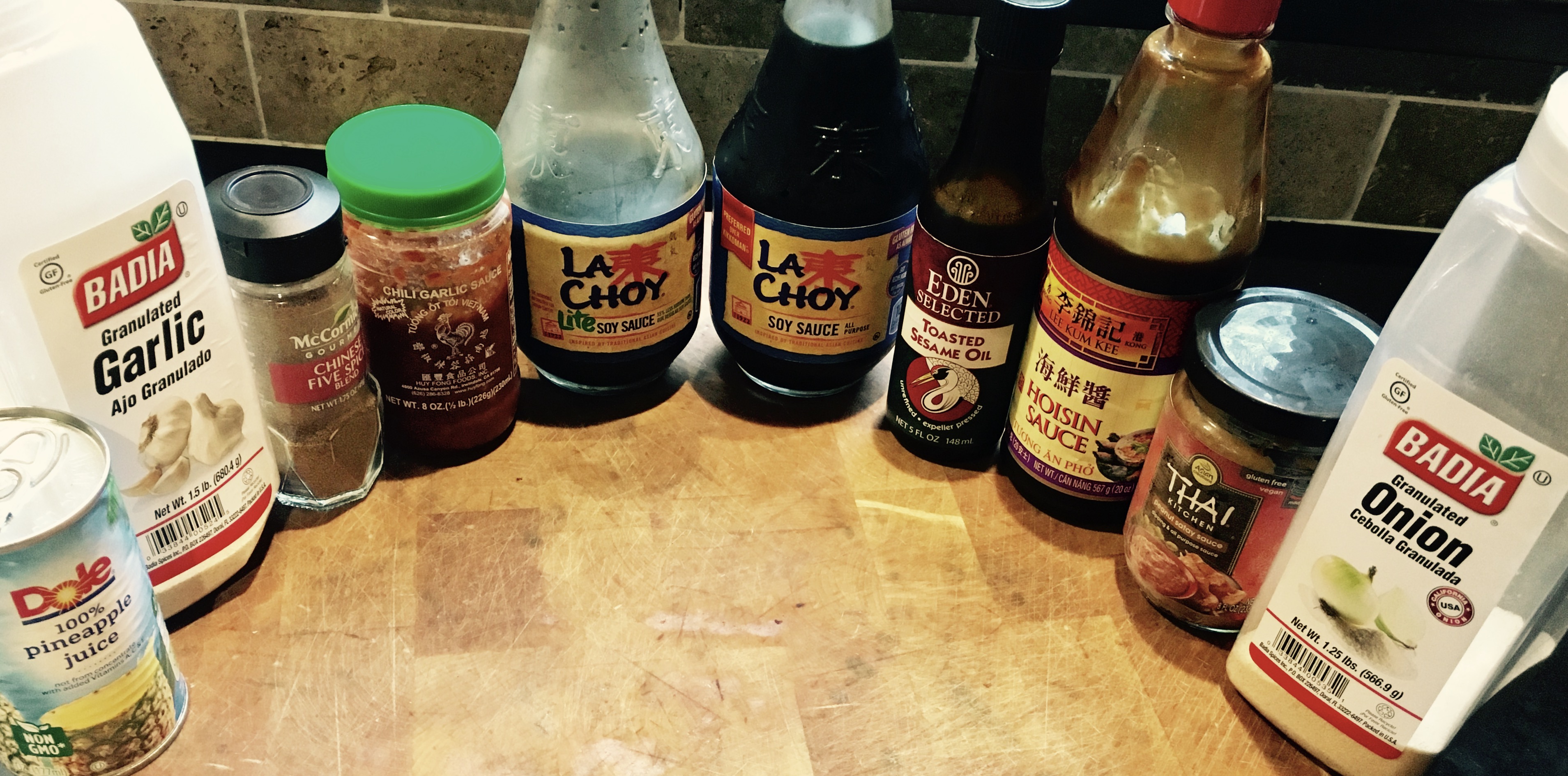
My wife is on a gluten-free diet, so I cook that way when possible. In this case, the soy sauce usually has wheat, so I use La Choy, a gluten-free brand.  You’ll notice two bottles below. I sometimes mix half regular soy sauce with half lite soy to cut the sodium.


10 lbs. chicken wings, the larger the better
1 cup soy sauce (I use La Choy, which is gluten-free)
1 small can (6 oz.) pineapple juice
2/3 cup brown sugar
1 tablespoon hoisin sauce
2 teaspoons chili garlic sauce
1 teaspoon granulated onion
1 teaspoon granulated garlic
1 teaspoon Chinese five spice
1 teaspoon sesame oil
1 teaspoon peanut satay sauce (optional)

Place the chicken pieces in a large  Ziploc bag. Whisk all the marinade ingredients together in a bowl. Add the marinade to the bag, seal it well, then squish the bag around so that the marinade makes contact with all the chicken.
To prevent accidental spills, place the bag in a clean bowl. Marinate the chicken for several hours at room temperature or overnight in the fridge, turning the bag once in a while to make sure everything gets an even exposure to the marinade.
The next day, pour off the marinade and discard it, removing the chicken wings from the bag. Place the wings on a cookie sheet lined with foil (I use Reynold’s non-stick) and bake at 325 degrees for about 30 minutes.

A SAD STOLI

Posted: June 4, 2017 in Uncategorized
Tags: , , ,

I thought I got this little bugger…

On January 23rd, I posted a recipe on this blog about herring appetizers my Mom would make and the Stolichnaya vodka she’d serve to wash them down. (http://wp.me/p1c1Nl-10B) My cousin, in the booze business, saw the post and passed it along to her friends at Stoli Elit, my favorite vodka. Next thing I know, a package arrived at my home, and inside was a big, beautiful bottle of Stoli Elit with a thank you card!

But…the seal on the bottle was broken…the bottle had been opened! I’m guessing that the intern in charge of sending my bottle to me reached into the big Stoli promotional closet full of bottles and accidentally grabbed one that someone took a swig from, and mailed it to me without giving it a good look first. So there I was…my favorite vodka in hand, but already opened. I really wanted to drink it…but I knew that I shouldn’t.

I didn’t have the heart to pour the vodka down the drain, so, with a deep sigh, I put the bottle in my garage until I would figure out what I could do with it.

Now, remember, this is a chipmunk story…

A week later, this little rat bastard tunneled through the area near the back door of my house. Suddenly, there was a hole in the ground that didn’t exist the day before. I had tried all the tricks of the trade in the past: smoke bombs, mouse poison…nothing worked. I don’t mind having chipmunks in my yard, but not tunneling right next to my house.

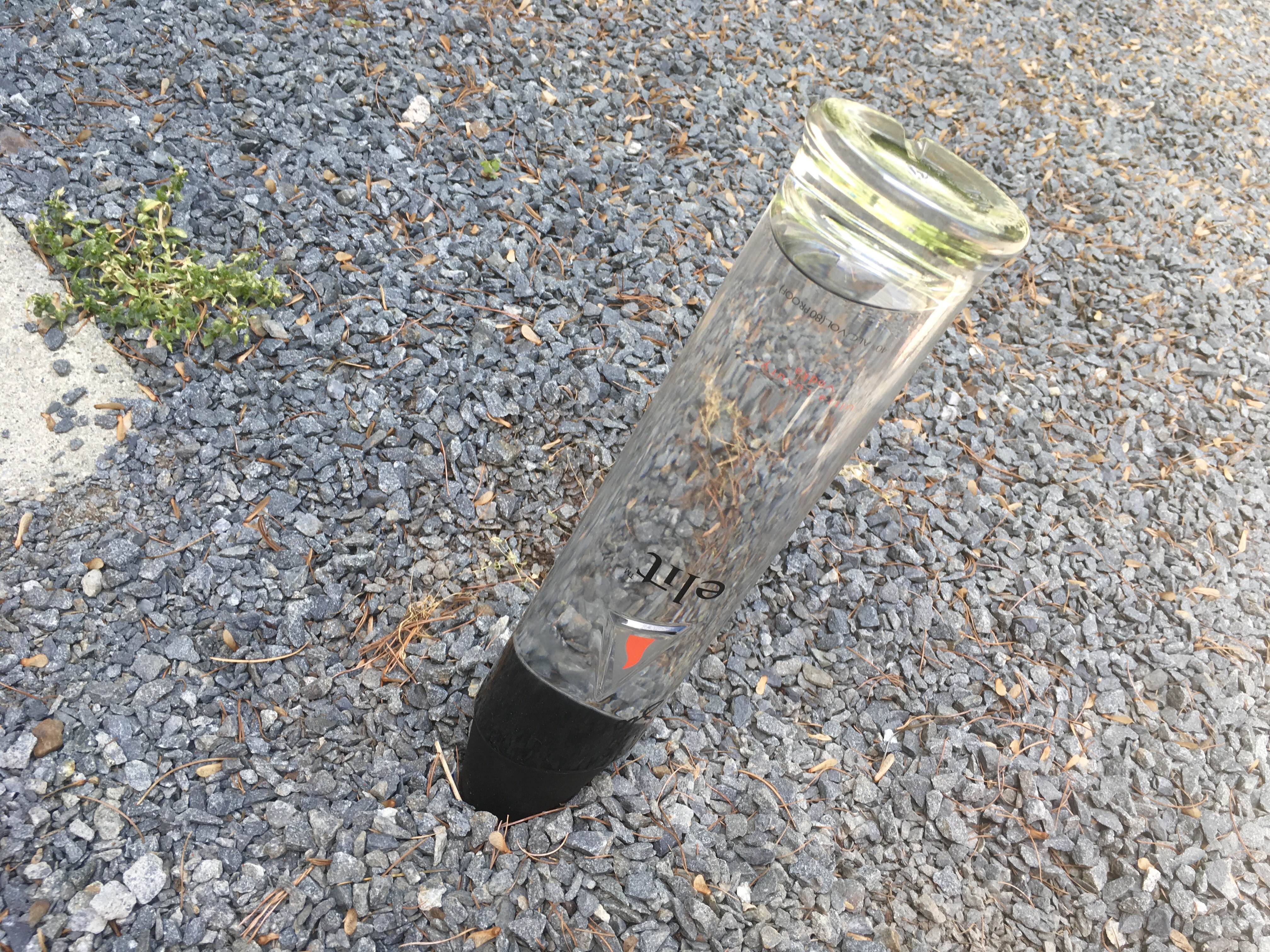
Suddenly, I had an epiphany: I would put that bottle of Stoli Elit to good use. I grabbed it, unscrewed the top, and jammed the bottle upside-down into the chipmunk hole, watching my beautiful elixir slowly gurgle its way out of the bottle and down into the underground tunnel system below my feet.


A reenactment of my “Stoli solution.” No actual bottles of Stoli Elit were damaged, and not a drop of additional vodka was spilled, during the photo shoot.


I covered the hole with a stone as a marker, and it remained unmoved for weeks. I thought my eradication was a success. No better way to go than drown in a bath in Stoli Elit, right?

Then, one day, a small hole, a new tunnel, appeared next to the stone. Maybe Stoli Elit is his favorite vodka, too.

I really thought I got this little bugger…

Many people are turned off by lamb because somewhere in their past, they had a horribly cooked piece of meat that ruined it for the rest of their lives. I’m here to tell you: don’t be sheepish! Try lamb again!

If you think lamb is too “gamey,” buy American lamb over New Zealand or Australian lamb. Although the animals are mostly pasture-raised, American lamb is larger and grain finished, which means a milder flavor.

I prefer 100% grass-fed lamb. You can find it from the US, but most of it comes from New Zealand. Having been to the country, I can tell you that the quality is unmatched and the grasslands in New Zealand are the most beautiful I’ve ever seen. New Zealand lamb is smaller and is slaughtered at a younger age than American lamb, making it very tender. In New Zealand, as well as many other countries, only an animal under 12 months of age and without incisors can be called “lamb.” No such labeling is required in the United States.

I love the baby lamb chops that look like miniature porterhouse steaks. You can find them in any supermarket. A good marinade will get rid of any of those flavors you don’t want. Here’s an easy recipe that I served at a party in my home for 40 people, many of whom claimed they didn’t like lamb or never had it before. By the end of dinner, the chops were gone!

lamb LTL


½ cup olive oil
¼ cup balsamic vinegar
2 cloves garlic, through a garlic press
1 tablespoon fresh rosemary, chopped
1 tablespoon honey
2 teaspoons Dijon mustard
1 teaspoon dried oregano
Salt and pepper
2 lbs. lamb chops

Place the lamb chops in a plastic bag. Combine all the ingredients for the marinade and pour it over lamb. Seal the bag and squish it around so that the marinade reaches every part of the chops. Place it in refrigerator for a few hours…overnight is better.

Next day, pre-heat your barbecue grill. While your grill’s warming up, remove the plastic bag from the fridge and let the lamb come to room temperature.

Grill the lamb chops until they’re done, which means cooked no more than medium. Don’t cook it to death!

If you can’t get to a grill, pre-heat your oven to 350. Heat an oven-proof pan on the stove top with a little oil. Carefully place the lamb chops in the pan and sear on all sides. Then place it in a 350-degree oven to cook all the way through.


Who says you have to cook a burger on the grill for Memorial Day? This is one of my favorite ways to enjoy clams…and without the clam knife! I always use hardwood charcoal.

Although I live on the opposite side of Rhode Island, I love visiting my friends at American Mussel Harvesters in North Kingstown. The quality of their seafood is second to none, which is why they supply so many area restaurants with their products. They feature “restaurant ready” mussels, meaning they’ve been cleaned and de-bearded. And their “restaurant-ready” clams mean they’ve been purged to perfection! (www.americanmussel.com) They ship, too.

image


A couple of dozen (or more) little neck clams, washed and purged
1 stick (8 oz.) of unsalted butter
1/4 cup extra virgin olive oil
1/4 cup chopped parsley
1 teaspoon dried oregano
1/2 teaspoon dried basil
1 teaspoon minced garlic
1/2 teaspoon sea salt

image


The clams should be stored cold and dry until ready to use…not in water, not on ice. Place the clams in a bowl and cover with a wet dish towel in the fridge.

Because my clams have already been purged, I don’t have to do it at home. But here’s what to do if they haven’t been purged: Fill a large bowl with cold water, add sea salt and some corn meal to it, and mix it around. Add the clams to this bowl and let them purge in this liquid for at least an hour. They will suck up the corn meal and spit out sand and grit. After an hour, pour off the water/salt/meal/grit mix, and thoroughly wash the clams.

Start your hardwood charcoal grill and divide it in half: coals on one side, no coals on the other.

While the coals are heating up, grab a disposable aluminum foil tray and place it on a burner on your stove over medium heat. Add the butter, olive oil, parsley, oregano, basil, garlic and salt, and stir to combine. Once the butter has melted and everything has blended, bring the tray over to the charcoal grill and place on the side of the grill without coals. It will stay warm.

Once the coals are hot, just place the clams directly on the grill. (Use tongs, unless you want to remove all of your knuckle hair.) They’re done as soon as they open, but you can cook them as long as you like, from raw to more thoroughly cooked. As each one reaches its desired doneness, place it carefully in the aluminum tray, making sure you don’t lose any of that precious liquid inside the clam shell. Give it a swish in the butter and herb mix.

When all the clams have been cooked and are in the tray, serve them with that herby butter sauce on top of pasta…or simply eat them with a fresh baguette. A glass of great white wine is a must.

image

This is our family’s favorite pancake recipe, but the need to go gluten-free for my wife meant a change in the ingredients. Fortunately, my favorite go-to all-purpose flour, “Cup 4 Cup,” worked so well in this recipe, there was no difference in taste or texture. Now this is the only way we make ’em and no one notices the difference!
 image
1 cup all-purpose flour (or Cup 4 Cup original multi-purpose flour)
1 1/2 cups stone-ground yellow cornmeal
2 tablespoons organic cane sugar
2 teaspoons baking powder
1/2 teaspoon baking soda
1/2 teaspoon salt
2 cups buttermilk (or 1 1/2 cups milk and the juice of 1 large lemon)
zest of 1 organic lemon
1 large egg
3 tablespoons melted unsalted butter, slightly cooled
1–2 teaspoons avocado oil
1 cup fresh or frozen blueberries, preferably wild, rinsed and dried
Whisk the flour, corn meal, sugar, baking powder, baking soda, and salt in a medium bowl
to combine.
In a separate bowl, whisk the egg, lemon zest, and melted butter into the buttermilk to combine.
Make a well in the center of the dry ingredients in the bowl. Pour in the milk mixture and
whisk very gently until just combined. Do not over mix. A few lumps are OK.
Heat non-stick skillet over medium heat. Add 1 teaspoon of oil and use a brush to coat the skillet
bottom evenly. Pour 1/4 cup of the batter into 3 spots on the skillet. Sprinkle 1 tablespoon of the
blueberries over each pancake. Cook the pancakes until large bubbles begin to appear,
about 1 1/2 to 2 minutes. Using a thin, wide spatula, flip the pancakes and cook until they’re golden
brown on the other side, 1 to 1 1/2 minutes longer.
Chow down immediately!
image

Maybe you saw the story in the news recently: the nephew of Colonel Sanders himself revealed the 11 secret herbs and spices that made KFC’s original recipe chicken a worldwide success. He claimed he worked for his uncle for many years and had to make huge batches of the seasoning mix. The article reduced the amounts to a more user-friendly version, which I put together last night.

You have to understand something…although I’m a big proponent of grass-fed this and pastured that, I have a weakness. My kryptonite is KFC’s original recipe chicken. There’s a KFC right next door to a local Home Depot in my area and my car literally drives itself to the pick-up window…I can’t help it. I justify the consumption of grease by asking for no sides–no biscuit, no nothing. I get one breast and one thigh, and I drive off, steering my car with my knees as I indulge in my dirty secret.

Making the KFC chicken recipe at home means I do have some control over product quality. I use pastured or organic chicken. I use clean oil. And I oven-fry my chicken, meaning I fry it in oil until golden brown, then finish the cooking process in the oven.

I have to say, the recipe really works! Maybe if I placed the real KFC side-by-side with my home-made chicken, I’d notice a difference. But it was pretty damn close and absolutely delicious! If I could change one thing, I would use smaller chicken pieces next time. I used large pieces and the meat-to-breading ratio was off. Though it was mighty tasty, I was craving more breading per bite.


2 cups all-purpose flour
4 tablespoons paprika
1 tablespoon black pepper
1 tablespoon celery salt
1 tablespoon dried mustard
1 tablespoon garlic salt
1 tablespoon ground ginger
2 teaspoons white pepper
1 1/2 teaspoons thyme
1 1/2 teaspoons basil
1 1/2 teaspoons oregano
1 teaspoon salt
1 cup milk
1 egg
5 lbs. chicken pieces…your choice
oil, for frying


Combine the flour and the “11 herbs and spices” in a bowl. Mix well.

In another bowl, whisk together the milk and the egg. Add the chicken pieces to this bowl and let the chicken soak in it for 10 minutes.

Pre-heat the oven to 350 degrees.

Pour a couple of inches of the oil into a pan with high sides and heat to 340 degrees, using a thermometer. Don’t go too high up, because oil expands when hot and could spill over.

Take the chicken pieces and coat them with the seasoning mix one at a time, making sure you coat them well. Carefully place the chicken in the hot oil. Don’t overcrowd the pan…work in small batches. Too much chicken could cause the oil to spill over the top.

Fry the chicken pieces until golden…no need to cook them all the way through. Place the pieces on a baking sheet lined with non-stick aluminum foil. When all the chicken has been fried, place the baking sheet in the oven and cook until the chicken pieces reach an internal temperature of at least 160 degrees.


An article recently appeared in Eater, showing how you can make the famous Shake Shack burgers. (https://www.eater.com/2017/5/13/15629654/recipe-shake-shack-burger?yptr=yahoo) But the one thing missing was the “Shack Sauce.” I’m here to help with that!

If I haven’t completely captured the taste of it, I’ve come pretty darn close. I do know that my Awesomesauce makes every cheeseburger I grill taste amazing. It’s also fantastic for shrimp, crab or lobster salad…a dip for veggies or boiled shrimp…a dressing for tacos…and great on salads.

Awesomesauce


1/2 cup mayonnaise
1 tablespoon ketchup
1 tablespoon yellow mustard
1 tablespoon dill pickle relish
1/4 teaspoon garlic powder
1/4 teaspoon paprika
Pinch cayenne pepper

Combine all the ingredients in a bowl. Refrigerate it covered for a few hours to blend the flavors.

Sometimes the best ideas come from out of nowhere.

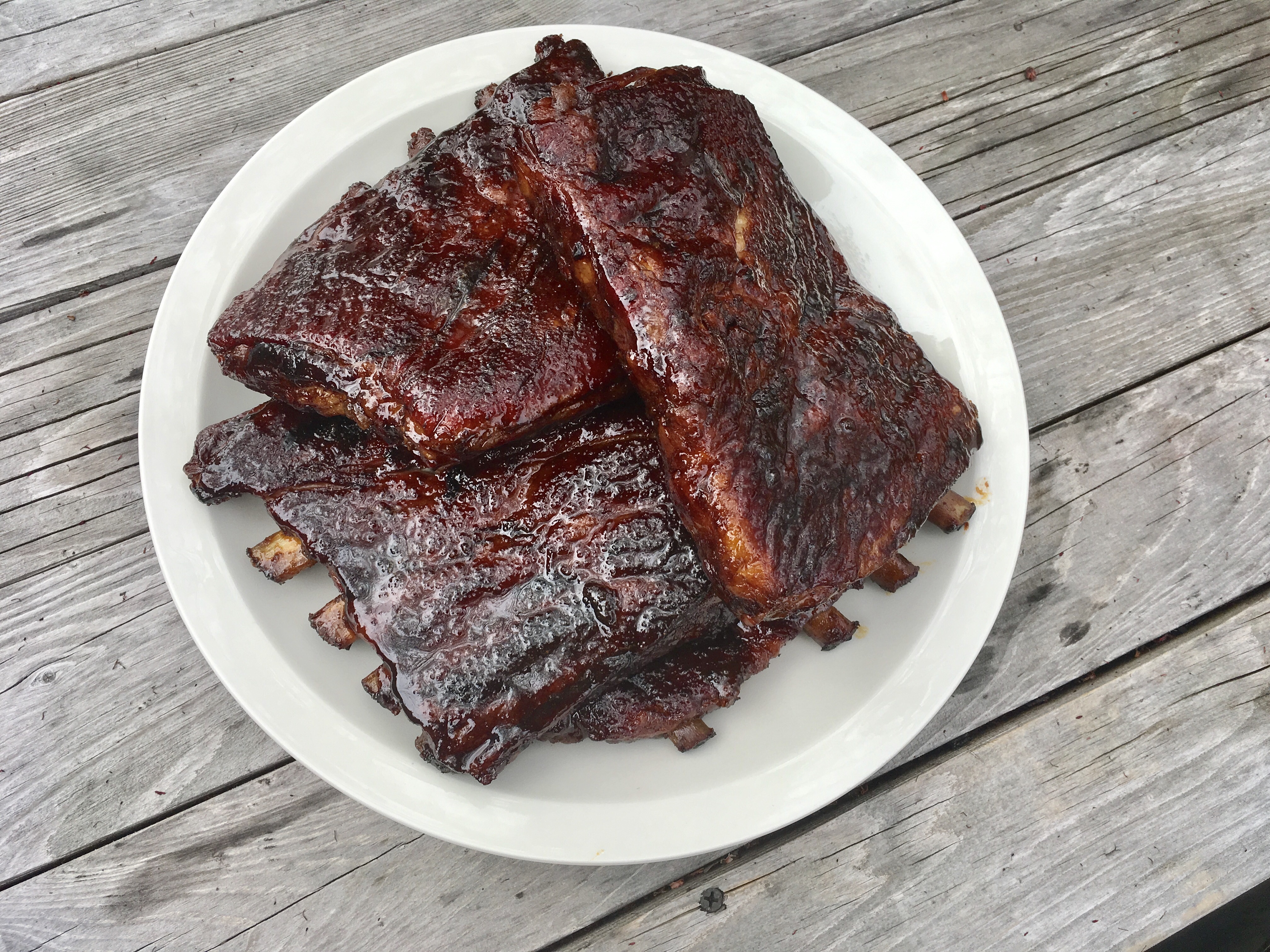
I had 5 lbs. of beautiful St. Louis-style heritage Berkshire (also known as Kurobuta) pork ribs thawing in the fridge, and I knew I wanted to create a new sauce or glaze with them, but I was feeling less than inspired. Our food-loving friends, Don and Johanna, showed up at our door with a gift they bought in Maine, at a shop called LeRoux Kitchen. It was a bottle of maple balsamic vinegar. It smelled wonderful…and tasted even better! I knew I had what I was looking for.


By the way, if Don (a talented local artist: http://www.doncadoret.net) and Johanna (a talented teacher) aren’t your friends, you can easily make your own maple balsamic vinegar by combining a 1/2 cup of balsamic (not the super-expensive kind, but the $9-a-bottle kind) with 2 teaspoons of maple syrup. Add more or less maple to taste. (That’s what I’ll be doing when this bottle runs out!)


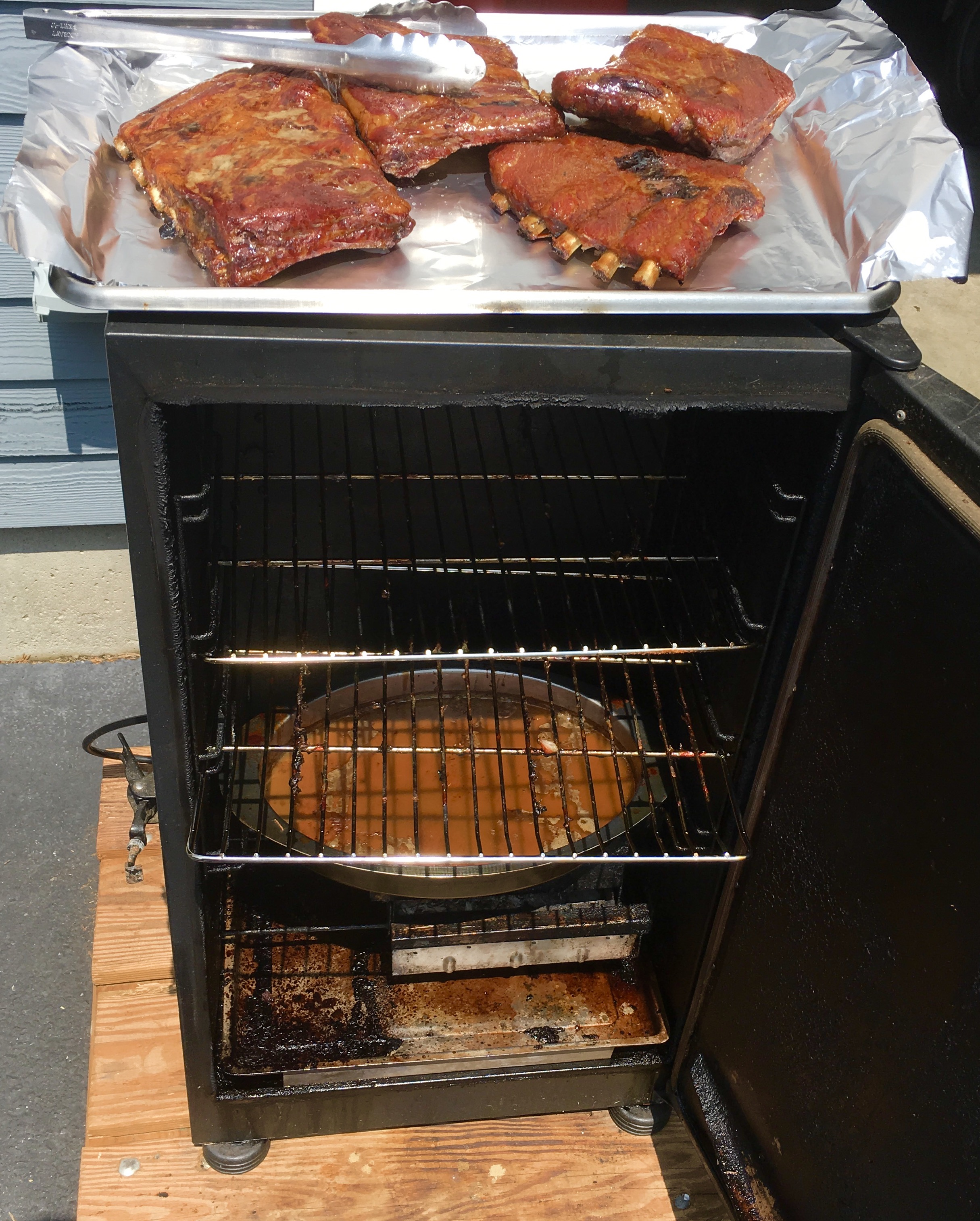
Yup…my smoker…she’s been used a few times!


I use an electric digital smoker made by Masterbuilt. I like the fact that I can set the temperature and time, and not have to constantly watch it. It has a side chute where I can add smoking chips when I want, and the results are consistent. I suppose some grilling fanatics might say I’m cheating, but a digital smoker allows me to live a life, hang out with my family, do some yard work. I don’t have time to babysit.

I chose to smoke my ribs for about 4 hours in the smoker, lightly seasoning them first with Lawry’s Seasoned Salt, adding hickory chips to the smoker only once to give them a “light smoke.”


Brushing with glaze, then wrapping in foil.


Although I always use a water bath in my smoker, the ribs still come out visibly dry, so I like to brush them with a glaze, wrap them in foil and finish the cooking process in the oven. The glaze flavors the meat and also adds a little steam that tenderizes it.

5 lbs. pork ribs (I get St. Louis-style Berkshire pork)
Lawry’s Seasoned Salt

1 cup water
1/2 cup maple balsamic vinegar
1/4 cup brown sugar
1/2 teaspoon granulated onion
1/2 teaspoon granulated garlic
1/2 teaspoon cayenne pepper sauce (I like Franks’ Red Hot)


Prepare the ribs by removing the inedible skin on the back of the rack. The easiest way to do this is to cut a little “tab” of skin, then pull it with your fingers. Holding the skin with a dry paper towel will help your grip. I cut the racks in half to fit my smoker.

Season the ribs lightly with Lawry’s Seasoned Salt on both sides and place them into a 240-degree smoker for 4 hours, smoking lightly with hickory wood.

In a saucepan over high heat, combine the water, maple balsamic vinegar, brown sugar, onion, garlic, and cayenne pepper sauce. Stir well, and let it come to a boil. Let it reduce by half, leaving it still watery. Set aside.

After 4 hours, remove the ribs from the smoker, placing them on a sheet of aluminum foil. (I use Reynold’s Non-Stick Foil, since the glaze will be sticky.) Brush both sides of the ribs with half of the glaze, and place the ribs meat-side-down on the foil before sealing the it around the ribs. Place the aluminum foil packets on a baking sheet, then into a pre-heated 250-degree oven.

While the ribs are cooking in the oven, turn the heat up on the remaining half of the balsamic glaze in the sauce pan and reduce it until it starts to thicken. Once you reach that stage, turn the heat off and set it aside.


Remove the ribs from the oven after 2 hours. Open the foil packets so that the ribs are now exposed. Brush the bottom of the ribs (which should be facing up), then flip the ribs over and brush the meaty side. The ribs should be falling off the bone at this point, which means they’re ready to serve.


PICKLING BEETS

Posted: May 10, 2017 in beets, Food, pickling, Recipes
Tags: , , ,

Growing up in a Lithuanian family, there was a small group of foods that I had to love to survive, since they constantly appeared on the dinner table: potatoes, cabbage, mushrooms, herring, and beets. Fortunately for me, I loved them all, despite my Mom’s desire to boil everything to death.

One of the many uses for beets, besides a cold summer soup and a hot winter soup, was pickling. Pickled beets are an excellent side dish for any hearty meat dish. (I love ’em with kielbasa!)  Store-bought pickled beets pack way too much sugar in every jar, so it was time to make my own. The addition of hard-boiled eggs to the mix is a personal one. If you don’t like ’em, leave ’em out and add more beets.

A real time saver is a product called Love Beets, which you can find in any supermarket. If you use them, you can skip the roasting of the beets altogether.

beets


4 to 8 beets, scrubbed (your favorite variety)
1 cup apple cider vinegar
1 cup water
3 garlic cloves, crushed
3 tablespoons sugar
2 teaspoons whole black peppercorns
1 tablespoon Kosher salt
1 red onion, sliced
4 hard-boiled eggs, peeled (optional)
6 fresh dill sprigs

Pre-heat the oven to 450. Wrap the beets in foil and roast for about an hour, until tender. When they’re cool enough, carefully peel and quarter them.

In a medium saucepan, combine the vinegar, water, garlic, sugar, peppercorns and salt. Bring it to a boil and simmer over moderately high heat, stirring until the sugar has dissolved. Let the pickling liquid cool to warm, about 15 minutes.

In a heat-proof glass jar or container, layer the beets, onion, eggs and dill sprigs and then cover with the pickling liquid. Let it stand at room temp for 2 hours, then place it in the fridge overnight.

They stay fresh for a week, but they won’t last that long!